
Pharmaceutical companies operate in one of the most rigorously regulated sectors globally. Consider the routine complexity of supporting a single pharmaceutical product across multiple regional markets today.
On any given day, packaging teams are juggling serialization, localized labeling, artwork approvals, regulatory filings, and batch traceability across every single market. It’s a massive lift, but these processes are non-negotiable. They ensure that life-saving medicines reach patients with accurate, compliant, and consistent information.
And that’s why Digital Product Passports (DPPs) are the next step in this evolution. They connect physical packaging with verified digital information, allowing manufacturers to provide richer product details throughout a product’s lifecycle.
Preparing for DPPs is about much more than placing a QR code on a carton. It requires reliable product data, connected workflows, and collaboration across packaging, regulatory, quality, manufacturing, and supply chain teams.
In this article, we’ll explore why Digital Product Passports matter to pharmaceutical companies in this current market situation, how they differ from traditional QR codes, and the operational foundations pharma teams should start strengthening today.
First of All, What Is a Digital Product Passport in Packaging?
A Digital Product Passport (DPP) is a standardized digital record that accompanies a physical product throughout its entire lifecycle, acting as a dynamic “digital twin” linked directly to a scannable 2D barcode on the packaging.
Instead of locking static information onto a printed box or paper leaflet, a DPP establishes a live connection to real-time backend data. In simple terms, a DPP brings together four main things:
- Product Details & Instructions: What the item is made of, how to use it safely, and up-to-date digital user manuals.
- Traceability & Proof of Authenticity: Exactly where and when the item was made, unique serial numbers, and proof that it isn’t a counterfeit.
- Supply Chain History: Where the product traveled, who handled it, and proof of proper handling along the way.
- Sustainability & Disposal Info: The product’s carbon footprint, material sourcing, and step-by-step instructions on how to repair, reuse, or recycle it.
In short, it transforms a basic, static piece of packaging into a smart, interactive hub for consumers, businesses, and inspectors alike.
QR Codes vs. Digital Product Passports: What's the Difference?
Both use a 2D scannable matrix on physical packaging, but their underlying architecture, data accessibility, and operational utility differ in a pharmaceutical context.
A standard QR code acts as a simple digital doorway pointing to a static web destination. In contrast, a Digital Product Passport is a dynamic ecosystem. Built on standardized architectures such as GS1 Digital Link, a DPP connects the physical pack directly to live backend data systems. Implementing these dynamic 2D codes requires precision at the artwork stage.
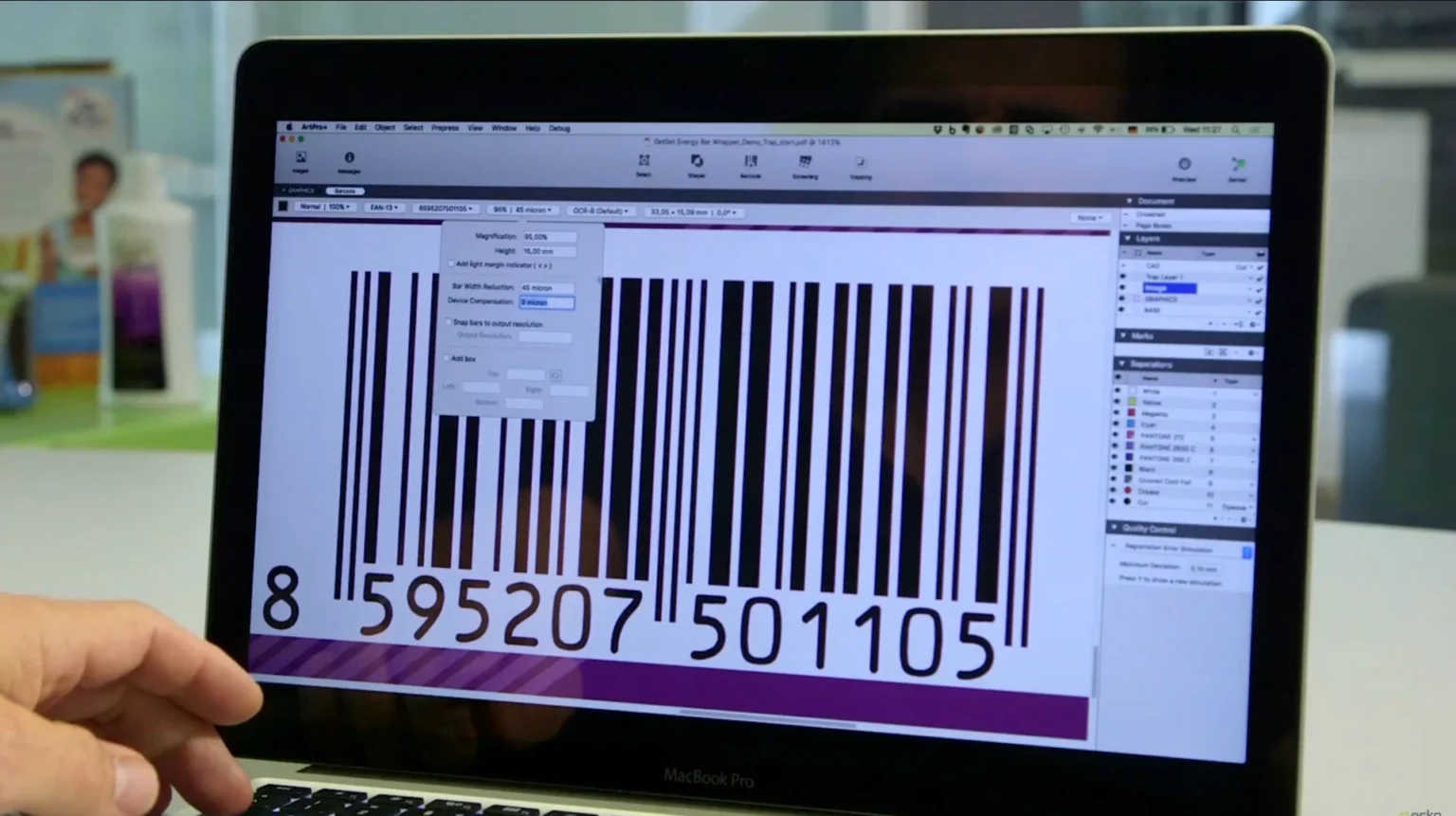
Edit and review barcode data for accuracy with ArtPro+
With specialized prepress software like ArtPro+ or DeskPack Adobe Illustrator Plug-ins, teams can natively generate and compare any type of 2D code, including GS1 DataMatrix and QR codes, and run visual compare tools against master files to verify code parameters before sending artwork to print.
Why Digital Product Passports Matter for Pharmaceutical Packages?
The shift toward Digital Product Passports is a life-changing transition from static, printed packaging elements to responsive, dynamic communication systems. This evolution provides immediate value across several critical operational vectors:
- Seamless Regulatory Compliance & Rapid Recall Execution: Regulatory mandates across major global markets are expanding to require detailed lifecycle reporting and electronic product information. A robust DPP framework lets manufacturers update regulatory details instantly without physical package redesigns, simplifying market access, and drastically accelerating recall notification speeds when safety issues arise.
- Improving Serialization Investments: Pharma brands have already invested millions into track-and-trace infrastructure to meet Drug Supply Chain Security Act (DSCSA) and EU Falsified Medicines Directive (FMD) standards. DPPs build directly upon this foundation, taking the unique identifiers generated during serialization and surfacing relevant information directly to healthcare providers and consumers through a unified digital interface.
- Patient Empowerment & Health Literacy: Paper Patient Information Leaflets (PILs) often suffer from microscopic typography and accessibility barriers. DPPs empower patients by providing immediate access to instructional videos, dosage calculators, audio guides, and localized translations in their native language, directly improving medication adherence and treatment outcomes.
- Transitioning from Static to Dynamic Information: Traditional packaging locks product details in print the moment a batch leaves the facility. DPPs introduce real-time agility, allowing brands to update storage guidelines, update safety warnings, or provide live supply chain updates instantaneously across an active product line without delaying manufacturing workflows.
The DPP Journey Has Already Begun
Digital Product Passports are rolling out through a deliberate, phased approach. While exact compliance timelines continue to take shape across different markets, the directional vector is crystal clear: regulatory bodies expect companies to strengthen their product data governance and packaging IT infrastructure well ahead of formal deadlines.
Preparing for DPPs isn’t a project you can treat as a last-minute packaging artwork ticket. It requires your artwork files, master product data, regulatory copy, and digital assets to work together through connected, automated workflows.
Pharma organizations that start strengthening these operational foundations today won’t just stay ahead of regulatory mandates but dramatically improve how product data is managed across their entire business.
Strategic Benefits for Pharmaceutical Brands
Beyond fulfilling regulatory mandates, adopting a comprehensive Digital Product Passport delivers substantial long-term commercial and operational advantages:
- Uncompromising Product Authenticity: Counterfeit pharmaceuticals pose severe risks to patient safety and brand reputation. DPPs use cryptographically secure digital anchors linked to physical serialization, allowing instantly verifiable product authentication at any point in the distribution chain.
- Heightened Supply Chain Transparency: By aggregating material origin, cold-chain temperature logs, and transit milestones into a single readable passport, brands gain deep visibility into their distribution network, allowing for faster resolution of logistics bottlenecks.
- Deepening Patient Trust: Providing patients with direct access to verified batch details, ethical sourcing metrics, and active ingredient verification builds enduring brand equity and trust in an increasingly critical healthcare landscape.
- Measurable Sustainability & Circularity Reporting: DPPs quantify the environmental impact of primary, secondary, and tertiary packaging materials. This precise data simplifies Scope 3 emissions tracking and supports regulatory reporting on recyclability and waste reduction.
How Packaging Teams Can Succeed with Digital Product Passports
Packaging engineers and prepress teams sit right at the center of this transition. As DPPs become standard, your role expands from managing physical print execution to maintaining the critical connection between physical packs and live digital data.
Here are a few areas that deserve attention:
Build a Reliable Source of Product Information
Digital Product Passports rely on accurate and governed product data. Packaging teams should work closely with regulatory, manufacturing, and quality teams to ensure product information is maintained through standardized processes rather than scattered across multiple systems.
Connect Artwork with Structured Product Data
Artwork files contain critical product information, but much of it exists as visual content. Linking approved artwork with structured metadata makes it easier to synchronize packaging information with Digital Product Passports throughout the approval process. Centralized packaging management platforms like Esko WebCenter serve as the single source of truth for packaging specifications and artwork, connecting approved regulatory copy directly to backend DPP data repositories.
Include DPPs in Change Management Workflows
A single packaging update usually triggers a chain reaction across regulatory files, physical labels, and digital content. Incorporating Digital Product Passports directly into your established change control workflows ensures that physical packs and online passports remain perfectly synchronized after every approved change.
Encourage Cross-Functional Collaboration
DPPs pull together information from packaging, regulatory affairs, quality assurance, manufacturing, supply chain, and sustainability teams. Breaking down functional silos and establishing shared, automated workflows keeps everyone operating from a single, approved source of truth.
Your Digital Product Passport Readiness Checklist
Ready to evaluate your current setup? Use this checklist to pinpoint where your packaging operations stand and where you need to fill the gaps.
-
Is product information managed through a trusted and governed process?
Reliable product data creates a strong foundation for maintaining consistency across packaging, regulatory documentation, and digital content. - Are artwork and product data connected? Connecting approved artwork with structured metadata eliminates tedious manual work. For instance, using Esko ArtPro+ to analyze and edit graphical elements natively on PDF files, generate compliant 2D codes, and automatically push that metadata directly into Esko WebCenter keeps your packaging records in sync.
- Do packaging updates automatically trigger downstream activities? Changes to artwork should also update related documentation and digital product information through controlled workflows.
- Can cross-functional teams collaborate on a single platform? Shared real-time visibility across packaging, regulatory, manufacturing, and quality teams prevents version-control disasters and eliminates communication gaps.
- Are digital assets version controlled alongside packaging assets? Managing digital content with the same level of governance as packaging artwork supports long-term consistency.
- Can market-specific product information be managed efficiently? Pharmaceutical products often require different information across regions, making controlled localization an important capability.
Conclusion
The pharmaceutical industry stands at a transformative inflection point. While managing regulatory compliance, serialization, and labeling approvals will always require rigorous focus, the advent of the Digital Product Passport allows brands to turn administrative necessity into strategic advantage.
Preparing for this shift starts with strengthening the operational foundations that support packaging. Reliable product data, governed artwork, collaborative approvals, and connected workflows all contribute to successful DPP adoption.
Esko sees Digital Product Passports as part of a broader transformation toward smart packaging, where every package becomes a gateway to trusted digital information. By connecting packaging specifications, artwork, and product data through integrated workflows, organizations can build the data foundation needed to support compliance while creating packaging that continues to deliver value long after it reaches the shelf.
Want to future-proof your packaging workflow for DPPs? Book a demo with Esko.