
Written by Gouri Sasidharan
Content Specialist, Esko
Compliance is absolutely business critical for every food and beverage brand. Yet most packs still get their first real compliance check only when they’re already marked as final.
It’s not because rules don’t exist. Regulatory bodies publish detailed guidance, and most organizations already have reference documents defining what can and cannot appear on a pack. The real problem is that these rules live outside the artwork process, scattered across PDFs, spreadsheets, and people’s heads.
Since compliance is still applied manually in many organizations and depends on tribal knowledge, errors surface late, fixes become expensive, and timelines quietly slip. While guidance isn’t lacking in any way, a system that checks for compliance while your packs are being built is critical.
Why Compliance is Non-Negotiable in F&B
Every day, you find or produce food packaging that consumers love. But in food packaging, artwork is not just a decoration on your pack. It must carry:
- Legal declarations (e.g., Manufacturer details, license numbers)
- Health information (e.g., Nutrition tables, ingredient lists)
- Consumer safety warnings (e.g., Allergen markers, storage instructions)
- Market-specific obligations (e.g., Country wise language, symbols, formats).
A single mistake here is not a creative error, but a regulatory breach.
As your brand grows with more flavors, regions, and limited editions, manual reviews simply cannot scale.
What Actually Happens When Your Pack Is Non-Compliant
A non-compliant pack rarely looks dramatic at first. It unfolds as a quiet, familiar chain reaction that every packaging team has seen too many times:
- Design looks final: The file reaches a stage where everyone assumes it is ready to go, even though critical compliance checks haven’t been fully done yet.
- A missing allergen line is spotted: Usually caught late, when artwork is already signed off internally, and any change now has a ripple effect.
- Legal raises a red flag: Not to slow the process down, but because the risk is real and tied to regulatory exposure.
- The file goes back into rework: Designers reopen old files, update layers, regenerate outputs, and restart internal quality checks.
- Timelines start slipping: Each round of correction resets review cycles and approval queues that were already packed.
- Printers reshuffle production slots: Your delay pushes you out of the original press window, often into a less optimal or more expensive slot.
- Launch windows quietly move: No one calls it a delay; it becomes a “minor shift,” even though it impacts retail and campaign plans.
These micro-delays snowball into missed launches, rush print costs, exhausted regulatory teams, and a culture where compliance feels like a blocker instead of a safeguard.
What most Food & Beverage “rulebooks” look like today
Let’s be honest. Most brands already have rules, but they are not easily usable or flexible enough.
They live in:
- 200-page regulatory PDFs
- Market-specific spreadsheets
- Long email chains
- Personal interpretations by reviewers
This creates a complicated situation where two people checking the same pack will never check it the same way, and compliance becomes subjective instead of systematic.
What a Comply Rulebook really is
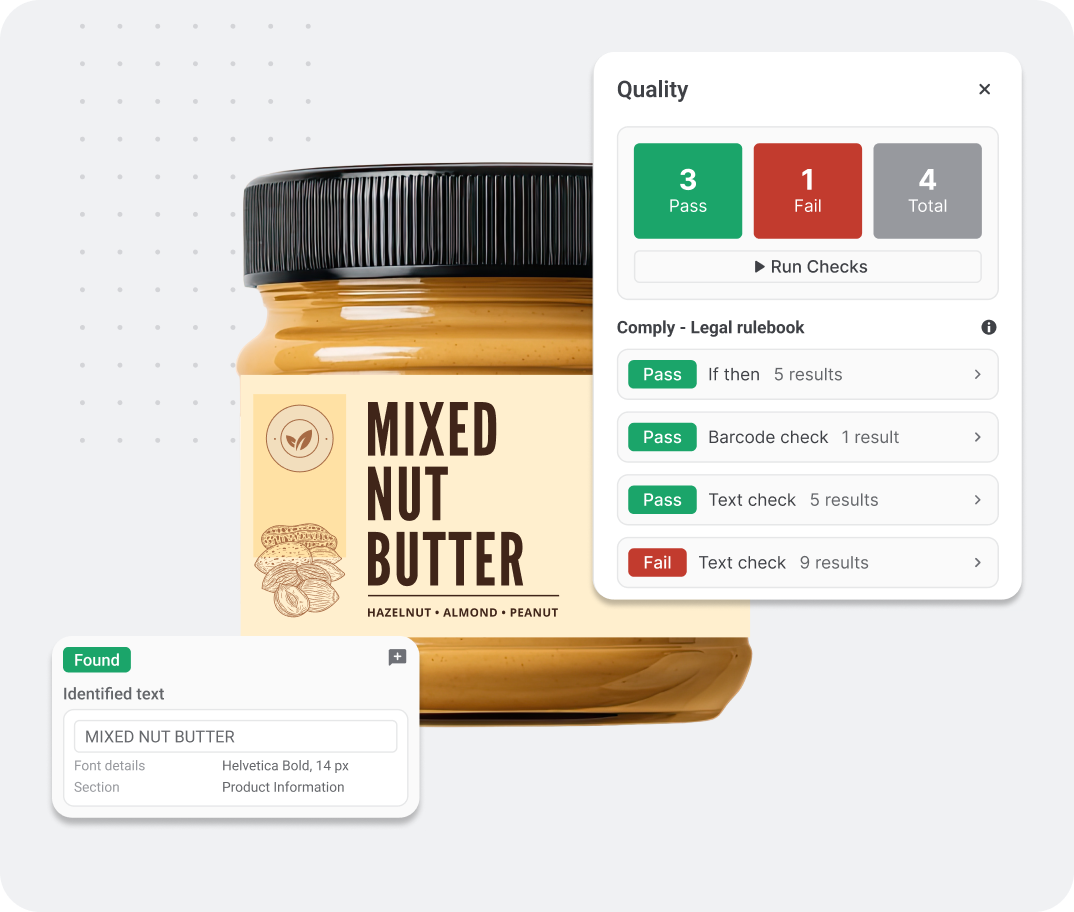
Comply is an AI-powered label compliance tool designed to run compliance checks on your packaging artwork. Be it a single artwork or thousands, Comply can scan the pack within seconds and flag errors.
To run these checks, you need to first add all your label requirements to the Comply module or the Rulebooks.
A Comply Rulebook is not your usual static document.
It is a set of customizable and enforceable rules inside that automatically scan artwork files and flag risks.
A Comply Rulebook acts as your brand’s central compliance brain. It defines:
- Allowed and restricted claims
- Mandatory statements by market
- Visual and layout constraints
- Font size minimums
- Ingredient and allergen logic
- Nutrition panel structure
- Symbol usage
- Country-specific nuances
And most importantly, it links every rule directly to the artwork review process.
Your team no longer asks, “Did anyone check this?”.
They see compliance happening in real time.
Just like ChatGPT needs a prompt to understand what you’re asking, Comply needs a rulebook to understand what ‘right’ looks like.
How to Build Your F&B Comply Rulebook
Here’s your step-by-step guide to building your own flexible F&B rulebooks.
Before you start creating your rulebooks, define the category they apply to.
Begin by documenting:
- The product category and sub-category (snacks, beverages, dairy, supplements, etc).
- The markets where the product will be sold.
- The required languages on the pack.
- The pack formats this rulebook covers.
This ensures the same rulebook is not blindly applied to the wrong SKUs or regions.
Now, let’s explore each section of rules the Comply Rulebook covers:
1. Nutrition Facts Rule
What this rule checks
This rule validates whether your nutrition panel contains all mandatory sections such as declared nutrients, values, and Daily Value references required by food regulators.
Why this matters
Designers often copy older panels or reuse templates, which leads to silent omissions especially when regulations change.

2. Allergen Detection
What this rule checks
This rule scans the entire artwork file for the presence of any of the allergens, such as peanuts, milk, soy, eggs, etc.
Why this matters
This is one of the high-risk factors in any Food & Beverages pack. These rules prevent recall-level mistakes and ensure consumer safety.
3. Image Check
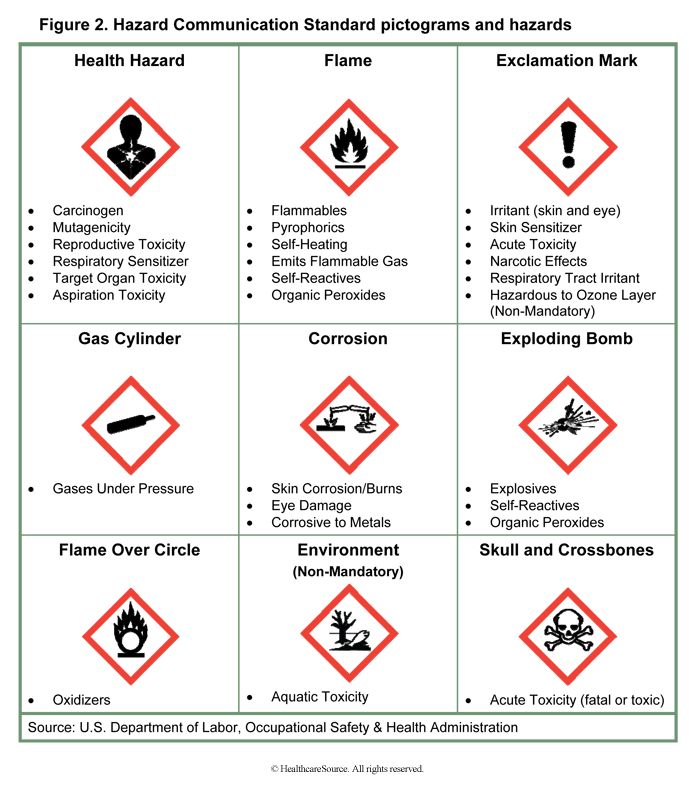
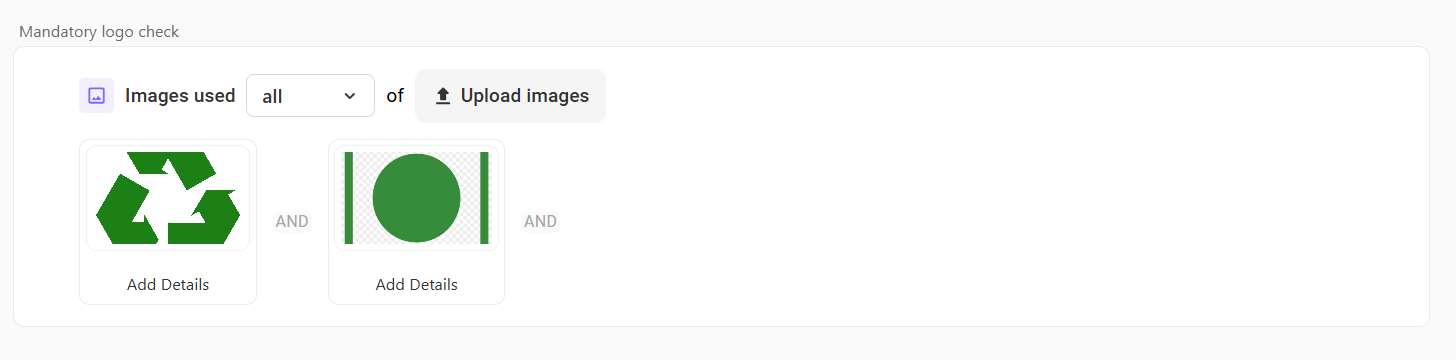
What this rule checks
It scans artwork images to ensure mandatory visual elements such as logos, certification marks, and product visuals are present, while also flagging banned or outdated imagery.
Why this matters
Brands often reuse old pack images or creative assets that can result in regulatory violations, trademark issues, and shelf rejection.
4. Formatting & Layout Rules
What this rule checks
It validates that compliance-critical text meets mandatory font style (for e.g., Helvetica Regular for Serving size) and minimum font size, and placement standards.
Why this matters
Information can be legally present yet still illegal if unreadable.

5. Storage and Expiry Declaration Rules
What this rule checks
It verifies that mandatory storage conditions and a valid shelf-life statement (Use By / Best Before) are present on the pack, and blocks approval if either is missing.
Why this matters
Missing storage or expiry information increases food safety risk, exposes the brand to compliance issues, and can lead to unsafe product consumption.

6. Marketing Claims
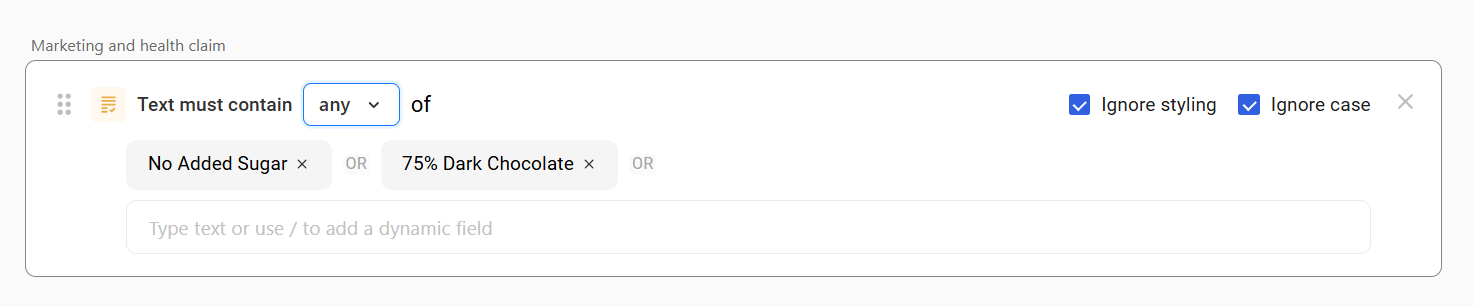
What this rule checks
It detects that every marketing claim on the pack is permitted and accurate.
Why this matters
Unverified claims are one of the biggest causes of regulatory action, consumer mistrust, and forced reprints.
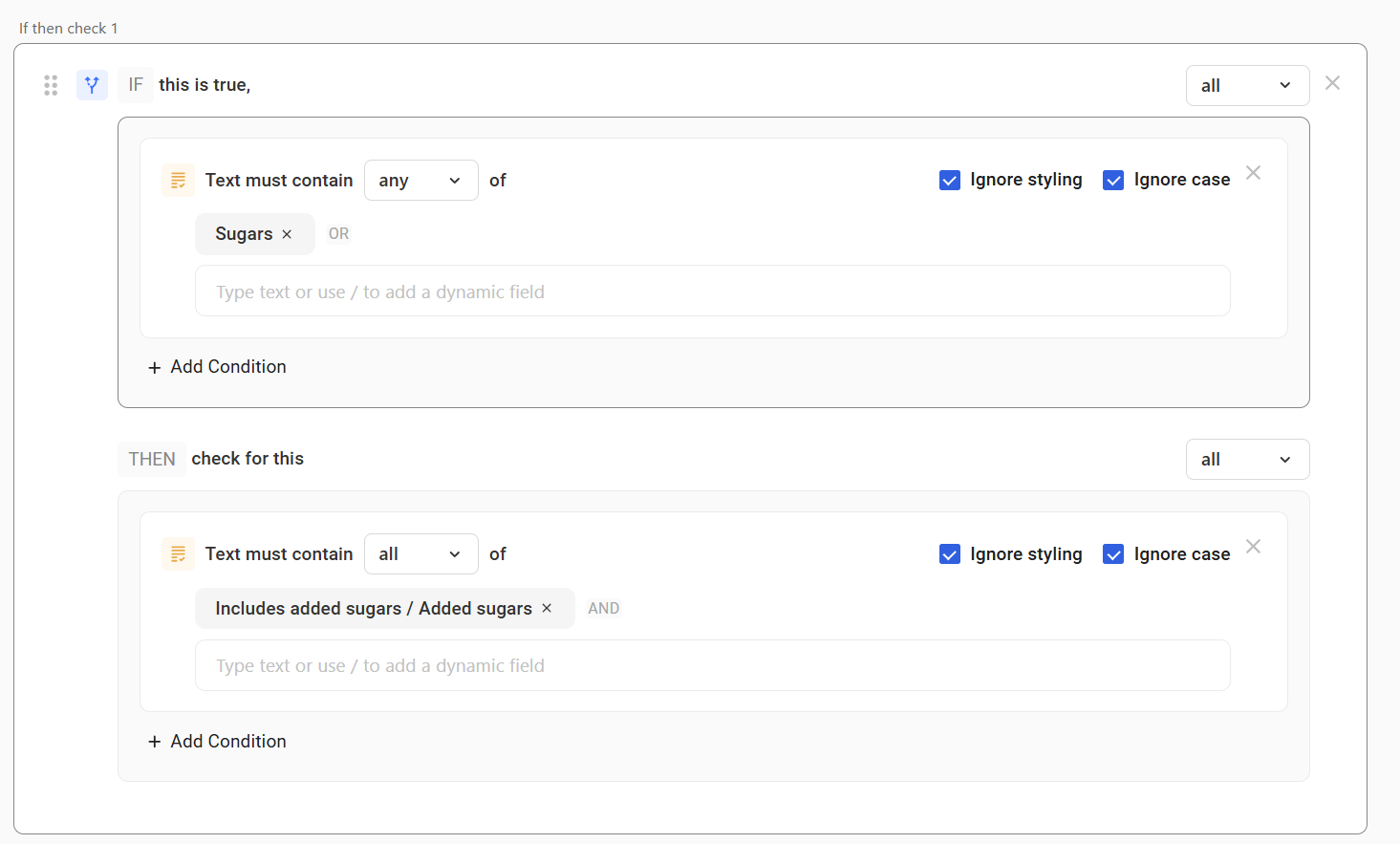
7. Conditional Logic (IF Rules)
What this rule checks
It shows dependencies between pack elements and ensures required follow-up information appears automatically.
Why this matters
Most compliance failures happen when teams forget hidden dependencies across ingredients, claims, markets, or pack formats.
8. Barcode Scanner
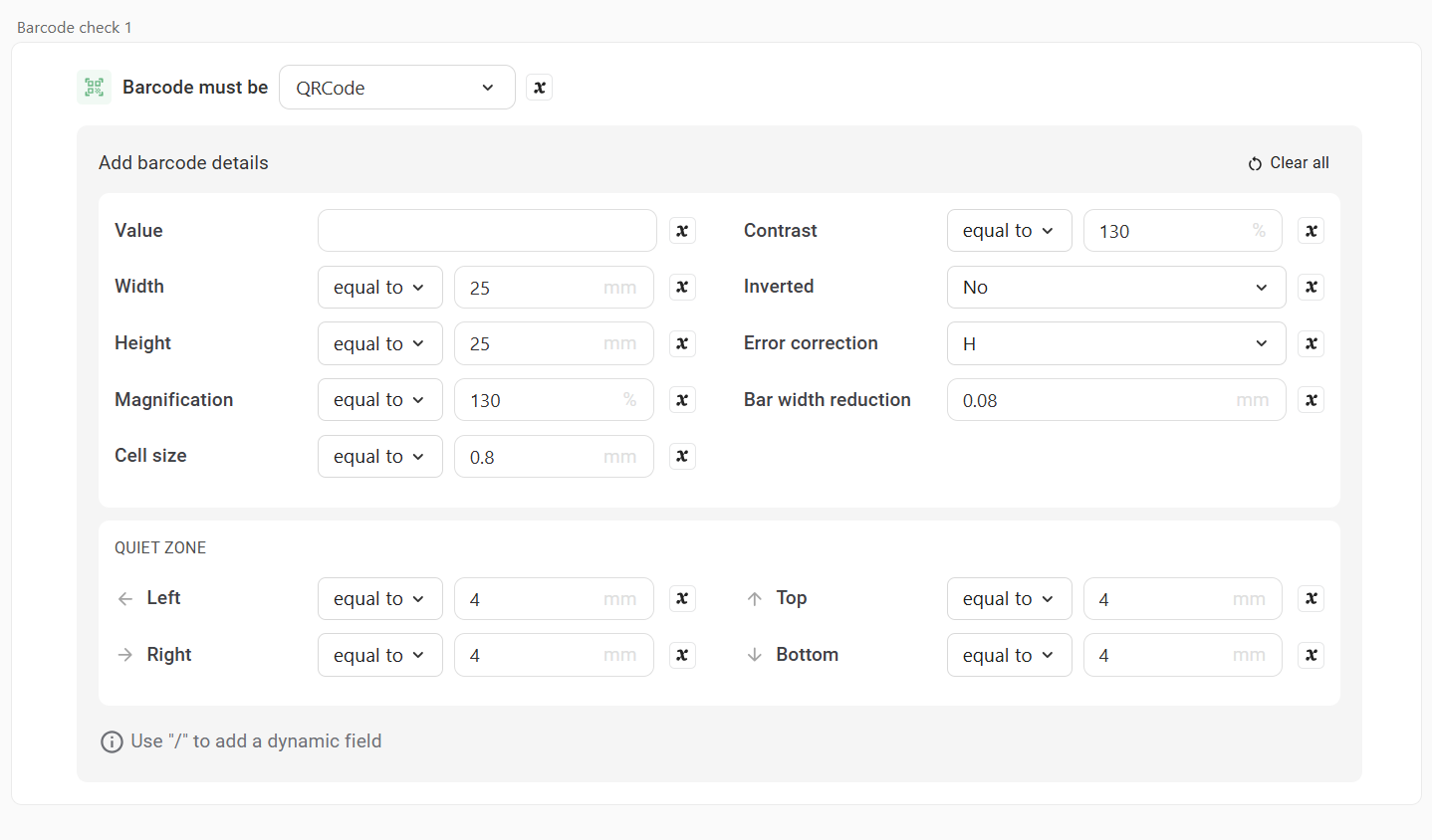
What this rule checks
It validates that the barcode type and encoded data match SKU and market requirements, ensuring correct product identification across the supply chain.
Why this matters
A barcode that doesn’t scan can break retail distribution or product traceability.
9. Nutrition Facts Table Check
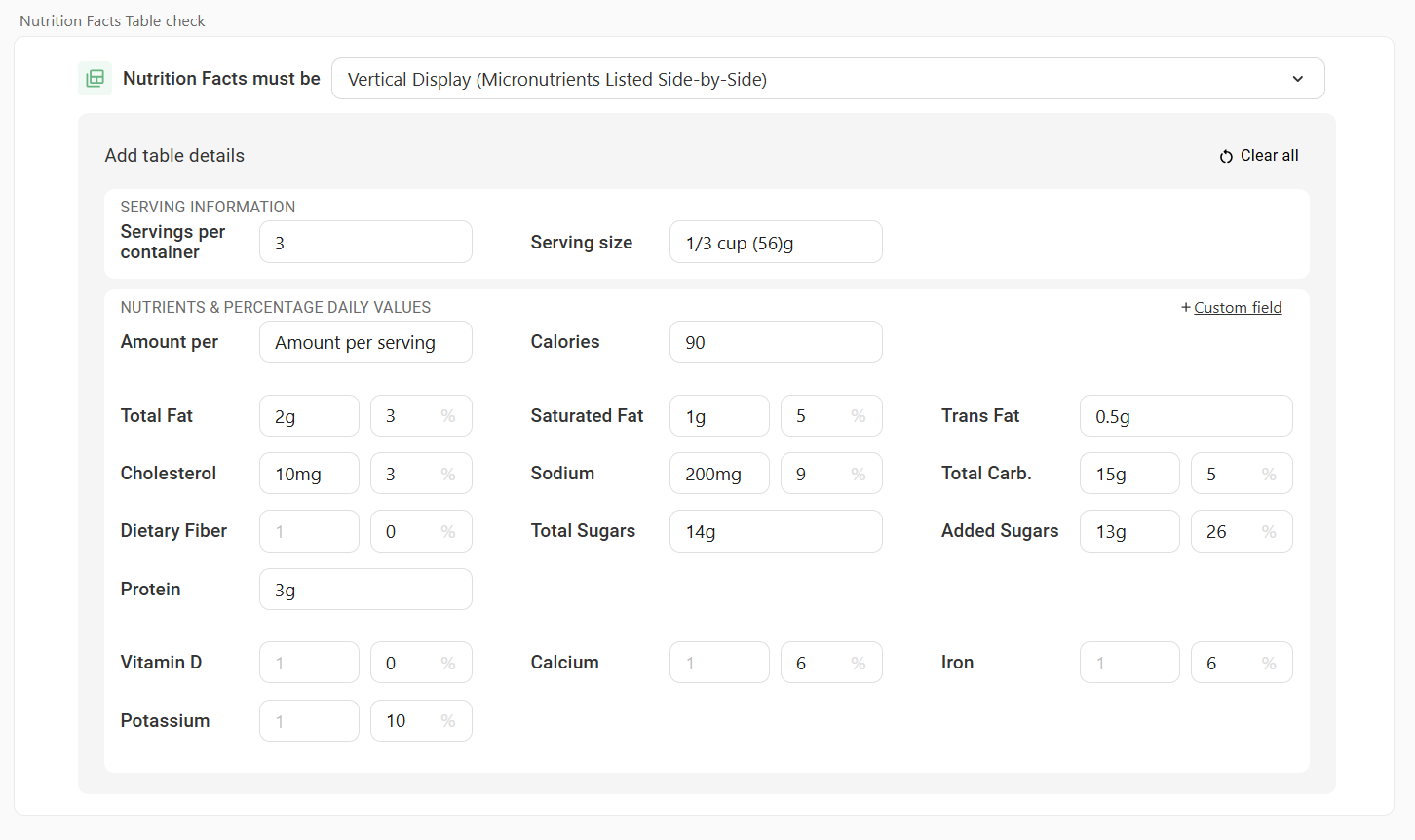
What this rule checks
It verifies that the nutrition facts table follows the approved layout (for example, vertical display with micronutrients listed side-by-side) and that all mandatory nutrient fields, units, and % Daily Values are present in the correct structure.
Why this matters
Even when the nutrition data is correct, an incorrect table format can make the pack legally non-compliant, cause regulatory rejection, and delay product launches.
10. Spell Check
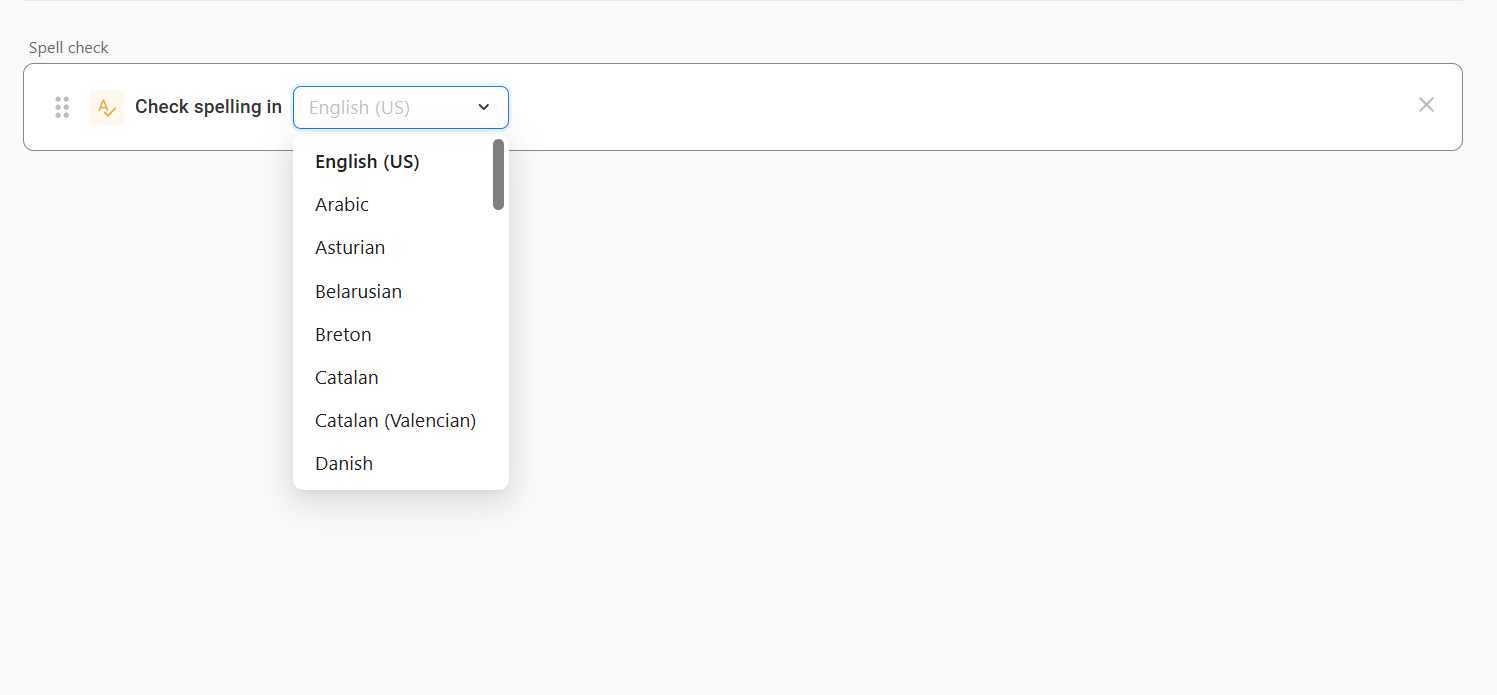
What this rule checks
It scans all artwork text across 35+ languages to detect spelling errors in legally sensitive terms such as allergens, claims, and safety statements.
Why this matters
Spelling mistakes don’t just look unprofessional in food packaging. They can change meaning, invalidate claims, and trigger regulatory objections.
Ultimately, you can set up your rulebook in a way that covers rules from general spell checks and mandatory regulatory requirements to advanced logical checks.
How Comply works
Now that your rulebook is ready, it’s time to run it against your respective food and beverage packaging artwork.
A key benefit of Comply is its integration with WebCenter Go for growing brands and WebCenter Enterprise for complex packaging operations. This allows you to run AI-powered label checks on every artwork file directly within your live packaging workflow, using the exact rules and conditions you’ve defined.
Once triggered, your rulebook scans the artwork in real time, highlights deviations and errors, and lets you comment or tag stakeholders in the same workspace for quick escalation.
Start Building Your Comply Rulebook
The Comply Rulebook is your team’s guide to staying compliant when you have several F&B packs of various SKUs. When your rulebook lives inside your packaging workflow, compliance stops being a last-minute scramble and becomes a built-in behavior.
It helps packaging teams move faster, errors surface earlier, and regulatory checks no longer depend on who happens to be reviewing the file that day.
So, whether you’re looking to scale your portfolio with advanced quality assurance and minimal setup, or maintain compliance in multi-brand, multi-market operations, Comply Rulebooks make it easier. Contact us to learn more.