
Written by Alexandra Blanck
Content Manager, Esko
For years, sustainability in packaging has been driven by ambition.
Brands set voluntary goals. Marketing teams highlighted recyclable materials. Innovation teams explored lighter formats. Progress was measured in percentages and press releases.
However, that era is ending.
Sustainability is now being defined by regulation, and regulation is becoming increasingly specific, detailed, and enforceable.
Across Europe and North America, packaging requirements are tightening, reporting is expanding, and fees are being modulated.
This means one thing: data is being scrutinized.
The question is no longer whether sustainability matters. The question is whether your packaging data, workflows, and supply chain are ready.
Recent discussions during Unboxing Live: The Virtual Packaging Summit made one thing clear: compliance is no longer a downstream reporting exercise. It’s becoming embedded into packaging design, procurement, and development decisions from day one.
Regulation is Setting the Direction
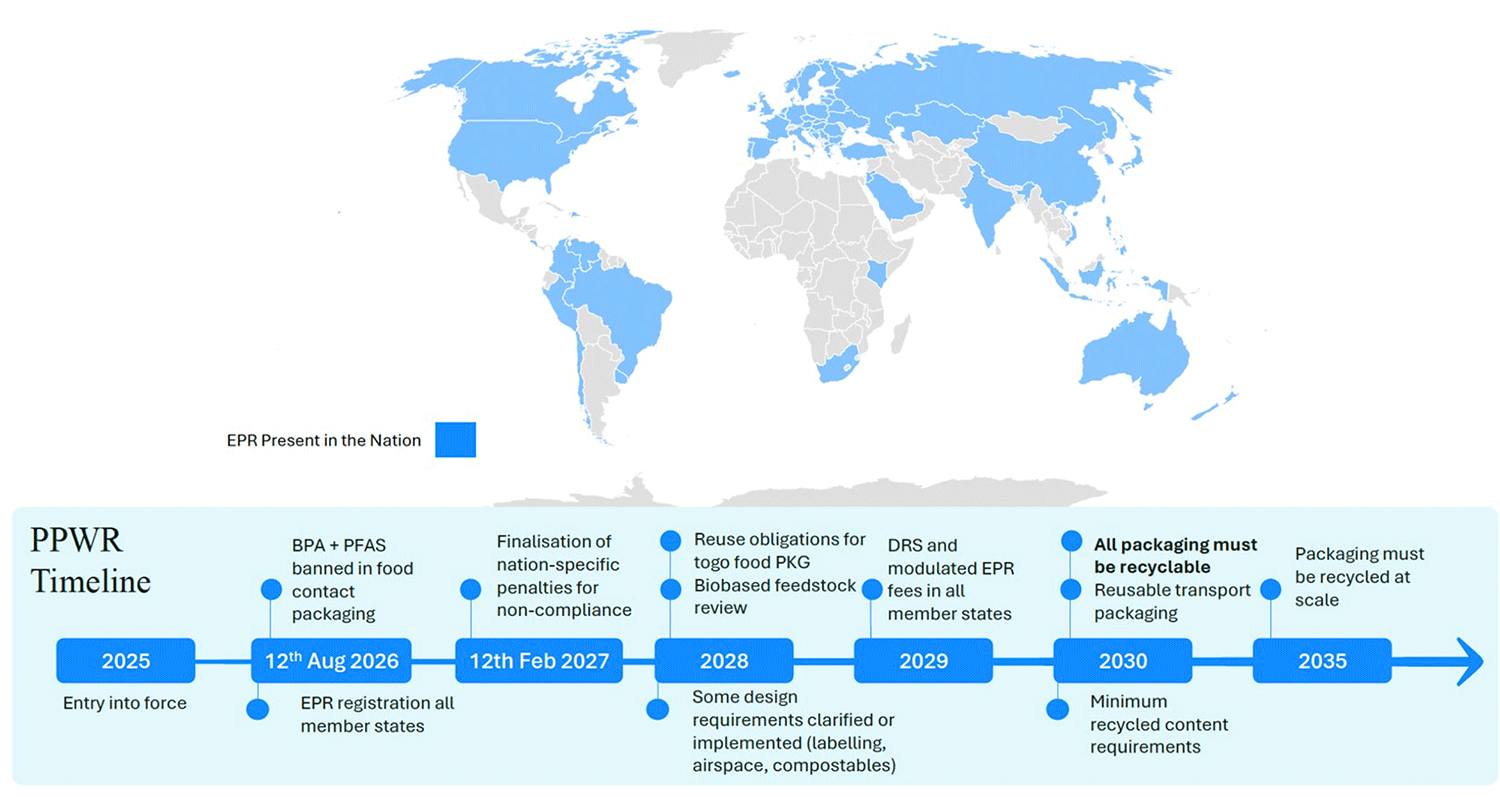
In the EU, the Packaging and Packaging Waste Regulation (PPWR) has introduced binding waste reduction targets, recyclability requirements, recycled content thresholds, reuse mandates, and mandatory Extended Producer Responsibility (EPR) fees, with milestones stretching from 2026 through 2040.
This is not a short-term compliance cycle. It is a long-term structural shift in how packaging must be designed, documented, and justified.
At the same time, the Ecodesign for Sustainable Products Regulation (ESPR) introduces Digital Product Passports (DPP), which will require structured, digital environmental information linked to products, including packaging. Environmental impact data, composition details, and disposal information will increasingly need to be digitally accessible and traceable.
In North America, EPR programs are expanding state by state and province by province. Requirements differ across jurisdictions, creating complexity. But they also introduce a consistent principle: companies are financially responsible for the end-of-life impact of their packaging.
Embedding sustainability drives not just regulations, but it also drives profitability.
That statement captures the dual reality brands now face.
Regulation is raising expectations, while creating economic signals that reward better packaging decisions.
The Real Pressure Point Isn’t the Law. It’s the Data
It’s tempting to think the challenge is regulatory interpretation.
But in reality, most organizations already understand the direction: reduce waste, improve recyclability, document material composition, and prepare for digital transparency.
The real pressure point lies in how packaging data is collected, structured, updated, and shared.
During the joint session on EPR and recyclability mandates, the current environment was described bluntly, “We have a tsunami of regulations and of requirements internationally.” –Vivian Loftin, Co-Founder, Recyda
On one side, regulatory requirements are becoming more detailed. On the other, many companies are still operating with fragmented data systems, disconnected tools, and manual reporting processes.
This disconnect introduces risk, including:
- Incomplete or outdated material data
- Inaccurate reporting
- Difficulty modeling EPR fees
- Delayed product launches
- Redesign efforts after compliance gaps are identified
PPWR requires declarations of conformity supported by technical documentation. Digital Product Passports require structured data that can be shared and verified. EPR schemes increasingly link recyclability performance to fee structures.
Without reliable, centralized packaging data, compliance becomes reactive and resource intensive.
With structured data embedded into workflows, it becomes manageable.
Data is the foundational layer to triangulate profits, business opportunities, whilst being compliant at all times.
Sustainability Cannot Be an Afterthought
If you take one thing away from this blog, let it be this: packaging end-of-life performance must be considered at the design stage, not after launch.
Traditionally, packaging design decisions have been driven by cost, functionality, shelf appeal, and manufacturability. Sustainability assessments often occurred later, during reporting or corporate review cycles.
That model no longer works.
When recyclability classifications, EPR fee implications, and regional regulatory differences are invisible during development, the consequences surface later, often at higher cost.
Esko partner Recyda’s platform addresses this by modeling recyclability and EPR rules across markets.
Their enterprise packaging sustainability platform consolidates packaging data and connects it with existing rules, regulations, and guidelines.
But sustainability intelligence only delivers value when it connects to packaging workflows.
That’s where integration becomes critical.
Bringing Sustainability Intelligence into Packaging Workflows
Many brands and converters already manage packaging specifications and collaboration processes digitally.
In fact, as shared during the session, several companies reported that their packaging data already sits within Esko systems.
By connecting WebCenter packaging data with Recyda’s regulatory and recyclability intelligence, companies can:
- Use existing structured packaging specifications
- Evaluate recyclability and EPR implications during development
- Identify potential fee impacts before launch
- Integrate sustainability checks into approval workflows
“We can already look at end-of-life of packaging as part of the development of packaging.” –Christian Knobloch, Co-Founder, Recyda
This changes the role of sustainability inside the organization.
Instead of a separate reporting task handled at the end of the year, sustainability becomes a decision variable during packaging design.
EPR Fees are Changing the Economics of Packaging
Extended Producer Responsibility introduces a direct financial signal into packaging decisions.
Recyclability is increasingly linked to cost. Eco-modulation penalties can increase fees, while improved material choices can reduce them.
That financial dimension changes internal conversations.
Packaging engineers, procurement teams, and sustainability leads now have a shared economic language.
When EPR fees are modeled accurately, companies can evaluate:
- Whether a material change reduces long-term fees
- Whether removing unnecessary components offsets cost increases
- Whether improved recyclability improves both compliance and cost structure
Sustainability becomes measurable and defensible in financial terms.

Planning Beyond the Next Deadline
PPWR introduces deadlines beginning in 2026, but its milestones extend to 2030, 2035, and 2040.
Material qualification, supplier coordination, testing, and consumer validation do not happen overnight. This makes long-term planning essential.
Short-term fixes may solve immediate reporting needs. But packaging portfolios need structured roadmaps that align with regulatory milestones.
Digital systems make this possible by allowing organizations to:
- Establish packaging baselines
- Model regulatory exposure across markets
- Prioritize high-impact changes
- Phase investments logically
This is not about reacting to one regulation at a time. It is about building a structured approach that can adapt as requirements evolve.
Sustainability is a Team Sport
No brand can meet these requirements alone.
Raw material suppliers, packaging converters, brand owners, retailers, and regulatory intelligence providers all contribute to the data chain.
Converters that provide structured sustainability data and proactive regulatory insight strengthen their relationships with brand customers.
Service providers that connect design workflows with recyclability and EPR modeling create additional value.
A Clear Direction
Sustainability in packaging is now defined by regulation, reinforced by financial incentives, and operationalized through data.
The organizations that embed sustainability into everyday packaging decisions will be best equipped to respond.
Not because sustainability is fashionable, but because it is now fundamental to how packaging operates in regulated markets.
Want to understand how PPWR, EPR, and DPP will impact your packaging portfolio? Watch the Shaping Packaging’s Sustainable Future session here.
Curious how to embed recyclability and EPR modeling directly into your packaging workflow? Explore the Esko + Recyda session here.