
Written by Alexandra Blanck
Content Manager, Esko
By the end of 2027, retailers are expected to be able to scan 2D barcodes at point of sale.
That deadline alone is enough to get the industry’s attention.
But if this shift is framed as simply “replacing the UPC with a QR code,” we’re missing the bigger picture.
What’s happening right now isn’t a just barcode upgrade.
It’s a redefinition of what packaging does.
For decades, packaging carried static information. A 1D barcode handled checkout. Printed text handled compliance. Marketing handled engagement separately. Traceability, authentication, and sustainability data lived in different systems.
2D codes collapse all of that into a single, connected layer. And that changes everything.
For many companies, the migration to 2D barcodes represents one of the most significant packaging shifts since the adoption of the UPC.
These insights were explored during the webinar “Decoding Compliance: The Future of Smart Packaging,” where experts from Esko, GS1, Scantrust, and Videojet discussed what the migration to 2D barcodes means for packaging, retail, and supply chains.
Let’s take a closer look.
2D Codes Are Becoming Infrastructure, Not Decoration
The migration to 2D is being coordinated across retailers, standards bodies, and solution providers.
By the end of 2027, 2D barcodes would be able to scan at point of sale.
That’s not a pilot. That’s a structural shift.
But the real story isn’t the deadline. It’s what these codes can carry.
A single 2D code — whether QR, GS1 DataMatrix, or DataMatrix with Digital Link — can now serve multiple purposes simultaneously, including:
- Point-of-sale scanning
- Consumer engagement
- Nutritional and allergen disclosures
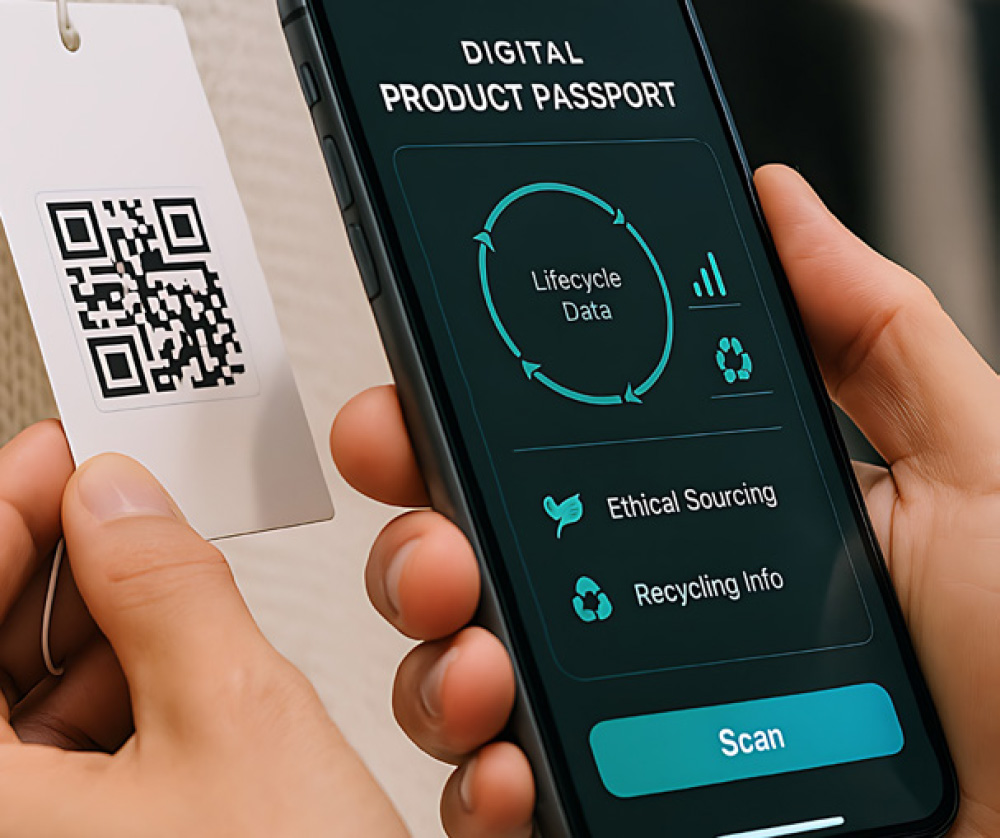
- Sustainability and recycling information
- Digital Product Passport readiness
- Supply chain traceability
- Product authentication
- Regulatory compliance
In fresh food, 2D scanning already helps retailers manage expiry dates, reduce waste, and improve food safety.
In wine and spirits, QR codes now link to mandatory nutritional and ingredient disclosures across Europe.
In healthcare, 2D codes have long been used for serialization and safety.
The center of the store is next.
This is not about adding another QR code “for marketing.” It’s about replacing fragmented, single-purpose codes with a unified digital gateway.
The barcode is moving from just a scanner trigger to digital infrastructure.

Compliance is Driving 2D Adoption, but Growth is the Real Opportunity
When regulations enter the conversation, whether it be Digital Product Passports, FSMA 204, or extended producer responsibility, most companies think in terms of cost and risk.
They see more labeling requirements, more reporting, and more complexity.
But the companies that are leaning into connected packaging are discovering something different.
Those who are using connected products properly are seeing it become a profit center.
The shift from cost center to profit center is the real inflection point.
Connected packaging platforms allow brands to:
- Engage consumers directly through scans
- Deliver region-specific content automatically
- Monitor distribution flows
- Detect grey market activity
- Authenticate products to combat counterfeiting
- Capture valuable scan data at scale
This means that every scan becomes a data point. For example:
Where was the product scanned?
When?
Was it authentic?
Which market?
What content was served?
Instead of packaging being the end of the conversation, it becomes the start of one.
Compliance may have accelerated adoption. But growth, transparency, and direct consumer connection are what make the business case compelling.
Smart Packaging Requires Smart Workflows
It’s easy to talk about what 2D codes do for companies.
It’s harder to talk about what it takes to execute them at scale.
Because this isn’t as simple as generating a QR code and placing it on artwork.
GS1 Digital Link 2D codes must be constructed accurately. Regional redirection rules must be configured correctly. Serialized products must be managed with precision. Regulatory content must align with geography. Consumer-facing experiences must remain consistent globally.
And all of it must survive cross-functional approval.
On top of that, manual processes introduce risk at every step, including:
- Incorrect data strings
- Misaligned GTINs
- Mismatched redirection logic
- Inconsistent language content
- Artwork version errors
Automation becomes essential. As Dries Vandenbussche, Senior Director of Global Partner Strategic Development at Esko, noted during the session, “Automation will be essential to be successful in this journey.”
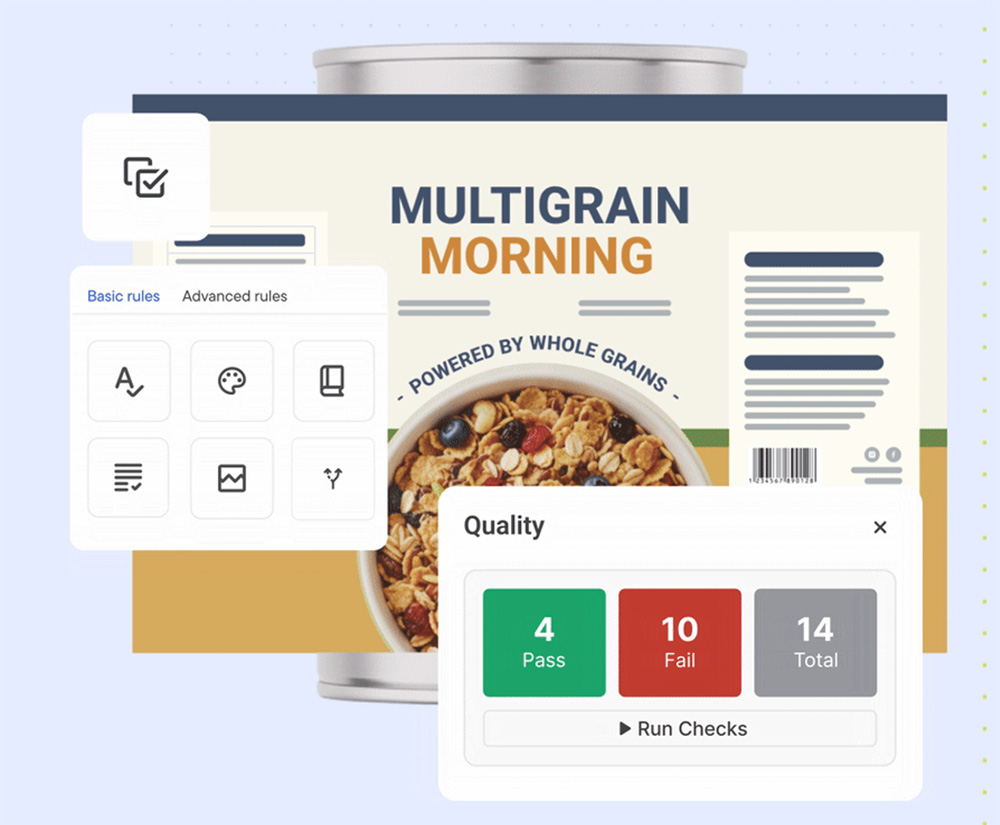
From artwork management to code generation to digital validation, connected workflows are what make 2D adoption scalable.
Without automation, complexity compounds quickly. With it, brands can move from isolated tasks to orchestrated processes, from code creation to production to consumer engagement.
This is where smart packaging goes beyond a mere concept to become a system.
Why Printing & Production Matter for 2D Barcode Adoption
Strategy happens in the boardroom.
Execution happens on the production line.
That’s where many 2D discussions become more nuanced.
Printing 2D codes at scale introduces variables that don’t exist with traditional 1D barcodes. For example:
- Code version size and data density
- Substrate compatibility
- Ink vs. laser considerations
- Color limitations
- Product movement during printing
- Scanner illumination (often red)
- Placement relative to existing UPCs
- Even the content inside the code matters.
QR codes expand in “versions” depending on how much data they contain. More data means more modules (the small squares that form the code), which increases physical size.
Rationalizing code structure can reduce size, which frees up valuable packaging real estate and improves checkout performance.
Substrate choice also matters. Some materials respond differently to laser technologies. Some inks adhere better than others. Movement on the production line can distort machine-readable codes in ways that human-readable text would tolerate.
In other words: 2D adoption is as much an operational conversation as it is a strategic one.
The good news? It’s achievable.
Pilots across brands are proving that existing printing technologies can be adapted with the right planning and cross-functional alignment.
It requires early collaboration between packaging design, IT, standards experts, and production teams.
One Code, Multiple Markets
A common question is whether global markets will truly move information, such as nutritional data, and visible packaging to digital experiences.
The reality is nuanced.
There will be regional differences. Some markets will embrace e-labeling faster than others. Some will require hybrid models.
But the flexibility of QR codes changes the dynamic.
- A single printed code can:
- Redirect to French nutritional pages in France
- Serve authenticity workflows in China
- Deliver marketing experiences in the U.S.
- Provide accessibility features for visually impaired consumers
- Adapt over time as regulations evolve
QR codes are dynamic. The printed code remains constant, but its digital destination can evolve.
That adaptability provides a layer of resilience.
Instead of redesigning packaging for every regulatory update, brands can update digital content and redirection logic, reducing physical change cycles.
In that sense, 2D isn’t just about compliance readiness. It’s about operational agility.
From Barcode to Business Driver
For years, packaging has largely been treated as a necessary cost. A vehicle to move product and satisfy regulation.
Now, however, 2D codes are changing that perception.
When properly integrated into workflows, connected to digital platforms, and supported by scalable automation, packaging becomes something more.
It becomes:
- A compliance enabler
- A consumer engagement channel
- A traceability anchor
- A brand protection mechanism
- A sustainability data carrier
- A growth lever
You can move from packaging as being a cost center to packaging as a growth engine.
The shift doesn’t happen by accident. It requires standards alignment, digital infrastructure, workflow automation, production planning, and cross-industry collaboration.
But the direction is clear. The migration to 2D is underway. Retailers are preparing. Regulations are accelerating. Consumers are already scanning.
The question is no longer whether 2D will become the norm.
The question is whether your packaging ecosystem — from design to data to production — is ready to support what those codes can now do.
Because once the barcode becomes infrastructure, packaging evolves beyond a label.
It becomes a digital touchpoint. And that’s a much bigger opportunity.
Want to dive deeper into the shift to 2D barcodes and connected packaging? Watch the full webinar replay here.