Skip to content
English
My AccountCart
Artwork Management

Your Holiday Packaging Season Starts Now (Don’t Let It Become Your Brand’s Biggest Risk)

Mitha Shameer headshot

Written by Mitha Shameer

Content Specialist, Esko

If you’re reading this in June or July, you’re already thinking about Q4. You’ve been through enough seasonal campaigns to know what a late start costs: the compressed timelines, the stakeholder pile-on, and the last-minute regulatory flag right before a print deadline.

A festive tin, a limited-edition Halloween sleeve, or a Chinese New Year gift set carries the same compliance weight as any year-round SKU, just with half the runway and twice the regional complexity. It’s no coincidence that labeling issues accounted for roughly one-third of all FDA food and beverage recalls in Q2 2025.

So, this isn’t about convincing you that holiday packaging is risky. You already know that. The real question is whether the process you have in place today can actually handle what’s coming.

The Window Is Shorter Than It Looks

Nearly 80% of holiday gift spending happens before Cyber Monday, and  64% of consumers plan to start shopping before Halloween. Work backwards from an October shelf date and a seasonal artwork cycle involving multiple regions, languages, and regulatory reviews typically needs 12 to 16 weeks minimum.

If you’re managing multiple holiday cycles (Halloween, Diwali, Chinese New Year, year-end gifting), those timelines stack on top of each other. You’ve probably already felt what that overlap does to a team. This year, the goal is to get ahead of it before it gets ahead of you.

Why Seasonal Campaigns Break Processes That Work Fine the Rest of the Year

The errors that derail seasonal campaigns are usually information management failures, and they happen to good, experienced teams under the specific conditions that seasonal campaigns create.

Under those conditions, even teams with strong year-round packaging processes become more vulnerable to compliance gaps, missed updates, approval bottlenecks, and labeling errors during their busiest season.

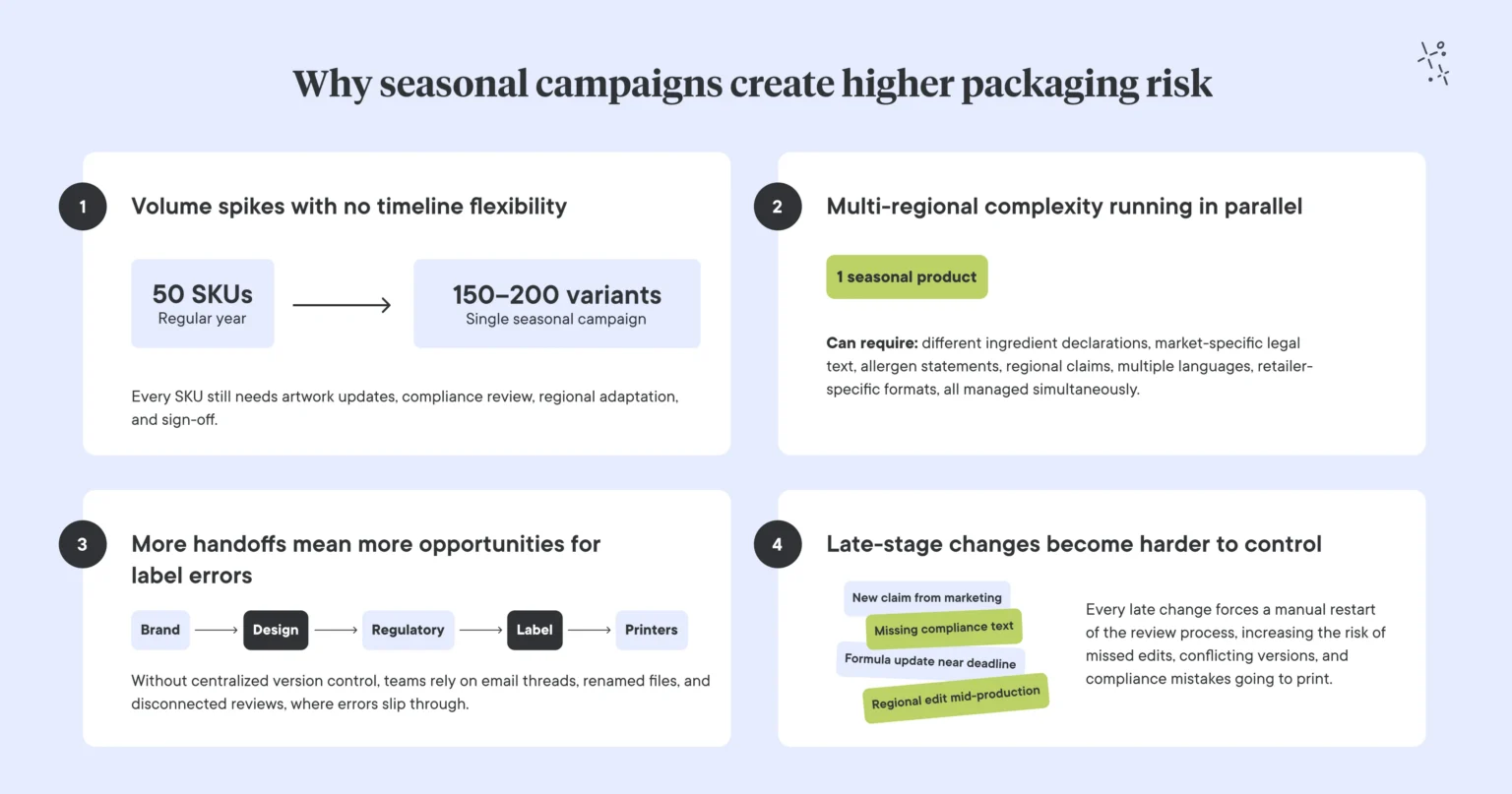
1. Volume spikes with no timeline flexibility

Seasonal campaigns dramatically increase packaging workload in a very short period of time. A brand managing 50 active SKUs year-round may suddenly need to process hundreds of festive or regional variants within a single campaign cycle.

And unlike regular launches, holiday timelines are fixed. Packaging delays do not simply postpone a campaign. Missing a retail window for Halloween, Diwali, or Lunar New Year can mean losing an entire season of revenue.

Every SKU still requires artwork updates, regulatory review, market-specific adaptations, approvals, print validation, and production sign-off.

2. Multi-regional complexity running in parallel

Seasonal campaigns often run across multiple regions simultaneously, creating a surge in packaging variations. One festive product may require different ingredient declarations, market-specific legal text, updated allergen statements, regional claims, multiple languages, and retailer-specific packaging formats.

3. More handoffs means more opportunities for label errors

Seasonal packaging campaigns rarely stay within a single team. Brand, marketing, design, regulatory, legal, supply chain, production teams, printers, and external agencies are often reviewing files at the same time. Every new stakeholder introduces another approval layer, another feedback loop, and another opportunity for outdated artwork to move forward accidentally.

Without centralized version control, teams often rely on email approvals, shared drives, manually renamed files, and disconnected review processes.

That is when outdated claims, incorrect copy, or unapproved artwork versions start slipping into production.

4. Late-stage changes become harder to control

Seasonal packaging workflows are especially vulnerable to late changes.

Marketing may introduce a new campaign claim after approvals begin. Regulatory teams may flag missing compliance text. Ingredient or formula updates can arrive close to print deadlines. Regional teams may request market-specific edits midway through production.

In disconnected workflows, every late-stage change forces teams to manually restart parts of the review process. That increases the likelihood of missed edits, conflicting versions, approval delays, and compliance mistakes making it into print.

Where Compliance Errors Actually Come From

Most packaging compliance errors do happen because seasonal campaigns put pressure on processes that were never designed to handle that level of speed, complexity, and volume at once.

And the impact is significant. Labeling issues were the leading cause of US food recalls in 2024, accounting for nearly 45% of all recall events and an estimated $1.92 billion in direct costs. In January 2024 alone, the FDA issued 30 product recalls, 18 of which were linked to undeclared allergens or incorrectly declared ingredients.

The underlying issues behind these recalls tend to look very familiar across seasonal packaging campaigns.

Outdated legal text carried over from the standard SKU without anyone explicitly verifying it was updated for the seasonal variant.

Incorrect ingredient declarations because the product specification and the artwork live in separate systems with no automatic link between them. Someone updates the spec. Nobody updates the file.

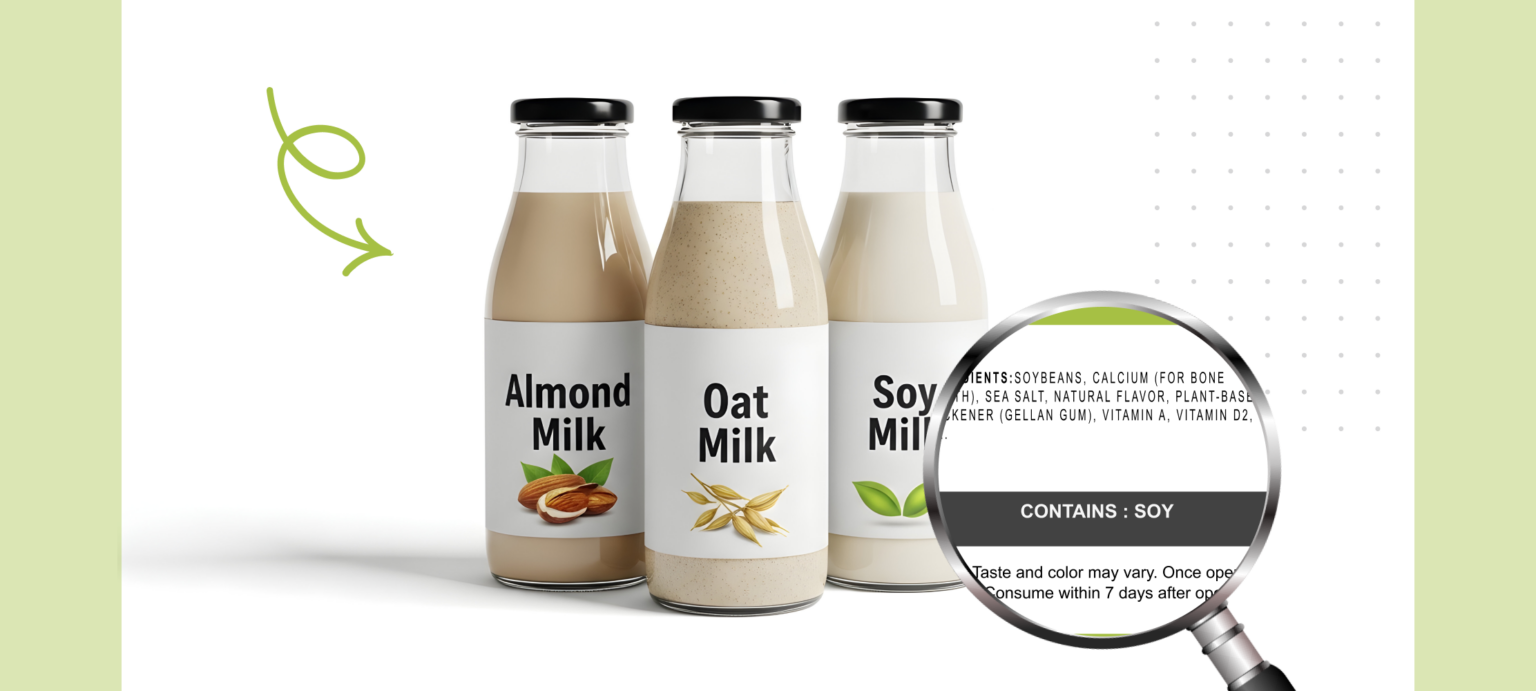
Allergen errors at the intersection of regional variants. The core product is the same. Regulatory requirements differ by market. A reviewer approves a label based on one market’s rules without recognizing the target region has different requirements.

Unapproved claims added by marketing after regulatory sign-off, without looping back through the compliance review.

Version control failures. Two versions of the same artwork circulate simultaneously. The wrong one gets approved. It happens more often than most teams want to admit, and it happens most often during high-volume seasonal campaigns when file management is least rigorous.

Tip: The most common seasonal artwork errors are not creative mistakes. They are information management failures. A compliance check tool that runs before human review begins will catch more of them than additional reviewers will.

Where Compliance Errors Actually Come From

A compliance error on a seasonal SKU does not just mean a reprint. It means a recall during your highest-revenue months.

The average direct cost of a CPG recall is $10 million, covering product retrieval, disposal, and regulatory fines, according to a Food Marketing Institute report. That figure does not include lost sales, legal exposure, or damage to brand equity, all of which can exceed the direct costs significantly over time.

For a seasonal product with a six to eight week selling window, a recall mid-season wipes out the entire commercial rationale for the campaign. The months of design work, supply chain coordination, and marketing investment can all be undone by an error that a better-designed process could have caught before the file went to print.

Building a Packaging Process That Can Handle Seasonal Campaign Pressure

The brands that manage high-volume seasonal campaigns successfully usually have one thing in common: they rely on structured, centralized workflows instead of disconnected manual processes.

1. Centralized Artwork with Version Control at the System Level

A centralized artwork management system gives teams a single source of truth for every packaging file, approval, and revision. Instead of relying on email threads, duplicated folders, or manually renamed files, teams can track exactly:

  • which version is current,
  • who approved it,
  • what changed,
  • and whether the artwork is production-ready.

This becomes especially important when late-stage updates happen across multiple regional variants at once.

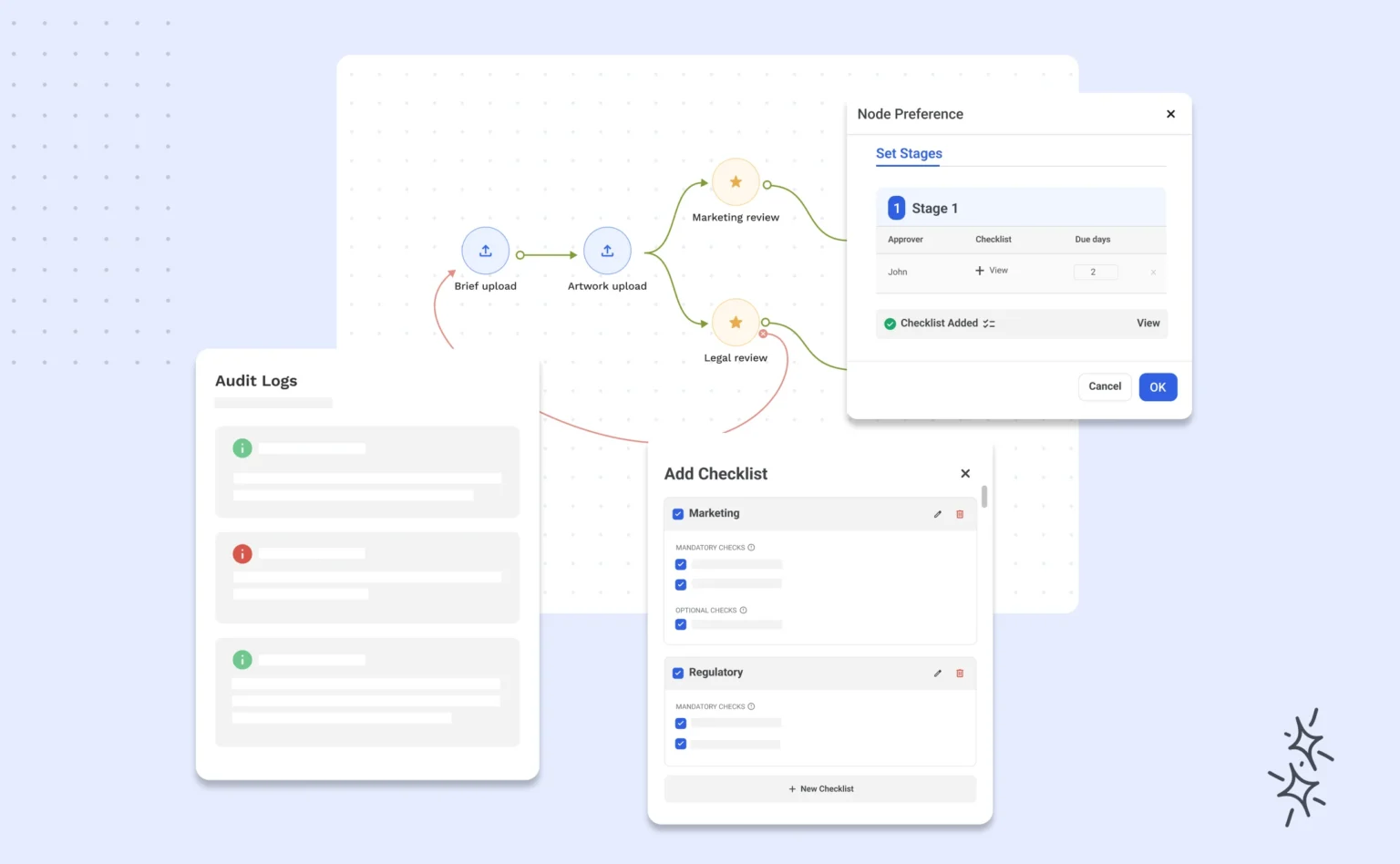
2. Structured Approval Workflows with Defined Stages and Accountability

Every seasonal SKU moves through the same process: briefing, design, compliance review, regional adaptation, sign-off, and print release. When something changes mid-cycle, workflows can automatically route artwork back through the right approval stages, notify stakeholders, and maintain a complete audit trail throughout the process.

That means fewer missed approvals, fewer bottlenecks, and significantly less manual coordination during peak campaign periods.

3. AI-led Compliance Checks Before Errors Move Downstream

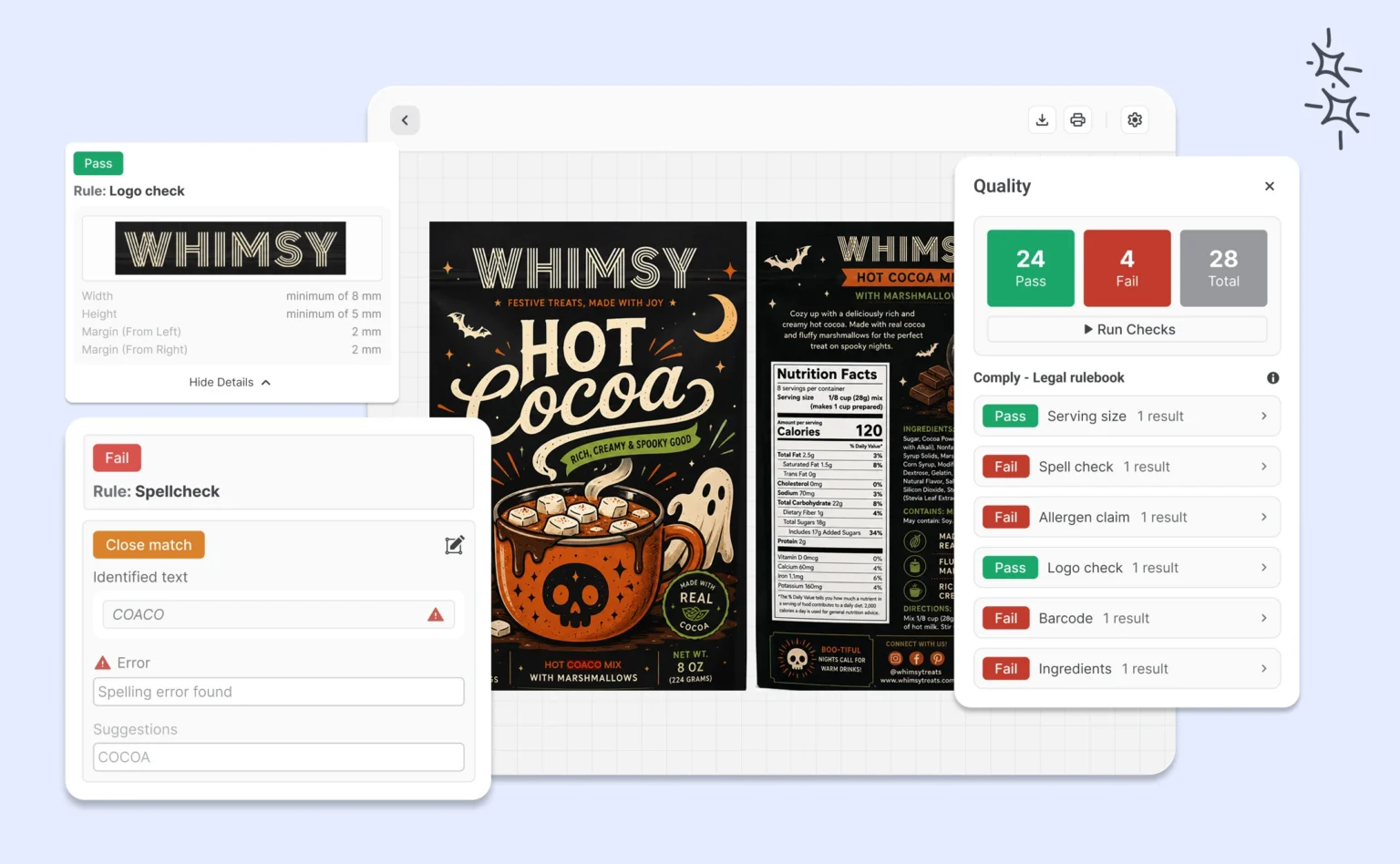
Comply scans artwork automatically and flags issues such as wrong claims, missing legal text, outdated ingredient declarations, incorrect allergen statements, and so on directly on the artwork. Think of it as a first pass that catches the predictable errors that manual review misses under time pressure. Given that labeling issues continue to be one of the leading causes of food recalls, identifying these risks earlier can prevent costly downstream errors.

4. Faster Proofing and Approvals Across Distributed Teams

Seasonal campaigns often involve marketing, regulatory, design, packaging, supply chain teams, printers, and external agencies working simultaneously.

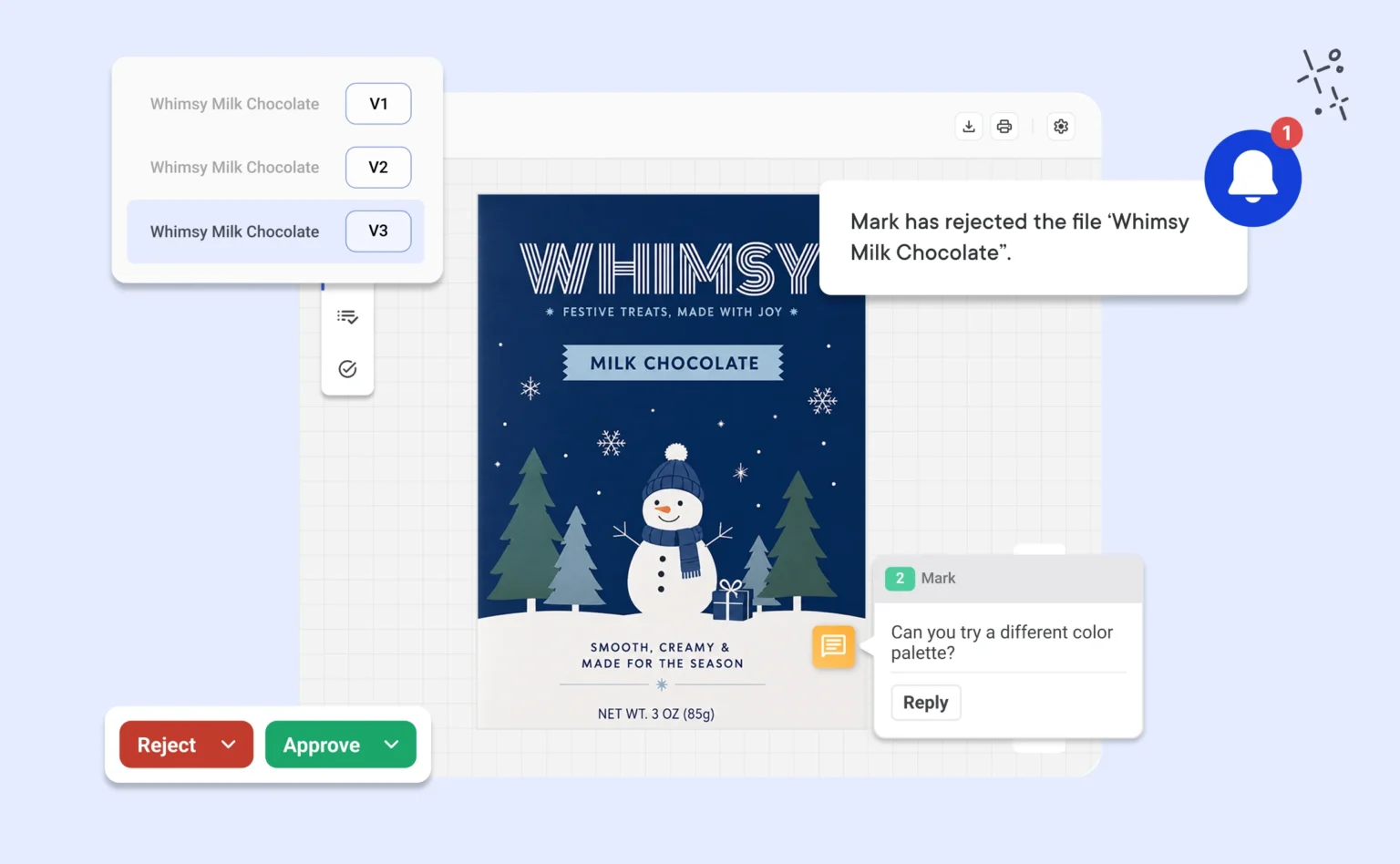
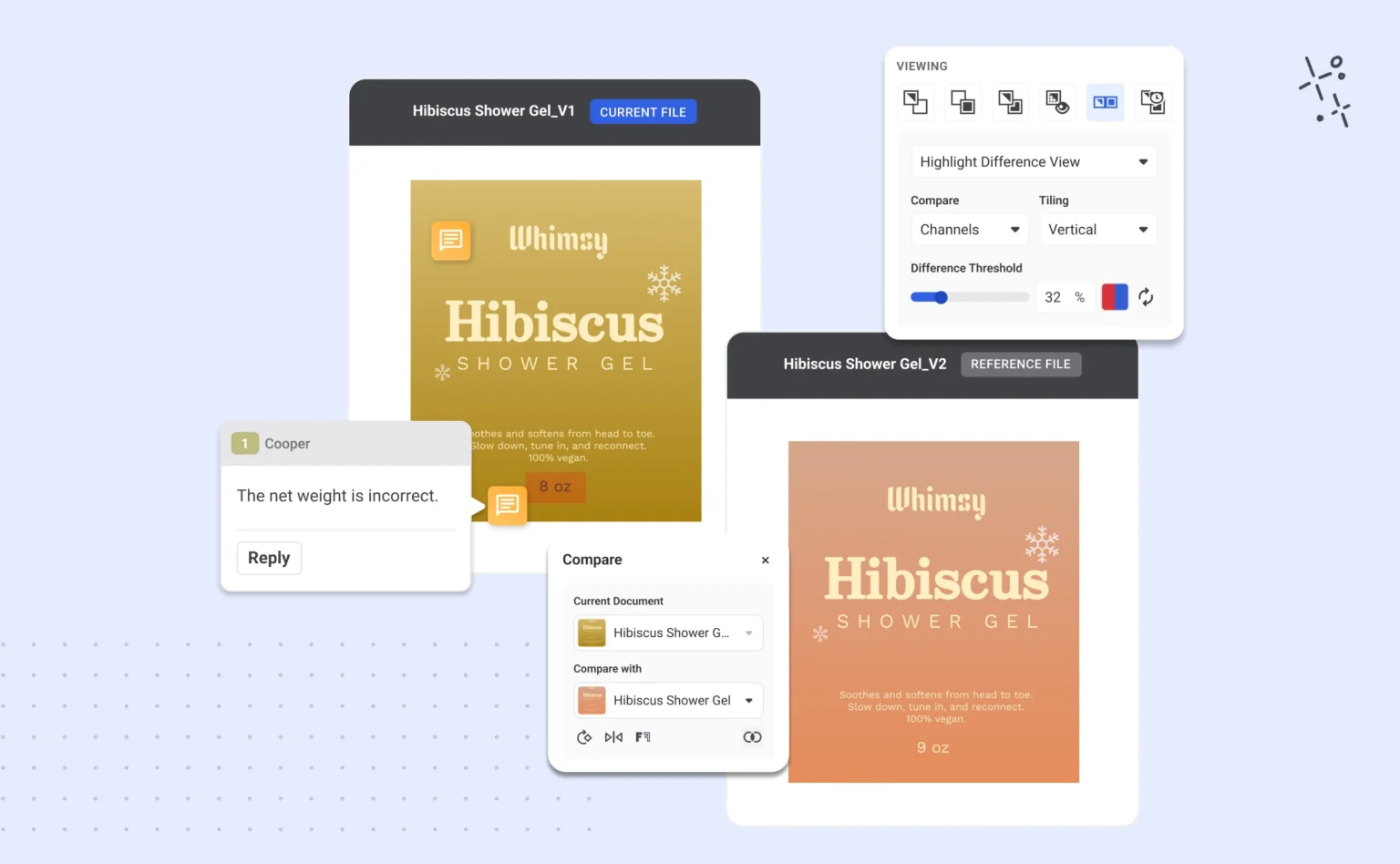
Online proofing tools simplify this collaboration by allowing stakeholders to review, annotate, compare versions, and approve artwork in one place instead of across scattered email chains.

This shortens approval cycles significantly while giving teams clearer visibility into what is pending, approved, or rejected.

5. Real-time Visibility Across the Full Campaign

As seasonal SKU counts increase, visibility becomes just as important as speed.

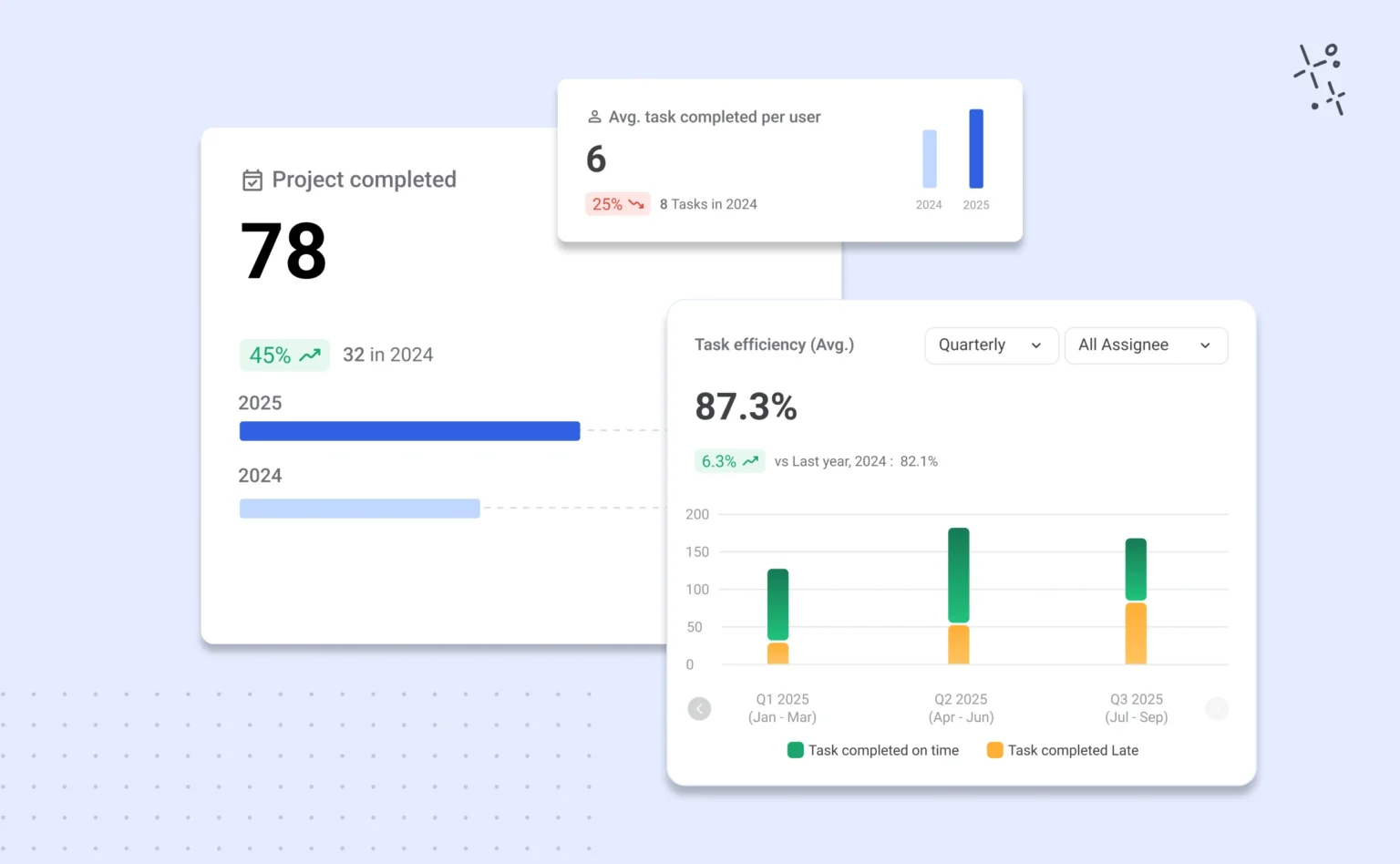
Dashboards, analytics, and reporting tools help teams monitor:

  • approval bottlenecks,
  • overdue tasks,
  • campaign progress,
  • workload distribution,
  • and high-risk deadlines.

Instead of reacting to delays after print windows are missed, teams can identify issues earlier and keep campaigns moving proactively.

Why Packaging Teams Are Moving Toward Structured Artwork Management

You already know your current process won’t scale through a high-volume seasonal campaign. The challenge is fixing it without a months-long implementation that disrupts the way your team works.

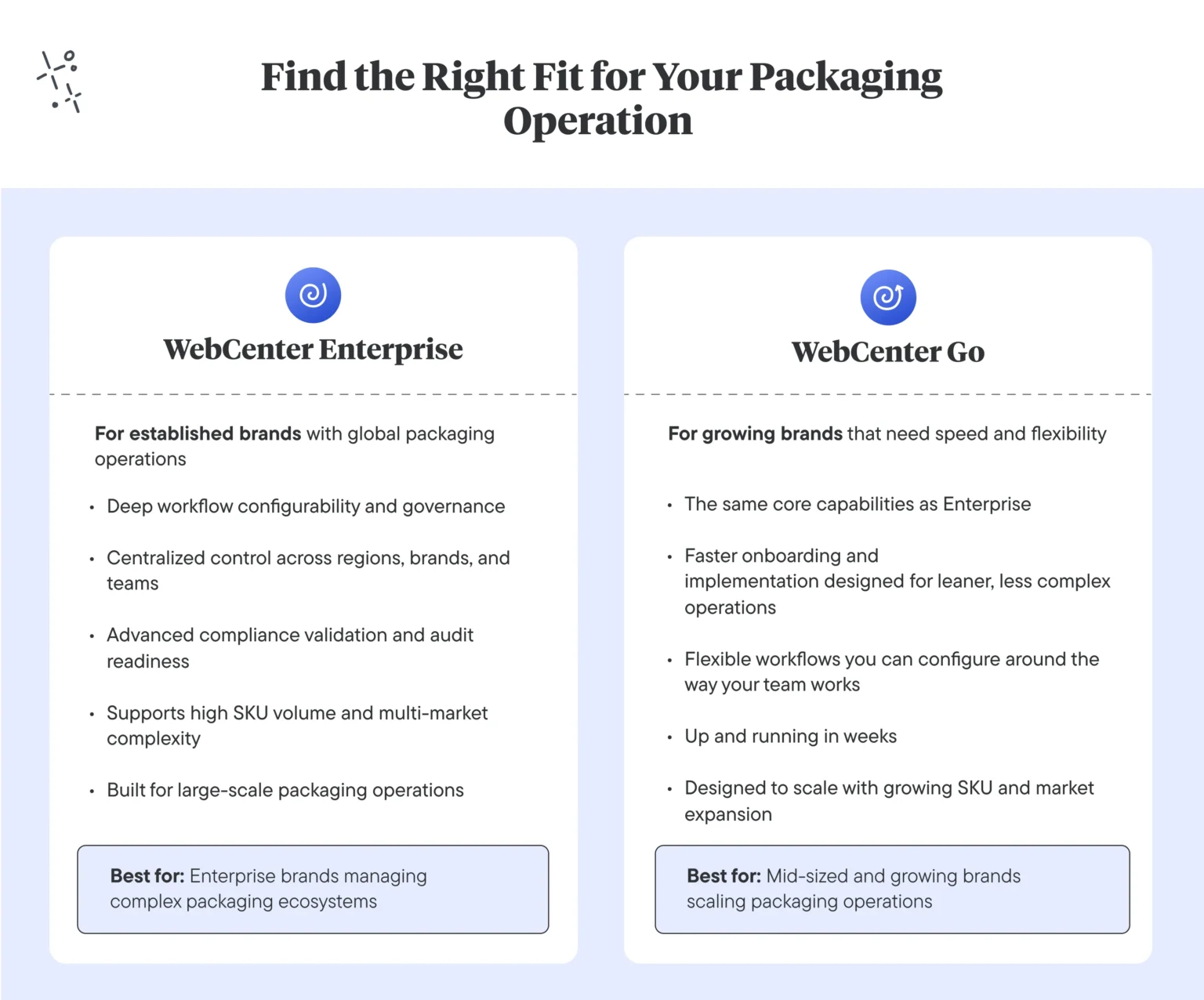
The right fit depends on your team’s size, SKU complexity, and regional footprint. What doesn’t change is the goal: a process built for seasonal volume, not one held together by manual coordination and individual vigilance under pressure.

Start Now, Not in September

If you’re still managing seasonal artwork across email threads, shared folders, and manual compliance reviews, this is the window to fix that before the campaign pressure starts.

Growing brand? Book a demo of WebCenter Go

Enterprise team? Book a demo of WebCenter Enterprise

About the Author

Mitha Shameer is a content specialist who writes for various SaaS platforms across Esko, bringing nearly six years of experience in writing. She’s passionate about creating content that resonates deeply with audiences and drives performance. When she’s not working on her next piece, she’s probably binge-watching crime documentaries or overthinking something she said five days ago.

Mitha Shameer headshot