

Written by Alexandra Blanck
Content Manager, Esko
Defining the Trend
For years, automation in packaging followed a predictable pattern: rule-based systems built around pre-defined templates, workflows, and extensive human input. Whether placing nutrition panels, resizing ingredient lists, or routing approvals, people dictated every step, with machines carrying out repeatable instructions. Early large language models (LLMs) offered some progress, but they were largely reactive— “sentence completers” that responded to prompts without the ability to be creative.
Agentic AI marks a clear departure. Instead of waiting for input, agentic systems act autonomously using its learnings from the codified domain knowledge and analyzing data patterns. They have the capacity to reflect on a goal, take proactive steps, and execute a plan. David Crow, Director of Packaging Intelligence for Esko’s Packaging Lifecycle Management Platform, likens this to a travel agent, stating, “The key paradigm with agentic AI is the concept of agency—the ability to reflect on the goal given, take proactive steps, and execute a plan towards that goal. I often use the travel agent analogy because the traveler presents a goal, the agent then uses tools, proposes options, and acts on feedback to complete the task.”
Applied to packaging workflows, AI agents assess requirements, gather data, test possibilities, and move work forward with minimal handholding. They provide higher precision and speed in identifying data anomalies and patterns.
Srinivas Kuppa, Esko’s Chief Product Officer, explains the evolution this way: predictive AI focuses on data analysis for specific tasks (like barcode analysis), while multimodal generative AI offers broader, more interpretive capabilities using natural language and vision.
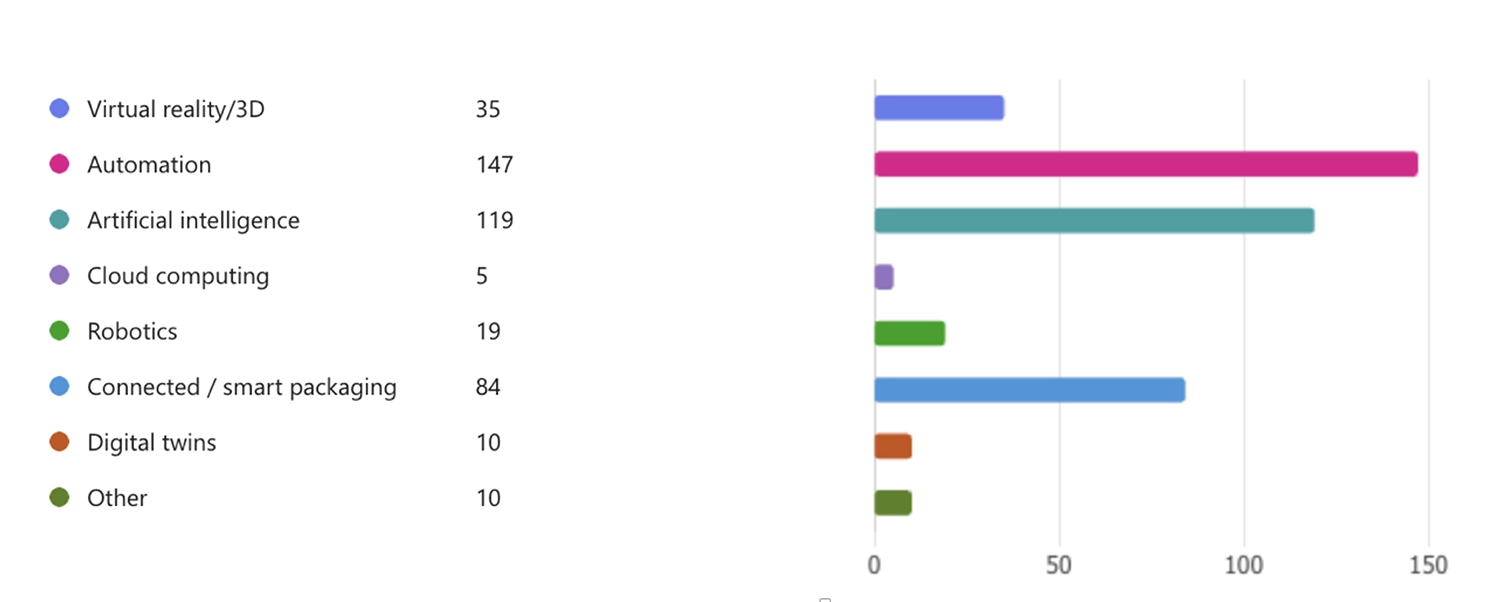
That shift is reflected in industry sentiment too. In Esko’s 2026 Packaging Trends Survey, 119 respondents identified artificial intelligence as one of the technologies with the greatest impact on packaging by 2026, second only to automation.
Today, agentic AI connects these steps into an adaptive, end-to-end workflow that not only executes tasks but learns from them. “Creating individual automation steps and then tying them together almost like the pearls of a necklace into an intelligent end-to-end workflow is very agentic. It significantly reduces human labor, lowers complexity, and captures the tribal knowledge that was previously stuck with people.” Kuppa said.
However, agentic AI varies in autonomy. Weak agents still wait for human initiation while strong agents can launch processes independently as seen in financial trading systems.
In packaging, the most relevant applications fall in between: workflows that define their own action plans, critique and refine them, and optimize continuously.
In short, Agentic AI represents a shift from machines executing instructions to workflows that actively improve themselves.
Why It Matters Now
AI has been a buzzword for the last several years. But the timing of the agentic AI conversation is no coincidence. According to KPMG, 33% of large enterprises now use agentic AI in production—up from just 11% only months earlier. Adoption is accelerating across industries, and packaging is primed to benefit.
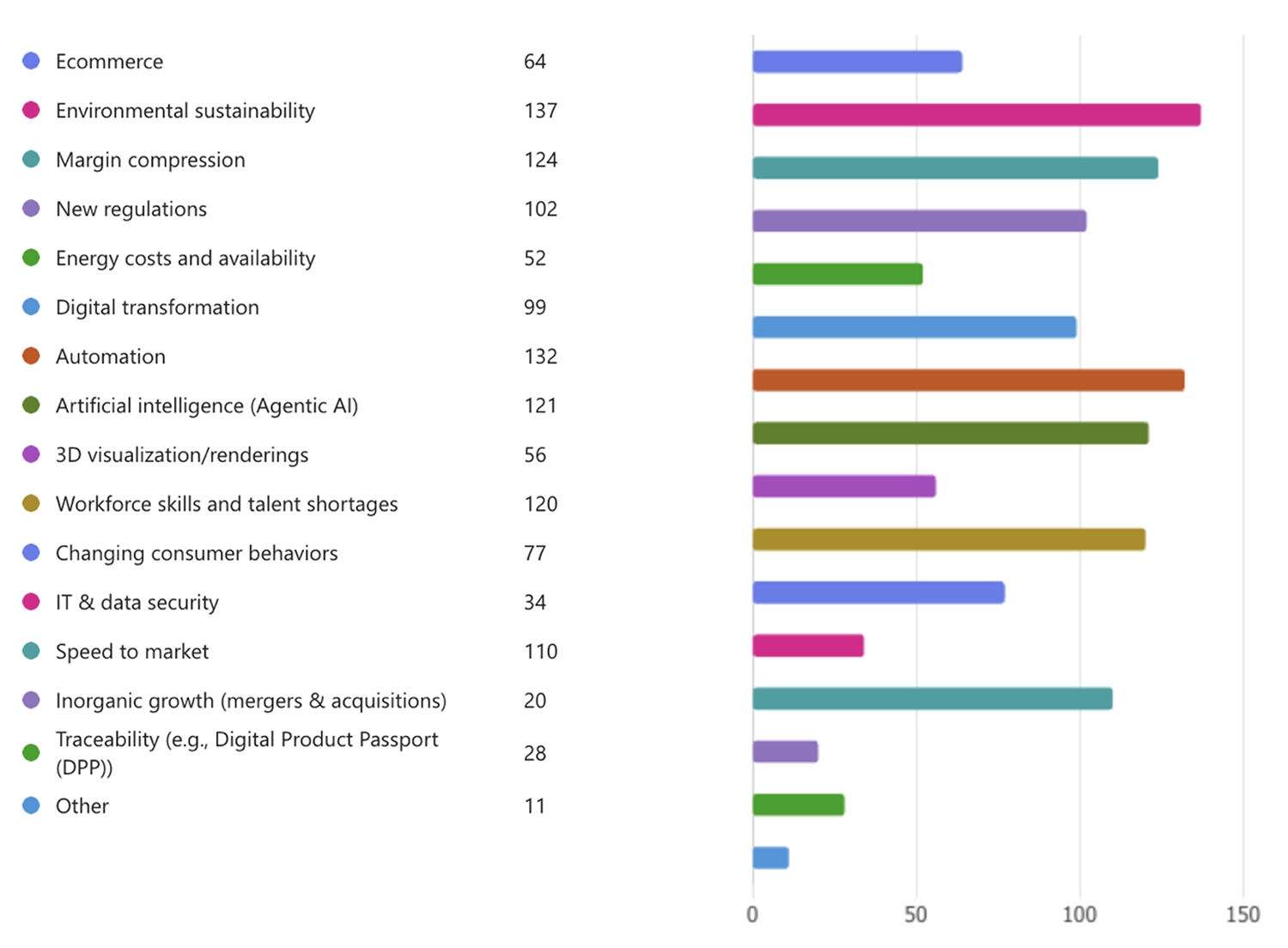
Survey respondents echoed this momentum, though with a note of caution: While adoption is accelerating, 121 identified AI adoption as one of their biggest challenges for 2026, reflecting both the opportunity and uncertainty ahead.
As Jan De Roeck, Director of Industry Relations at Esko, observed, “Expectations are extremely high, but willingness to engage is relatively low. That tells me AI is still very immature. It will take a while before people start to understand how they should use—or not use—it.”
While De Roeck notes that overall willingness to engage remains low, a handful of early movers are already demonstrating what’s possible. Enterprise adoption of AI agents is accelerating faster than anyone predicted. For example, organizations like Intuit and Capital One are already deploying agents into production, signaling that agentic workflows are moving beyond pilot stages.
This has been sparked by three forces in particular:
Technology Maturity
LLMs now feature larger context windows, enabling them to manage more complex and longer-running tasks. Their enhanced reasoning capabilities allow them to plan, critique, and reflect. These are essential tools for self-optimizing workflows.
Additionally, multimodal AI can process images, audio, and video, directly addressing the visual and content-heavy nature of packaging. Open third-party libraries make integration simpler and vendor-agnostic.
David Crow validated this, commenting, “The reasoning capabilities are key because they let the system define an action plan, critique its own plan, and reflect upon it. Add multimodal input—images, sound, video— and suddenly you have a system that can interpret and assist with the complexity packaging coordinators face every day.”
Rising Complexity in Packaging Lifecycles
From product briefs through labeling and supply chain handoffs, packaging involves countless people and steps. Information such as nutrition panels, claims, and legal disclaimers must pass through multiple cross-functional areas, including marketing, legal, regulatory, and product teams. This often introduces delays and the possibility of mistakes.
As Srinivas Kuppa noted, “When you start bringing so many people together through a workflow process, the potential for human errors, delays, and the like increases. That’s where Agentic AI steps in to codify human knowledge and make the entire lifecycle more intelligent.”
Business Pressures
Packaging teams face constant demands to reduce cycle times, increase throughput, and eliminate unanticipated costs. Agentic AI offers a compelling case: codifying “tribal knowledge” into the system, automating lower-value tasks, and freeing human experts to focus on high-impact work.
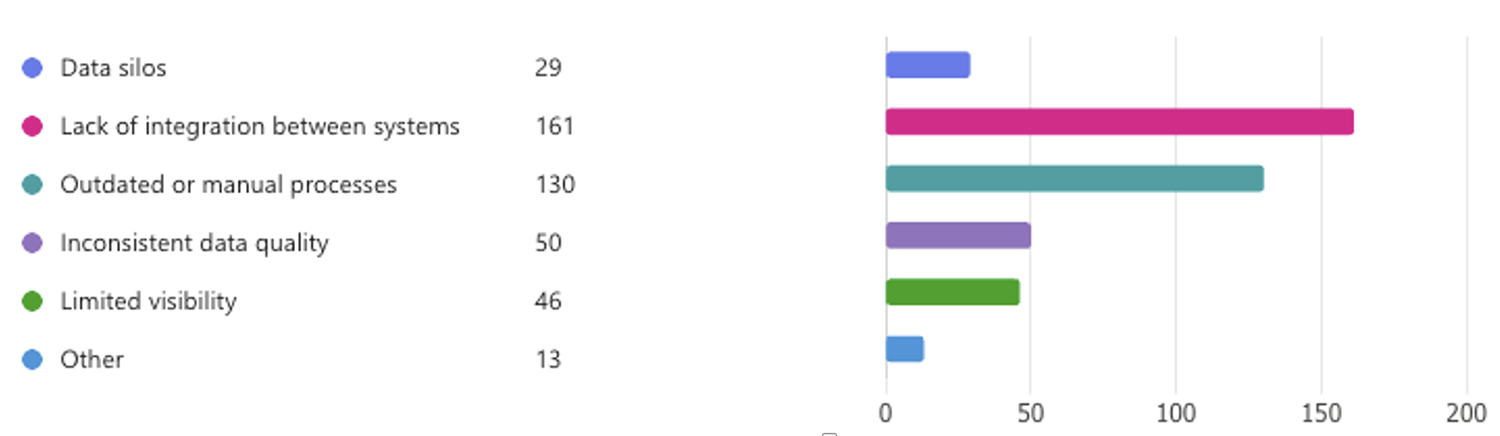
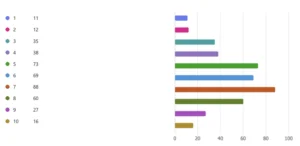
Yet many companies are not fully ready to capture these gains. In the survey, respondents rated their average digital maturity at just 6.2 out of 10, with the biggest barriers being lack of integration between systems (161 mentions) and outdated manual processes (130 mentions).
According to Gitnux’s AI in the Packaging Industry Statistics 2025 report, 65% of packaging companies planned to “increase AI adoption in their operations in 2025.” In 2027, autonomous AI-powered packaging robots are “projected to handle 50% of packaging tasks.” This demonstrates that packaging leaders are not just exploring AI but actively preparing to scale it into core operations.
Simply put, agentic AI has matured at precisely the moment packaging workflows need it most.
Examples and Early Movers
While still emerging, real-world applications already illustrate how agentic AI is impacting packaging. Let’s look at the following examples.
Coca-Cola + Adobe
Coca-Cola and Adobe’s Project Fizzion is a pilot system that rethinks brand guidelines as “intelligent, adaptive assets” instead of static documents. Fizzion learns from designers’ behavior inside tools like Illustrator®, Photoshop®, and InDesign® to encode rules, typography, logo use, and layouts into machine-readable identifiers. This enables creative teams to produce content up to 10x faster while maintaining consistency and quality.
Project Fizzion is built so that designers remain in control, using it to streamline the tedious parts of formatting and compliance, and not replacing creative intent. Fizzion shows how agentic AI is able to embed governance within the creative workflow so that scale doesn’t come at the cost of brand identity.
Ranpak
Ranpak, a leader in sustainable paper packaging, is also making strides using agentic AI by combining vision systems, automation, and human-centered workflows to improve warehouse operations. Omar Asali, CEO of Ranpak, emphasizes that automation should enhance, not replace, human workers, allowing them to move out of purely manual tasks into more skilled roles.
Ranpak believes retrofitting packing warehouses with automation, such as machines that cut cartons to avoid excess room and optimize packaging sizes, help reduce waste, improve worker safety, and speed operations.
Additionally, Ranpak is investing in robotics partners (like Rabot and Pickle Robot) that automate warehouse operations, aligning productivity gains with sustainability goals.
For Ranpak, the bottom line is that automation paired with human oversight drives far better outcomes than automation alone.
Impact on Esko Users
For Esko users, Agentic AI is about productivity augmentation, not job replacement. The impact is seen in changes to the daily roles of packaging team members:
CAD Designers
Designers will be able to offload routine adjustments and compliance checks, freeing more time for creative iterations and ensuring brand consistency. Faster prototyping and fewer manual interventions mean reduced press issues and recalls.
Prepress Operators
Today, operators often juggle incomplete information and repetitive checks. With agentic AI, workflows deliver what Srinivas Kuppa calls a “cognitive payload: the user knows exactly what to review, approve, or act upon, while the smart workflow handles intelligent steps automatically.” This shift reduces confusion, prevents workflow stoppages, and helps operators focus on quality outcomes rather than administrative steps.
Instead of managing every detail of workflow logic, prepress operators will act more like strategic overseers. Agentic AI handles much of the complexity, presenting outputs and exceptions for review. This allows them to concentrate on higher-value problem-solving and continuous improvement.
Flexo Plate Room Operators
The life of a flexo plate room operator is currently very repetitive. Agentic AI adds value by performing routine coordination tasks such as scheduling runs, monitoring file integrity, finding potential issues before plates are imaged, and even predicting when equipment maintenance will be needed.
Agentic AI reduces reactivity by alerting operators to potential issues and enabling them to focus on quality checks and process improvements.
The benefit is clear across all roles: less manual copy-pasting and more focus on brand consistency, quality, and speed to market. Jan De Roeck explained, “AI will be the tool used by both experts and non-experts to deliver high quality results. With the shortage of skilled people, embedding tribal knowledge into software will free-up more time to focus on things that really matter in order to meet customer demand for quality and effectiveness.”
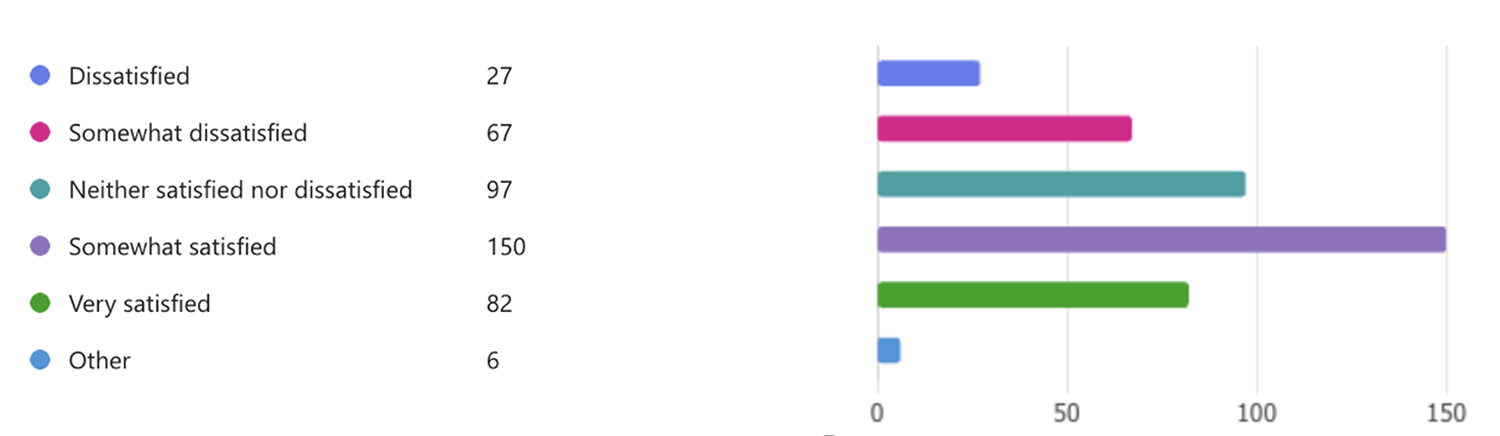
This aligns with survey feedback: while 82 respondents said they are very satisfied with their data management, more than 247 were only somewhat satisfied or neutral — leaving clear room for agentic AI to deliver value.
Looking Forward
The next 2–3 years will see agentic AI progress from short, assistive tasks to long-running processes lasting weeks or months. These could involve monitoring regulatory updates, generating compliance reports, or coordinating multi-stage packaging launches.
As Jan De Roeck quipped, “Fasten your seat belt, because the speed is only going to accelerate. The invention of AI will in turn increase the speed of innovation. There’s no escaping from that.”
Key developments to expect:
- Better oversight mechanisms produce optimized outputs in executional tasks where precision is critical.
- Greater productivity gains, allowing teams to do more with the same resources.
- Multi-agent systems: specialized agents working together, much like human experts do today. For example, a “studio manager” agent might consult a “color retouching” agent, escalating to humans for higher-level approvals.
- End-to-end codification of packaging knowledge, embedding expertise across every stage of the lifecycle, from creative briefs to print runs.
These developments aren’t theoretical. They’re already in progress. Packaging Digest, for example, highlights advances like predictive maintenance, vision-based quality control, supply-chain optimization, and smart or personalized packaging.
Yet, adoption will follow a maturity curve. Technology alone cannot enable full autonomy; organizations must also adapt processes, governance, and change management practices. As Crow said, “AI is not magic. These are probability-based tools, not deterministic systems. Outcomes will vary.”
For professionals, success with agentic AI requires cultivating three mindsets:
- Embracing change: Not fearing the technology but seeing it as a way to enhance productivity.
- Creativity: Actively brainstorming ways to integrate these tools into workflows to eliminate boring or tedious tasks.
- Critical thinking: Maintaining a critical mindset to effectively spot and correct mistakes made by the AI, ensuring the right direction for the output.
Esko is already embedding these principles in its roadmap. We are building core agentic AI capabilities that will span multiple solutions, ensuring consistent productivity gains across roles and customer types. Importantly, Esko is also addressing concerns about data security, intellectual property, and explainability, ensuring guardrails and trustworthiness as adoption scales.
As Kuppa explained, “Our roadmap goes beyond Agentic AI—it’s about codifying knowledge across the packaging lifecycle. That means semantic models, GPT-based tools, and ultimately agents driving end-to-end workflows. But adoption at scale will take time, not just for technology reasons but because of organizational maturity and risk tolerance,”
The Time is Now
Agentic AI represents a pivotal step forward. Automating tasks is one thing, but optimizing entire workflows is quite another. Unlike previous AI generations, agentic systems actively plan, reflect, and learn, making packaging processes more adaptive and resilient.
Agentic AI is not the future of packaging—it’s already here. The next three years will determine how quickly companies embrace it, and how far it reshapes the way packaging is imagined, created, and delivered.
Explore the Full 2026 Packaging Trends Report
Sustainability intelligence is only one of the major packaging trends today.
The 2026 Packaging Trends Report explores the three major shifts with insights from industry experts and global survey data.
Download the full report to explore all three trends.