
Written by Gouri Sasidharan
Content Specialist, Esko
With consumers demanding more information on what goes into their cleaning products and countless regulations from different organizations, it’s a daunting task to figure out labeling requirements for home cleaning products.
Moreover, a slight oversight or failure to meet these requirements may result in your product being labeled hazardous.
This may force recalls, penalties, and lawsuits as your product is suitable for household use BUT contains a hazardous substance susceptible to being ingested by a child.
This guide brings together all the major labeling and environmental compliance requirements for home cleaning products, including traditional cleaners and green or eco-friendly variants.
Disclaimer: This information is for general knowledge and guidance only and does not constitute legal or professional advice. Always consult the latest regulations from the EPA, OSHA, and FHSA for the most up-to-date information.
Who Regulates Cleaning Product Labels?
Cleaning products do not fall under the Food and Drug Administration (FDA) or the U.S. Department of Agriculture (USDA). Instead, labeling is governed by multiple agencies, depending on product composition and claims:
- Cleaning Product Labeling Act of 2017
- Federal Hazardous Substances Act (FHSA)
- Occupational Safety and Health Administration (OSHA)
- Environmental Protection Agency (EPA)
- Toxic Substances Control Act (TSCA)
- Federal Insecticide, Fungicide, and Rodenticide Act (FIFRA)
- State-level bodies such as the California Air Resources Board (CARB)
Cleaning Product Labeling Act of 2017:
Congress enacted the Cleaning Product Labeling Act of 2017 to require the labeling of ingredients on cleaning products distributed and manufactured in the United States.
According to this law, “any cleaning product manufactured for sale, offered for sale, distributed in commerce, or imported into the United States must have a label on the product’s container or packaging.”
The manufacturer must also include a complete list of ingredients on their website in the following order:
- You must mention ingredients in descending order of weight predominance, except ingredients that make up less than 1% of the product, which you can list in any order at the end.
- The ingredient list on the product’s website shall:
- Include each ingredient’s *CAS Registry Number*.
- Explain why each ingredient is in the cleaning product.
- Be available in English, Spanish, and any other language determined by the Commission or Administration to ensure that product users in the United States are fully aware of all the ingredients and functions.
Federal Hazardous Substances Act (FHSA)
The Federal Hazardous Substances Act (FHSA) mandates precautionary labeling for hazardous household products to ensure safe use, storage, and emergency response.
Products Included Under the FHSA
The FHSA only applies to,
- The products transported into or near a place where people dwell during their reasonably foreseeable purchase, storage, or use.
- The products used or kept in a garage, shed, carport, or other house-related structures.
How to Determine if a Product Needs to be Labeled
The product’s contents and the possibility that customers will be exposed to any hazards it poses determine whether it must be labeled. Here’s how the FHSA determines if the product is hazardous or not.
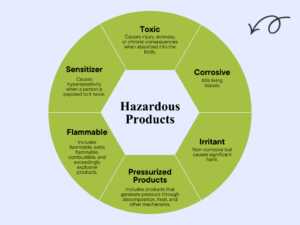
- The product must be toxic, corrosive, flammable, or combustible, an irritant, or a powerful sensitizer, or generate pressure through decomposition, heat, or other methods.
- The product must have the potential to cause severe personal injury or illness during or as a result of any customary or reasonably foreseeable handling or use.
This also includes foreseeable ingestion by children while handling or using the product.
How to Determine if a Product is Hazardous
Here’s a list of definitions provided by the FHSA for each of the hazards listed above according to regulations under the Act.
Packaging and Labeling Information for a Hazardous Product
The following information must be printed in English on the label on the immediate package of a hazardous product, as well as any outside wrapping or container that might obscure the label on the package.
- The manufacturer, packer, distributor, or seller’s name and company address.
- Each hazardous ingredient is a common, customary, or chemical name.
- The signal word “Danger” for caustic, severely flammable, or highly hazardous products.
For all other types of hazardous items, you must use the signal word “Caution” or “Warning.” - An affirmative declaration of the product’s primary hazard or hazards, such as “Flammable,” “Harmful if Swallowed,” “Causes Burns,” “Vapor Harmful,” and so on.
- Cautionary messages that inform users of what they must do or avoid to protect themselves.
- Instructions for first-aid treatment in case the product causes an injury.
- Besides the signal word “Danger,” “Poison” is termed for a very poisonous substance.
- Instructions for customers to follow if a product requires particular handling or storage to protect themselves, and the phrase “Keep out of reach of children” to protect children.
If no package exists, this information must be provided via hangtags. You must also print this information in any accompanying literature that includes instructions for use.
Ensuring Prominence and Conspicuousness of a Label
You must be able to distinguish all safety information about hazardous products on cleaning supply labels and in a legible type that contrasts with the other printed information.
The signal word and danger statement, for example, must be on the surface of the immediate container of the product whose labeling is most prominently exposed to or studied by consumers while shopping at retail.
The rest of the labeling, as specified in the regulation, may appear elsewhere on the package.
Please refer to the regulation for more information concerning color contrast, and special regulations for tubes, unpackaged hazardous materials, and accompanying information.
Occupational Safety and Health Administration (OSHA)
As part of its current amendment of the Hazard Communication Standard (HCS), OSHA has updated hazardous chemical labeling standards.
According to the standards, (with effect from 1st June 2015,) information concerning chemical risks must be presented on labels using rapid visual notations like pictograms to alert the user and provide immediate recognition of hazards.
These regulations are primarily for cleaning products that were removed from their original containers.
So, if you’re selling products in bulk by distributing them in smaller containers, affixing labels on such containers will help chemical users protect themselves and prevent injury or exposure to hazardous materials.
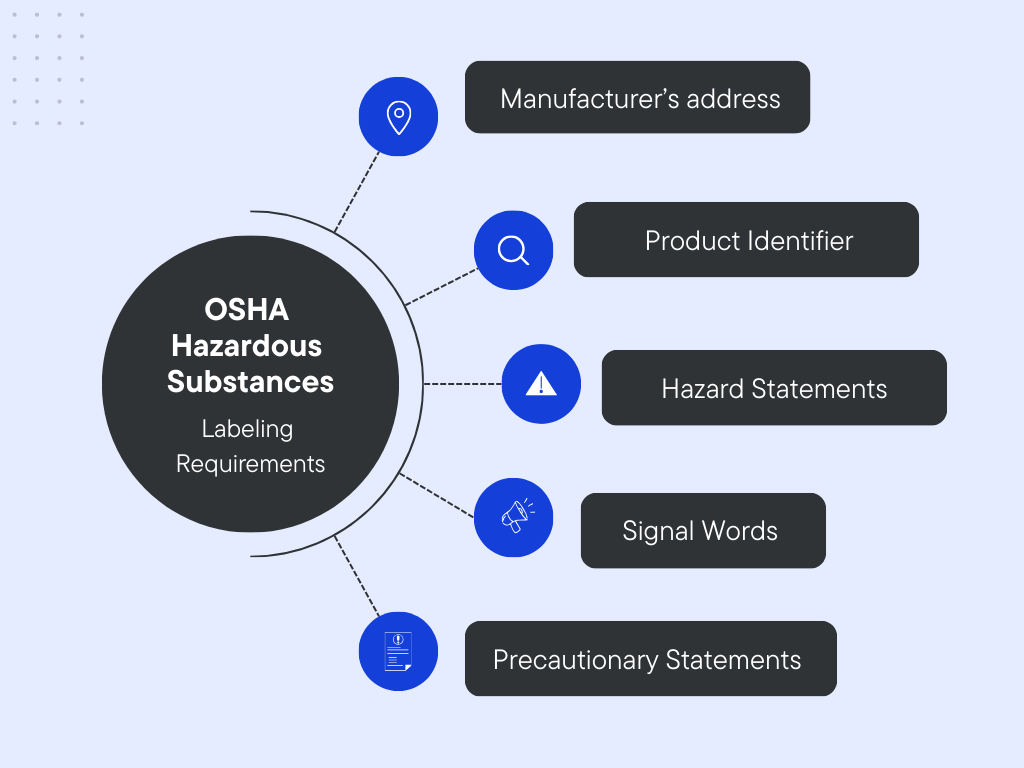
According to the HCS, hazardous chemical labels must now include the following elements:
- Manufacturer’s address: The chemical producer, importer, or other responsible party’s name, address, and phone number.
- Product identifier: The dangerous chemical is identified by its product identifier. This could be the chemical name, code number, or batch number, among other things. The relevant product identifier can be chosen by the manufacturer, importer, or distributor.
- Signal words: These words signify the hazard’s relative severity and alert the reader to a potential hazard on the label. “Danger” and “Warning” are the only two words used as signal words.
“Danger” is used for the more severe risks within a hazard class, whereas “Warning” is used for the less severe hazards.
- Hazard statements: These statements outline the nature of a chemical’s hazard(s), including the degree of hazard where applicable.
For example, “causes kidney harm when absorbed via the skin over a long period of time.”
To avoid redundancy and increase readability, hazard statements may be combined where appropriate. Few common examples are:
(i) Fatal if swallowed or in contact with skin
(ii) Toxic in contact with skin or if inhaled
(iii) Causes skin and eye irritation
The hazard statements are particular to the hazard categorization categories, and chemical consumers should always see the same statement for the same hazards, regardless of who manufactures it.
- Precautionary statements: These statements highlight the precautions you should take to reduce or eliminate the adverse effects of exposure to a hazardous substance or inappropriate storage or handling.
Precautionary statements warrant a separate section as they’re divided into four categories, with specific regulations for different hazardous products.
Precautionary statements are divided into four categories:
-
- Prevention statements (to reduce exposure)
- Reaction statements (in the event of an unintentional spill or exposure, emergency response, and first aid)
- Storage
- Disposal
The following table lists examples of these precautionary statements.
| Precautionary Statements | Examples |
|---|---|
6. Pictograms: Pictograms describe the icons and symbols that reflect the danger caused by the respective products.
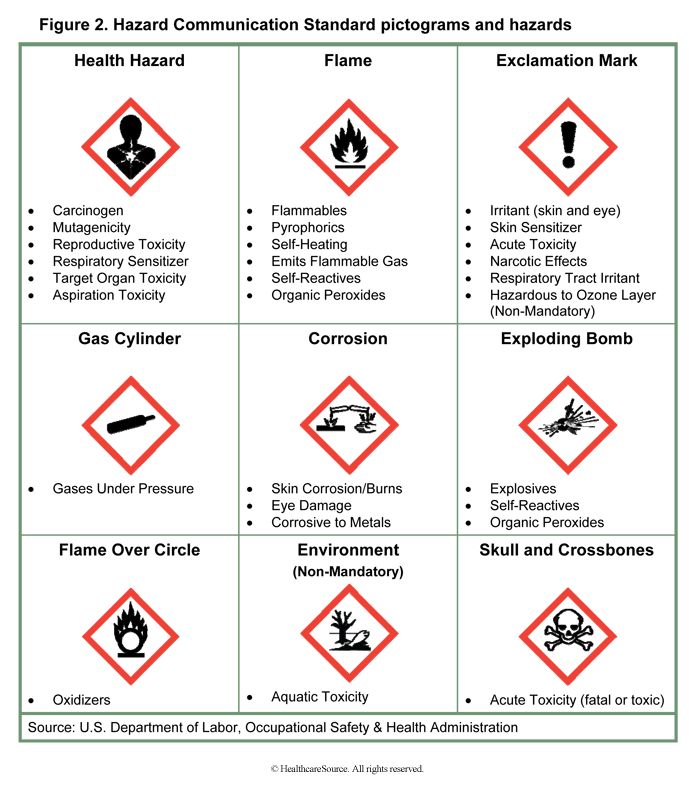
Source: Pinterest
If an employer includes additional information regarding the chemical that is above and beyond what the standard requires, it may list this information under “supplementary information.”
Environmental Protection Agency (EPA)
The U.S. Environmental Protection Agency (EPA) plays a central role in regulating both conventional household cleaning products and environmentally marketed (“green”) cleaners.
While the EPA does not regulate all cleaning products through a single law, it oversees how ingredients, claims, and environmental impacts are communicated, especially when products contain hazardous substances or make antimicrobial or eco-friendly claims.
EPA Oversight for All Home Cleaning Products
For standard household cleaning products, EPA involvement focuses on chemical safety and claim-based classification.
- The EPA requires manufacturers to:
- Disclose active disinfecting ingredients when present.
- Ensure that label claims do not unintentionally classify a product as a pesticide.
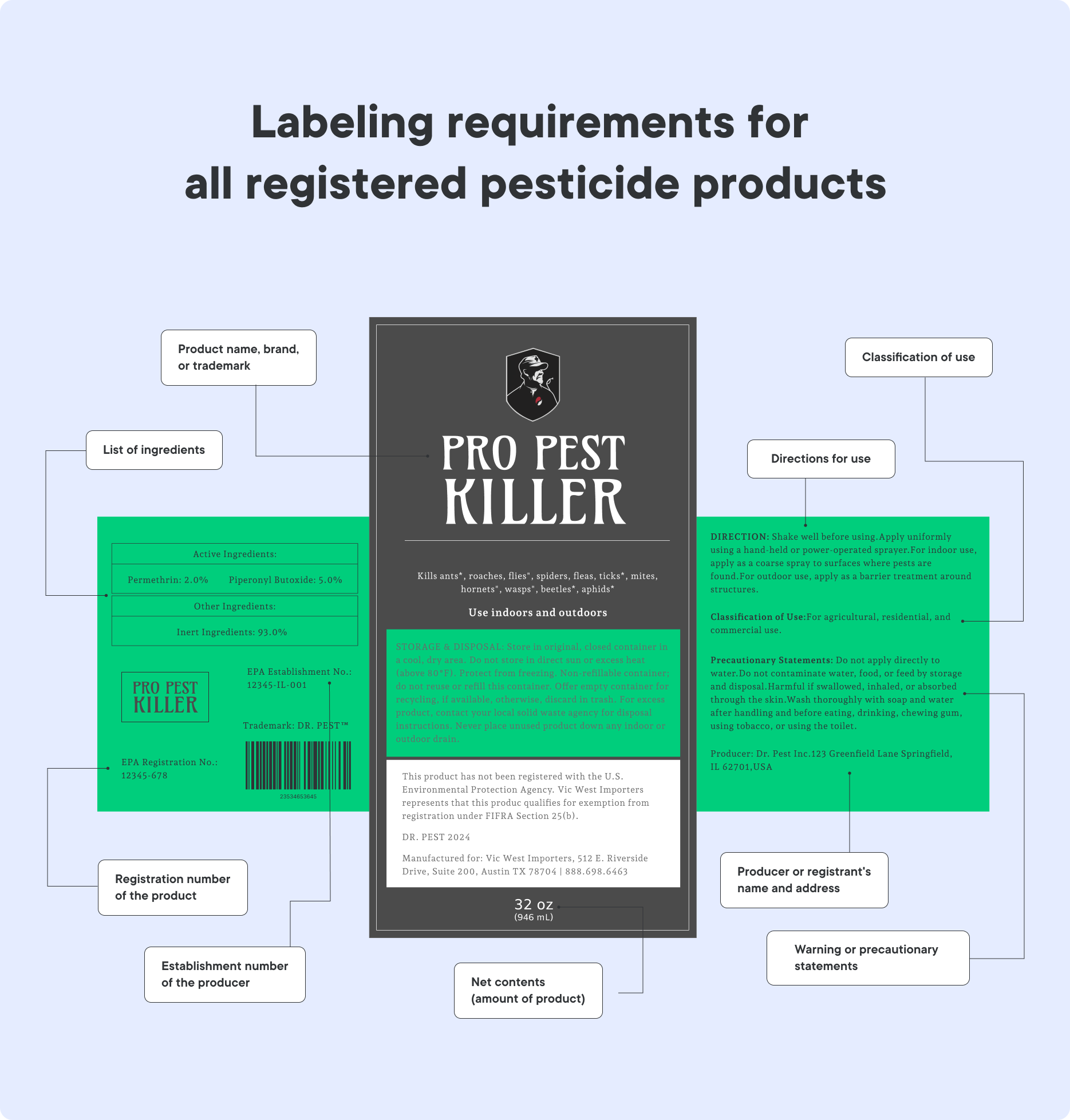
- Avoid claims that suggest pest control, sanitation, or disinfection unless the product is registered under the Federal Insecticide, Fungicide, and Rodenticide Act (FIFRA).
Given below are a few examples of claims or types of claims for a cleaning product that might necessitate product registration under FIFRA.
Label claims
A product is considered a pesticide if its claims imply that:
- Biofilm, scum, allergens, or any pest designated under the CFR are cleaned, washed away, or removed. This includes unqualified claims as well.
- Pests are suffocated or drowned.
- Pest habitats or breeding places are cleaned or removed.
- Contaminants, nutrients, or materials that offer food or habitat for bugs are cleaned, precipitated, or removed.
- The product removes or diminishes scum or sludge from areas where pests breed, feed, or live.
- Sanitizes, disinfects, or sterilizes the environment.
Graphic claims
- Images of pests or pest habitats (e.g., nest, hive, or web) that suggest cleansing or removal of pest habitats or their nutrition sources.
- Any claim on a label or labeling, or by other means such as websites, advertising, etc., that expressly relates the cleaning product to pest management, Integrated Pest Management (IPM), pests, or a specific sort of pest.
EPA Oversight for Green Cleaning Products
For green cleaning products, the Environmental Protection Agency (EPA) expands its role beyond safety into environmental and human health performance.
But how do buyers know that your product meets the high standards for safety, quality, and environmental friendliness? Safer Choice Program!
What is the Safer Choice Program?
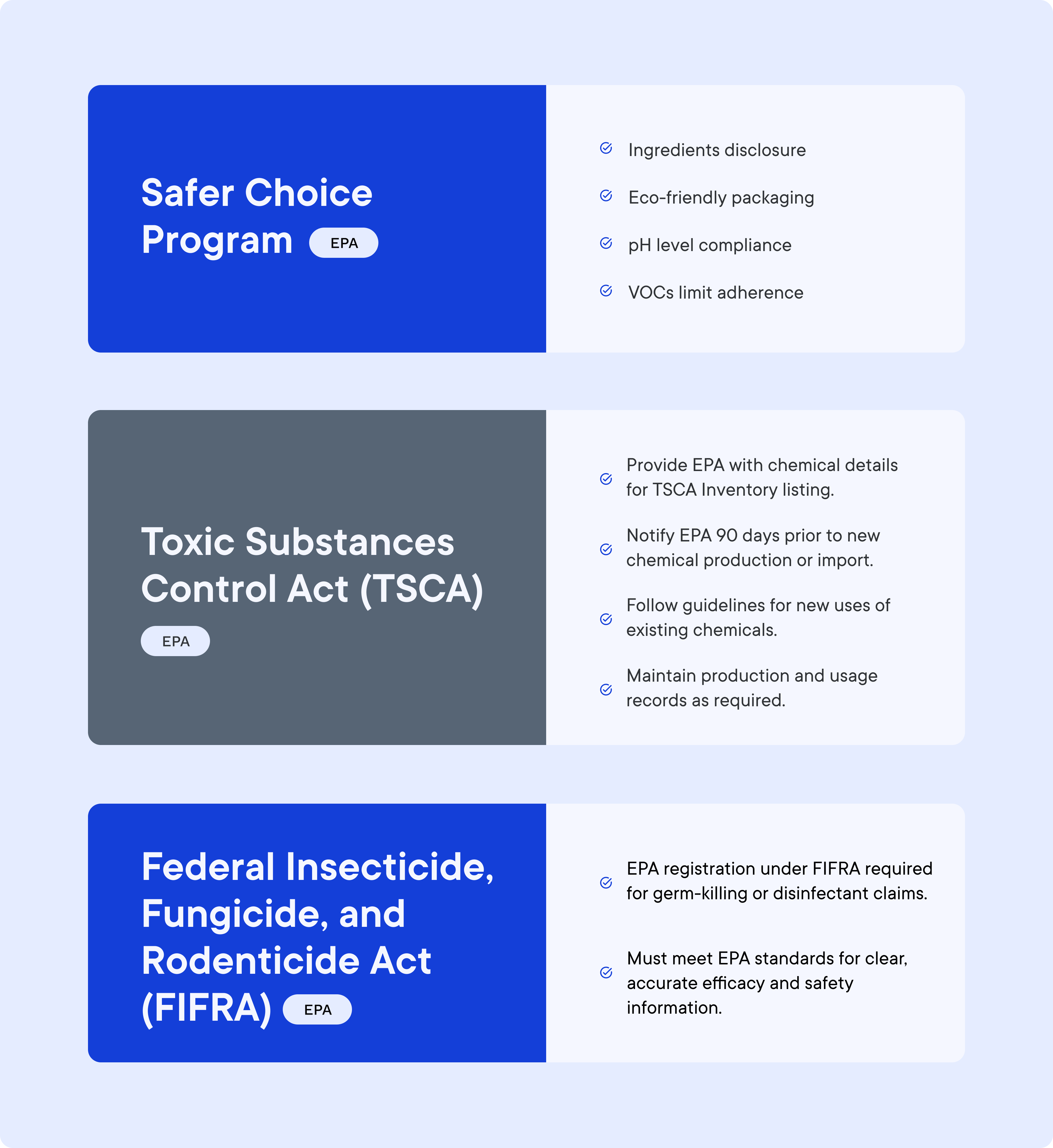
The EPA Safer Choice Program encourages the use of green chemistry in cleaning products and other consumer items. It signifies that every component in the product is carefully evaluated for its impact on human health and the environment.
Performance-wise, these green products must match or exceed the effectiveness of conventional alternatives, meaning consumers won’t have to sacrifice cleaning power for safety.
To earn the coveted Safer Choice label, your product must pass rigorous standards for safer chemical ingredients and have its formulas verified by an EPA-approved third party.
Now, as a green cleaning product manufacturer, there are a couple of things you need to keep in mind.
Ingredient disclosure for review:
You are required to disclose all ingredients, including any fragrances and dyes, ensuring complete transparency. This information must be accessible either on the product label, product catalog, or a dedicated website.
Packaging requirements:
Additionally, environmentally friendly packaging, like recyclable materials, is encouraged to reduce waste.
pH levels:
Products labeled under Safer Choice must meet pH standards that reduce the risk of skin and eye irritation or injury.
Volatile Organic Compounds (VOCs):
Safer Choice limits VOCs to lower indoor air pollution and related respiratory issues.
Ongoing compliance:
Certification isn’t a one-time deal; you must regularly submit your products for review to maintain their Safer Choice status, ensuring ongoing environmental compliance and safety.
Ingredient updates:
Any ingredient changes also require a new application. Mislabeling is taken seriously and can lead to criminal prosecution for fraud.
Now that you’re familiar with the Safer Choice Program, let’s move on to the other regulations surrounding green cleaning products that fall under the EPA.
Toxic Substances Control Act (TSCA)
The Toxic Substances Control Act (TSCA) is a U.S. federal law enacted in 1976. It gives the EPA the authority to regulate the production, importation, use, and disposal of chemicals.
The TSCA is designed to ensure that chemicals used in commerce do not pose an unreasonable risk to human health or the environment.
Below, we have listed some key provisions of the TSCA.
It requires you to provide the EPA with information on the chemicals you produce, which are then listed on the TSCA Inventory.
As manufacturers, you must submit a Pre-Manufacture Notice (PMN) to the EPA at least 90 days before producing or importing a new chemical substance or before manufacturing an existing chemical for a new use.
Furthermore, Significant New Use Rules (SNURs) require manufacturers to follow specific guidelines if you plan to use existing chemicals in new ways.
It requires manufacturers, importers, and processors to maintain records and report information about the production and use of chemicals.
Federal Insecticide, Fungicide, and Rodenticide Act (FIFRA)
FIFRA is a U.S. law that controls the registration, distribution, sale, and use of pesticides. Managed by the Environmental Protection Agency (EPA), this law requires that all pesticides used in the U.S. be registered with the EPA to make sure they meet safety standards that protect people and the environment.
Why Green Cleaning Product Manufacturers Should Be Concerned About FIFRA
While not all green cleaning products fall under FIFRA, those that do make pesticidal or antimicrobial claims must adhere to its regulations. You should carefully evaluate your product claims and ingredients to determine if FIFRA compliance is necessary.
CARB and Green Cleaning Products
The California Air Resources Board (CARB) is a state agency that regulates volatile organic compounds (VOCs) in consumer products, including cleaning products. VOCs are chemicals that can easily evaporate into the air and contribute to the formation of ground-level ozone and smog.
CARB plays a significant role in implementing and enforcing regulations aimed at improving air quality in California.
Voluntary Cleaning Label Certifications
With limited government regulations on cleaning products, third-party organizations have stepped in to create certification standards that enhance ingredient transparency and highlight the impact on human and environmental health. These certifications cater to consumers’ growing interest in eco-friendly cleaning products.
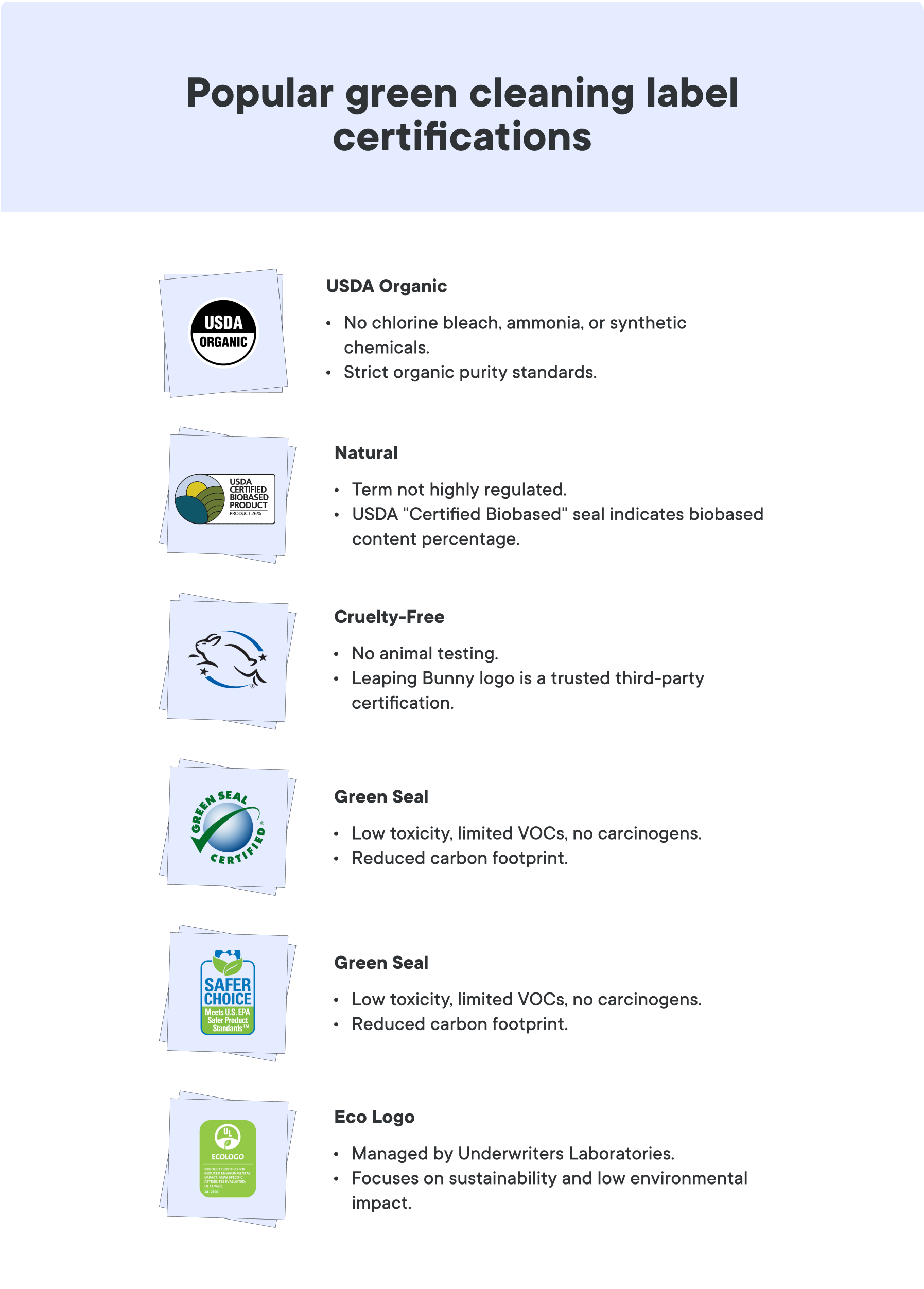
Here are some popular certifications:
- Organic: The USDA organic certification applies to cleaning products as well as food. To earn this label, products must meet stringent organic purity standards and cannot contain chlorine bleach, ammonia, or other synthetic chemicals.
- Green Seal: This certification evaluates product performance and sustainability. To display the Green Seal, products must meet strict criteria, including low toxicity, limited VOCs, no carcinogens, and a reduced carbon footprint.
- Safer Choice: Sponsored by the EPA, this program promotes transparency and safety. To use the Safer Choice logo, companies must meet toxicity standards for human and environmental health, fully disclose ingredients, and undergo manufacturing facility inspections.
- EcoLogo: Managed by Underwriters Laboratories, EcoLogo certification requirements are similar to those of Green Seal, focusing on sustainability and low environmental impact.
- Cruelty-Free: This certification indicates that a company vows not to test the product on animals. While there is no government-sanctioned cruelty-free label, the Leaping Bunny logo is a trusted third-party certification.
- Natural: Although the term “natural” is not highly regulated for cleaning products, the USDA offers a “Certified Biobased” seal. This seal indicates the percentage of biobased content, determined by the USDA and American Society for Testing and Materials.
What Every Cleaning Product Label Should Include
Cleaning product labels must follow strict packaging regulations set by agencies such as the Environmental Protection Agency (EPA), the Occupational Safety and Health Administration (OSHA), and the Federal Hazardous Substances Act (FHSA).
Let’s look at some of the key information to include in the packaging label of a cleaning product:
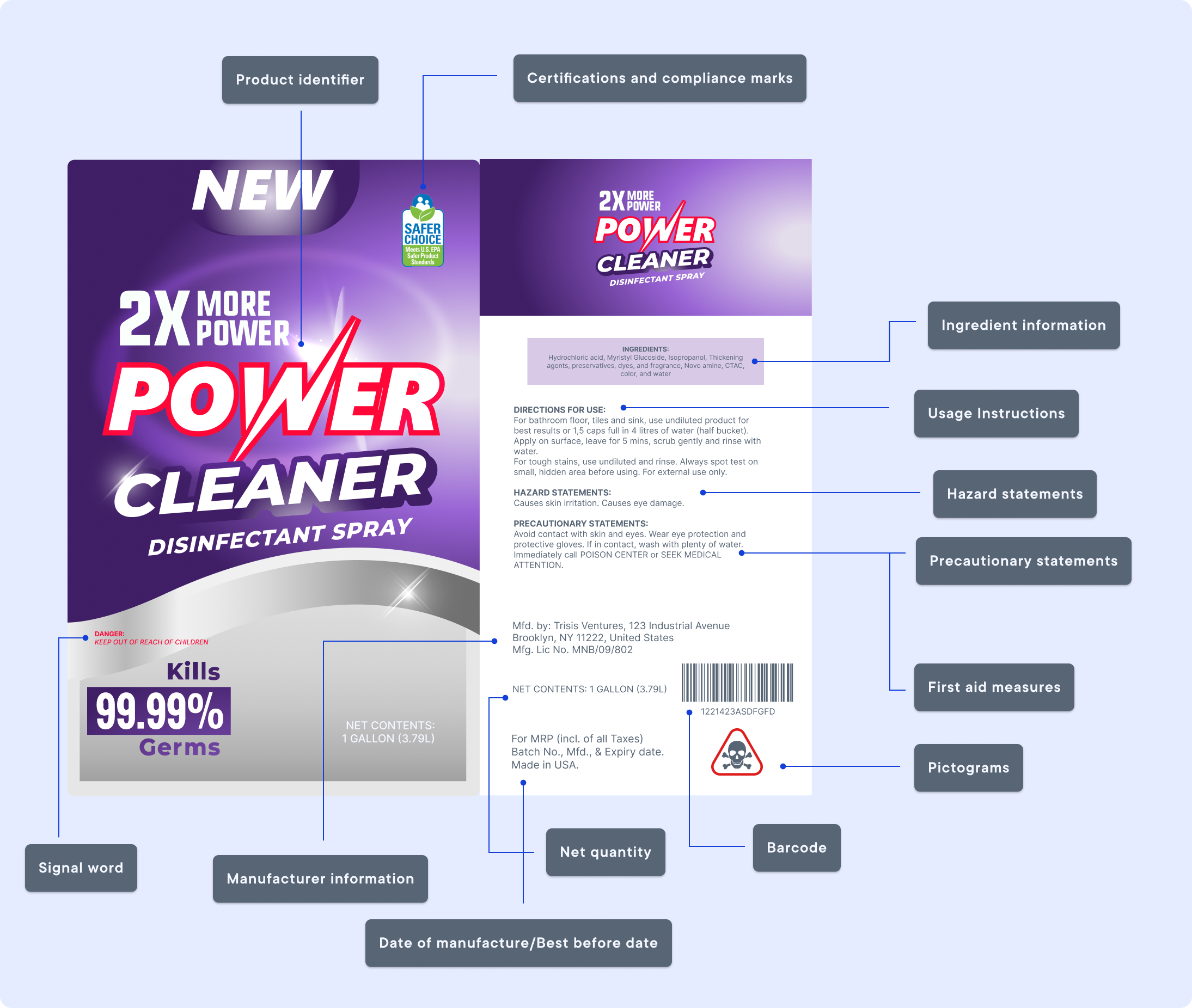
- Product identifier: This includes both the brand name and the product name. Make sure your product name accurately describes your product. E.g., All-Purpose Cleaner.
- Signal word: The signal words ‘Danger,’ ‘Warning,’ and ‘Caution’ are used to communicate the severity of the hazard.
- Usage instructions: Provide detailed directions on how to use the product effectively, including application methods, recommended surfaces, and any necessary precautions.
- Hazard statements: Concise statements describing the potential hazards (e.g., “Causes skin irritation,” “Flammable liquid and vapor”).
- Precautionary statements: Instructions on how to handle, use, and store the product safely. Includes statements like “Keep out of reach of children,” “Avoid contact with eyes,” and “Use with adequate ventilation.”
- First aid measures: Instructions for handling accidental contact (e.g., eye contact, skin contact, ingestion).
- Pictograms: Standardized symbols representing specific hazards (e.g., skull and crossbones for toxicity, flame for flammability).
- Ingredient information: While the FHSA does not require a full ingredient list, it may be beneficial for consumers to know the major ingredients.
- Net quantity: Clearly state the volume or weight of the product.
- Manufacturer information: Include the manufacturer’s name, address, and contact information.
- Certifications and compliance marks: Display relevant certification logos and compliance marks to indicate adherence to industry standards and regulations.
- Barcode: Incorporate a scannable barcode to facilitate retail operations and inventory management.
- Date of manufacture/Best before date: Indicate the date of manufacture or a best-before date for product stability.
Design 100% Compliant Home Cleaning Labels
Since there are various organizations overseeing the labeling regulations of a household cleaning product, you don’t want to end up with a misbranded product because of a minor oversight.
Cross-checking your home cleaning labels with regulations set by 2 or more organizations can be overwhelming and time-consuming. That’s where Comply helps you easily bring every complicated label compliance task under one roof. With this AI-powered tool, you can build custom rulebooks for each or all of the regulations you need to comply with and review every single piece of information on your labels, including images, smartly.
Imagine you’re about to launch a new fragrance-free cleaning spray under your brand. You’ve carefully formulated it to meet the EPA’s Safer Choice standards, and now you’re excited to highlight its purity with a fragrance-free label.
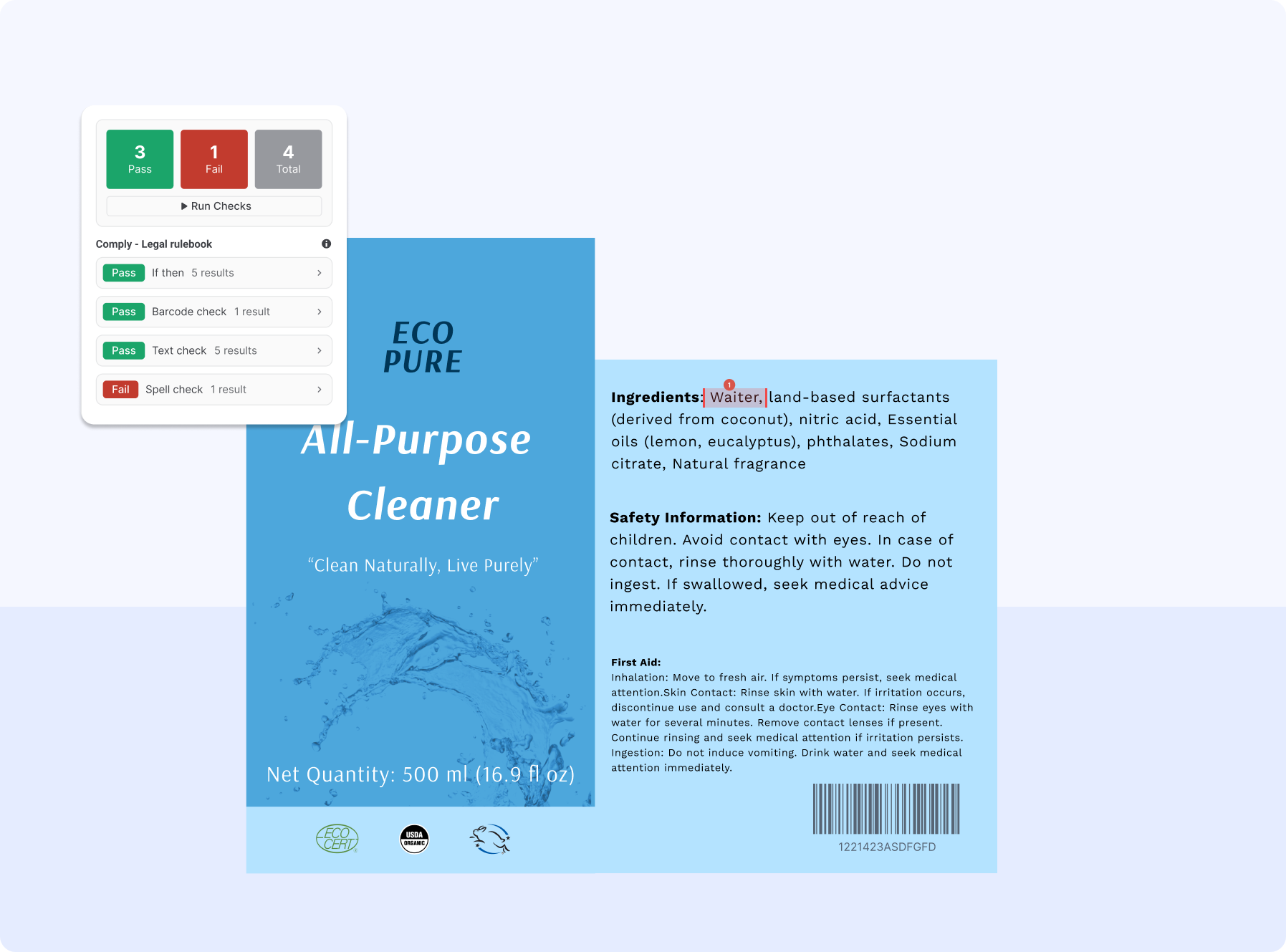
Using Comply, you can upload your label design and set up rules to check ingredients. It helps you quickly identify if any fragrance-containing ingredients are listed on the label.
The Comply feature helps with regulatory compliance, ensuring you effortlessly tick off all the regulatory boxes and giving you peace of mind as you launch into the market.
To learn more, book a demo with us!