Skip to content
English
My AccountCart
Artwork Management

How to Ensure Your Food Labels Meet FSSAI Standards

Overview

Government agencies across the globe have stringent regulatory policies for food packaging designs. Every time a new product is launched, or the packaging is renewed, you must adhere to packaging regulations.

In India, the Food Safety and Standards Authority of India (FSSAI) dictates  food packaging norms. For example, when it comes to food labeling, the list of ingredients, nutritional information, an indication of non-vegetarian items, and so on, are required to be added to the packaging label by the FSSAI.

Vegetarian and non-vegetarian indicators

But with so many rules in place, it’s easy to let errors creep in. Mistakes in food labeling and packaging can delay a product’s launch, lead to recalls, and cost a lot of money.

So, how do you avoid these pitfalls? How can you identify any packaging errors before your product hit the shelves? Let’s explore!‍

Disclaimer:This blog post derives information from the FSSAI website is updated as of April 2026. Please refer to the FSSAI website for final and updated information regarding regulations. WebCenter is a workflow solution and central digital source for managing artwork and label creation, not a service providing legal or regulatory advice. 

What are FSSAI Food Labeling Regulations?

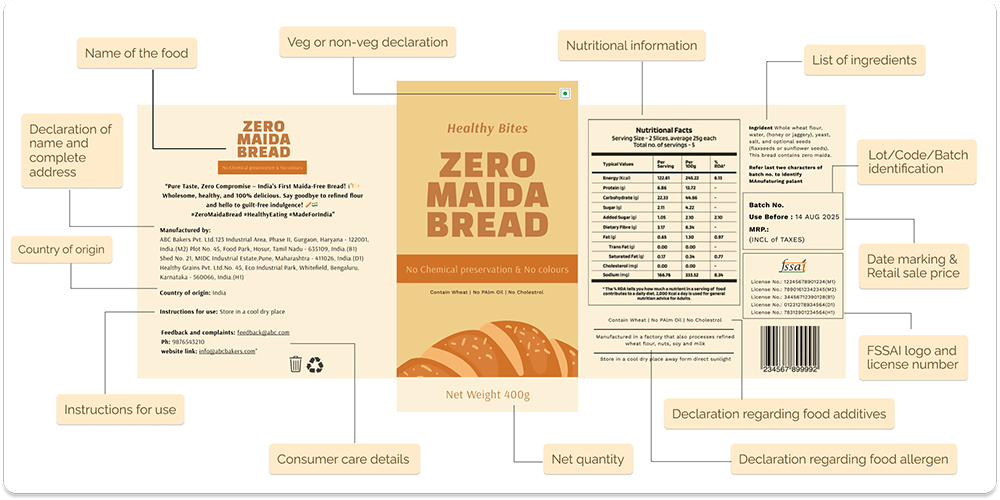
FSSAI regulations are a comprehensive set of guidelines that all food product manufacturers and brands should follow. FSSAI imposes twelve primary labeling regulations for any food packaging. These are:

1. Name of the Food

The food product must have its name clearly labeled. This helps the consumer identify the product. For example, “tomato ketchup” or “whole wheat bread.” It must be descriptive and accurately represent the contents of the package.

2. The List of Ingredients

All ingredients used in the food product must be listed in descending order of their weight or volume. Any allergens, such as nuts, gluten, or dairy, must be clearly identified.

3. Nutritional Information

Nutritional information should be provided in a standardized format, including details on calories, total fat, protein, carbohydrates, sugars, fiber, and salt.

4. Declaration if the Food Product is Vegetarian or Not

Food labels must indicate whether the product is vegetarian or non-vegetarian with the right logos. This declaration should be prominently displayed, with a green dot indicating vegetarian products and a brown dot for non-vegetarian items.

5. Declaration of the Food Additives Used

Any food additives, such as preservatives, colorants, or flavor enhancers, must be declared on the label.

6. Name and Complete Address of the Manufacturer

The label must include the name and full contact details of the manufacturer, importer, or packer.

7. Customer Care Details

Brands must provide customer care contact details, including a phone number, email, or website, so consumers can reach out for assistance, feedback, or concerns about the product.

8. Net Quantity

The net quantity of the food product, usually in weight or volume (e.g., 200 grams or 500 ml), must be clearly indicated.

9. Retail Sale Price

The price at which the food product is sold must be displayed on the packaging.

10. FSSAI Logo and License Number

The FSSAI logo, along with the license number, must be printed on all food packaging.

11. Batch Identification Number, Date of Marketing, & Country of Origin

The label should include a batch or lot number, which helps in tracking the product for quality control and recalls. Additionally, the date of marketing or manufacture, and the country of origin, should be listed. The country of origin is especially important for imported products, as it provides clarity about where the food comes from.

12. The Instructions for Use

If necessary, the label should provide clear instructions on how to use, store, or cook the product, ensuring consumers can safely enjoy the food. This may include storage temperature, preparation steps, or safety precautions, such as “keep refrigerated” or “consume within three days of opening.”

13. Date Marking

All food products must display an “Expiry Date” or “Use By” date to indicate when the product is no longer safe to consume. A “Best Before” date can also be included, showing when the product may lose quality but remains safe to eat.

The FSSAI decides the content architecture and the placement of content – what goes on the front or back, the sizes of different texts, typefaces to be used, and the amount of area the information should cover on all food and beverage labeling.

Packaging artwork is covered too. For example, logos that indicate ingredients, radiation-processed foods, fortified, and organic foods should match the exact dimensions and colors provided.
Download now:The Future of Packaging Compliance 


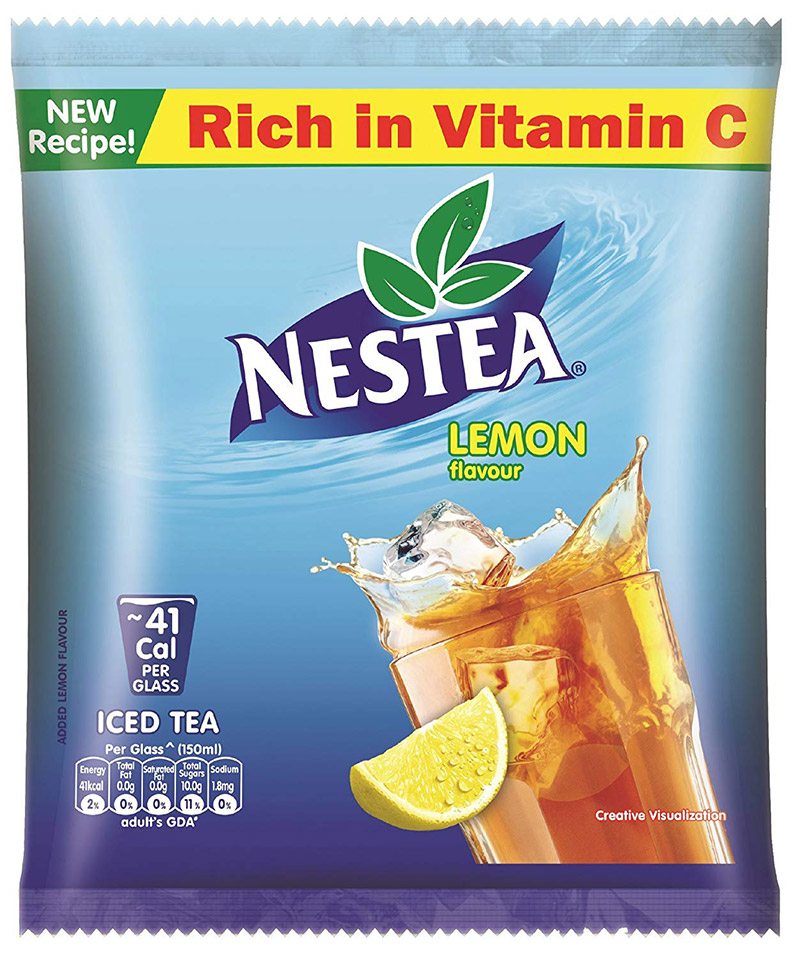
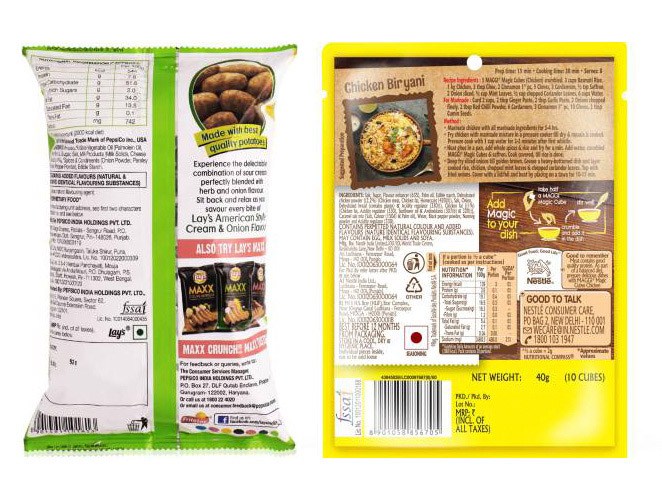
As you can see in the image above, Nestea brand’s packaging artwork follows mandatory text on labels as specified by FSSAI.

It’s essential to make a detailed note of these packaging regulations when designing product packages.

However, many companies often fall into the disapproval zone.

What’s New: FSSAI Labelling Amendment 2026

Recently, FSSAI introduced updates to the labeling and display regulations to improve clarity, traceability, and ease of compliance.  

Some of the key updates include: 

  • Exemptions for small packs: Packages below 100 sq. cm need not require the FSSAI logo. However, they must be declared on multi-unit packs.  
  • Simplified rules for infant nutrition products: Certain nutritional declarations like percentage contribution to the Recommended Dietary Allowance (A) per serving and number of servings, are no longer mandatory.  
  • Fortified foods update: Labels must declare, “Fortified with” followed by the nutrient name. You need to add the mandatory FSSAI fortification logo as well. 
  • Rules for non-retail containers: Display mandatory information such as product  

name, license number, batch details, and manufacturer information on the label. In case of insufficient space, this information can be included as a document. 

These changes will come into force from July 1, 2027, giving brands time to update their packaging workflows. 

However, in the process of updating their labels, many brands often fall into disapproval zones.

Common Mistakes that Affect FSSAI Approval

Quick overview of the most common mistakes:

  1. Choosing the wrong font type and size
  2. Not adhering to logo dimensions or color
  3. Not using enough contrast in packaging
  4. False advertising and misleading labels
  5. Nutritional information on the front of the package

1. Choosing the Wrong Font Type and Size

While you’re free to use any font for your logo or package name, FSSAI guidelines require you to use a predefined typeface and font dimensions when listing important information. Details about the product such as the list of ingredients, warnings, or nutritional information must be mentioned using an FSSAI approved font for effective packaging management.

For instance, the FSSAI has directed that alcoholic beverage bottles above 200ml should display a warning in a font size of no less than 3mm. By choosing the right font and size, you can steer clear of any such hiccups.

2. Not Adhering to Logo Dimensions or Color

Logos specified by FSSAI come with detailed instructions on size and exact color specifications. For example, the symbol indicating non-vegetarian ingredients should be brown and 4mm in size for packages between 100-500 sq. cm. The exact color to be used should be verified before application.

3. Not Using Enough Contrast in Packaging

Packaging color plays an important role when shaping consumer perceptions. But to simplify readability and ensure that content constitution is clearly specified, contrast is important.

For example, the FSSAI logo and license number must be displayed on the label in a color that contrasts with the background.

4. False Advertising and Misleading Labels

In April 2019, FSSAI introduced strict regulations to prevent false claims and misleading information. For example, soup packages labeled as ‘healthy’ or ‘nutritious’ cannot make this claim if they are high in sodium.

5. Nutritional Information on the Front of the Package

While most packaging information is displayed on the back label, it is mandatory to mention key details on the front of the package. The amount of energy, total fat, trans fat, total sugar, and salt per serving, along with their percentage contribution to the recommended daily allowance, must be clearly stated in the format specified by the FSSAI.

Following regulations in your design workflow can be challenging. However, it is essential to double-check your labeling and artwork before printing. Here’s why artwork management should be a key part of your packaging design process.

How Does Artwork Management Software Help?

Artwork management tools centralize and streamline the packaging design process, ensuring seamless collaboration, version control, and compliance. These solutions help teams to improve label accuracy, manage approvals efficiently, and reduce errors by addressing key aspects like color consistency and dimensional accuracy. 

WebCenter Go brings these benefits together in a simple, workflow-driven platform designed for packaging and labeling teams looking to scale their operations. 

With built-in compliance checks, an artwork management solution makes it easy to navigate regulatory requirements and catch packaging errors, streamlining your workflow every step of the way. 

1. Seamless Regulatory Compliance

Regulatory label compliance with Webcenter Go

Automate label compliance with AI-driven tools that: 

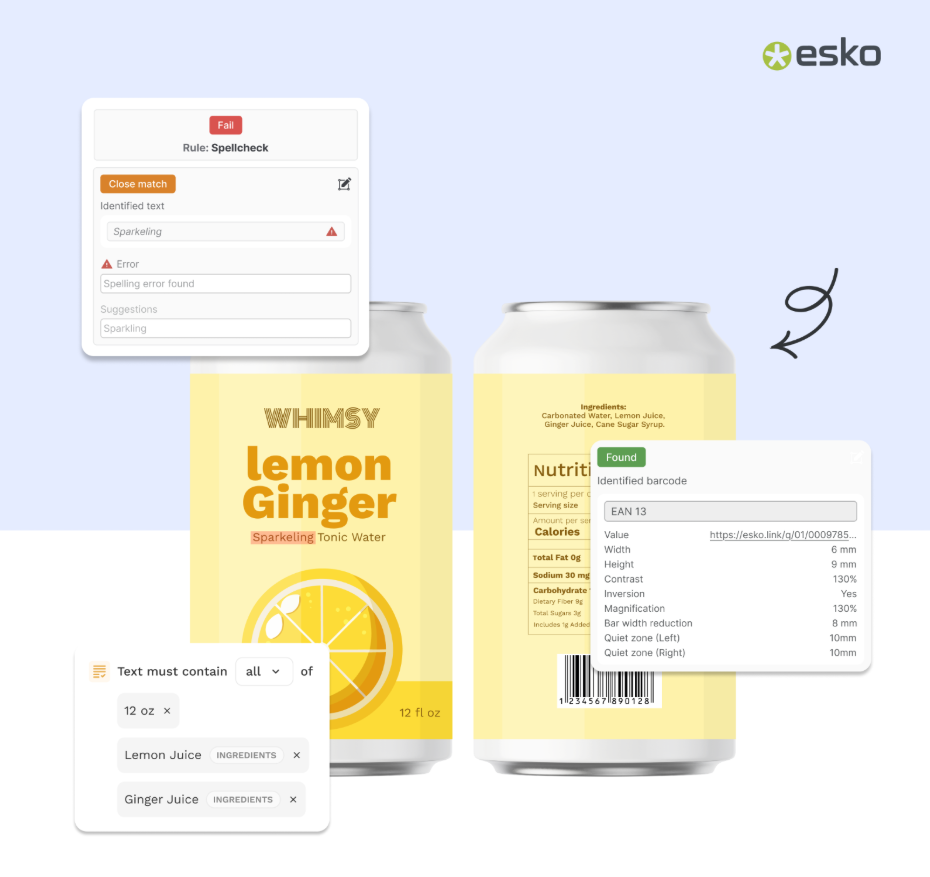
  • Automatically verify label information against FSSAI regulations using custom rulesets. 
  • Run automated label checks for barcodes, ingredients, net quantities, and more. 
  • Instantly detect errors and inconsistencies (e.g., incorrect nutritional data, missing disclaimers) in your labels. 
  • View errors and matches in a detailed results card and tag team members to implement changes in real time. 
  • Enable seamless collaboration between branding, regulatory, and packaging teams, making quick updates without disrupting your project workflow. 

2. Improved Quality Control

proofing through webcenter go

Quality assurance becomes faster and more reliable with artwork review features: 

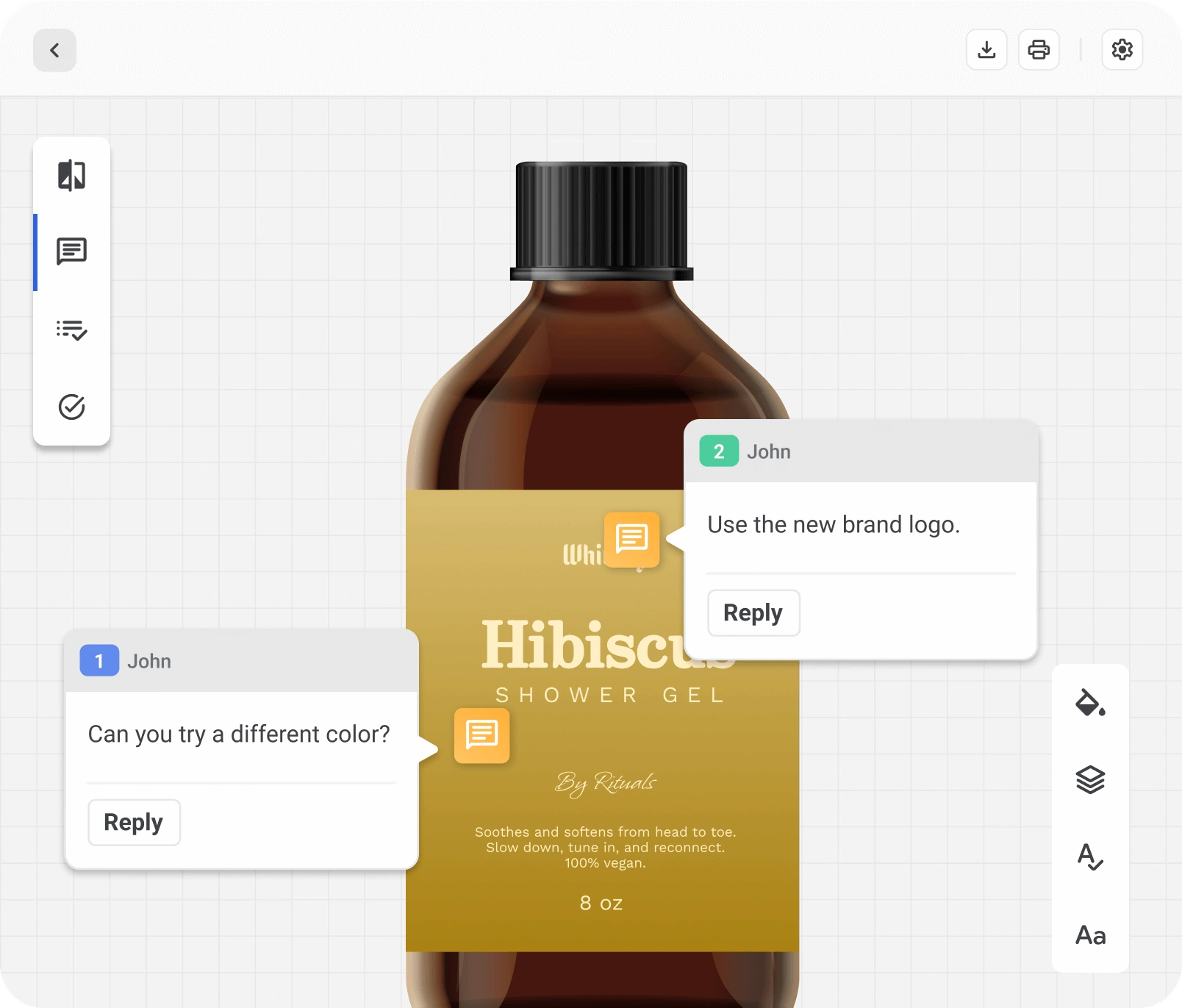
  • Use annotations and markup tools to leave actionable feedback directly on artwork files. 
  • Tag team members to address specific issues, minimizing back and forth and delays. 
  • Compare different versions of artwork PDFs instantly using 4 compare modes to identify changes at a glance. 

3. Faster Corrections

Annotation and markup tools

Artwork management tools speed up the artwork review and approval process: 

  • Provide precise feedback with markup tools that let you circle, underline, highlight key elements, and place comments exactly where they’re needed. 
  • Always know the status of tasks and ensure your team has all the information they need. 
  • View statistics to understand progress, bottlenecks, and areas for improvement 

Make Compliance Part of the Packaging Design Process

The best way to eliminate the risk of label and artwork non-compliance is by implementing digital tools to streamline the process from start to finish. With artwork management tools, you can ensure your food labels consistently meet FSSAI standards without manual effort.‍ 

Why Use AI for Label Compliance?

AI for label compliance using Esko software

AI-driven label checks allow you to: 

  • Verify compliance automatically by running checks against any artwork. 
  • Identify errors or inconsistencies in packaging labels, such as incorrect nutritional information, wrong barcode, or missing disclaimers. 
  • Accelerate the review process by reducing manual tasks with online proofing tools. 


For growing brands, solutions like WebCenter Go provide a fast, structured way to manage packaging and compliance without adding operational complexity. 

As requirements become more complex across multiple markets, product lines, and regulatory frameworks, teams often need deeper integrations, advanced workflows, and enterprise-grade governance. This is where WebCenter Enterprise comes into play. 

Before adopting an artwork management tool, here are a few questions to rethink your process: 

  • How do you ensure every label stays aligned with the latest FSSAI regulations and updates?  
  • Where do errors in labeling or packaging typically originate in your workflow?  
  • How many review cycles does it take to get artwork approved, and what causes delays?  
  • How do you track versions, feedback, and approvals across teams?  
  • How confident are you that the final printed artwork matches the last approved version? 


If you’re unsure about any of these areas, or simply want to explore how artwork management tools can simplify your workflow, book a discovery call today! 

Frequently Asked Questions

1. What are the FSSAI Food Labelling Regulations?

FSSAI food labeling regulations are guidelines set by the Food Safety and Standards Authority of India to ensure transparency and safety for consumers. These include displaying essential details like the food’s name, ingredients, nutritional values, vegetarian/non-vegetarian status, manufacturer details, FSSAI license number, and expiry date. Compliance with these regulations is mandatory for all packaged food products sold in India.

2. What Foods are Exempt from Food Labels?

Certain foods are exempt from labeling requirements under FSSAI regulations, such as:

  • Fresh fruits and vegetables.
  • Food served for immediate consumption (e.g., restaurants or catering).
  • Products in bulk packaging meant for industrial or institutional use.
  • Homemade or artisan foods sold directly to consumers without packaging.

3. What are the Mandatory Criteria for Food Labelling?

Food labeling must include essential details like:

  • Name of the food product.
  • Complete list of ingredients.
  • Nutritional information (calories, fat, protein, etc.).
  • Declaration of additives, if used.
  • FSSAI logo and license number.
  • Expiry or “Use By” date.

These criteria ensure product safety, quality, and transparency for consumers.

4. What are the PDP and IP?

  • PDP (Principal Display Panel): The front-facing part of the food package where key details like the product name, net quantity, and FSSAI logo are displayed.
  • IP (Information Panel): The side or back section containing detailed information like ingredients, nutritional values, and instructions for use.

5. How are Ingredients Listed on a Food Label?

According to FSSAI regulations, ingredients must be listed in descending order of their weight or volume as used in the product. This means the ingredient used in the highest quantity appears first, followed by others in decreasing amounts.

If the product contains additives such as preservatives, colorants, or flavor enhancers, these must be specifically declared. For instance, “Preservative (E202)” or “Color (INS 102).”

For compound ingredients (e.g., chocolate chips in a cookie), the breakdown of that ingredient must be provided if it constitutes more than 5% of the product. For example, “Chocolate Chips (Sugar, Cocoa Mass, Cocoa Butter, Emulsifier).”