
Written by Gouri Sasidharan
Content Specialist, Esko
Imagine it’s mid-November. A popular, in-demand toy brand is racing to push its Christmas lineup to market.
The dinosaur action figure now comes in three colors. The packaging needs to reflect the holiday theme. Legal just flagged a missing choking hazard warning. Marketing wants to tweak the tagline. Meanwhile, the French variant still needs translated copy and updated safety icons.
Feedback is coming in from email, PDFs, Slack, and a last-minute Teams call.
And then someone comes in and asks: “Which version are we approving?”
Everybody looks at them, and there’s a long pause.
This is every toy brand’s nightmare if they handle their packaging workflows manually.
This is especially common for mid-sized toy brands, where teams are growing, SKU counts are expanding, but packaging workflows are still catching up.
What Makes Toy Packaging Unique?
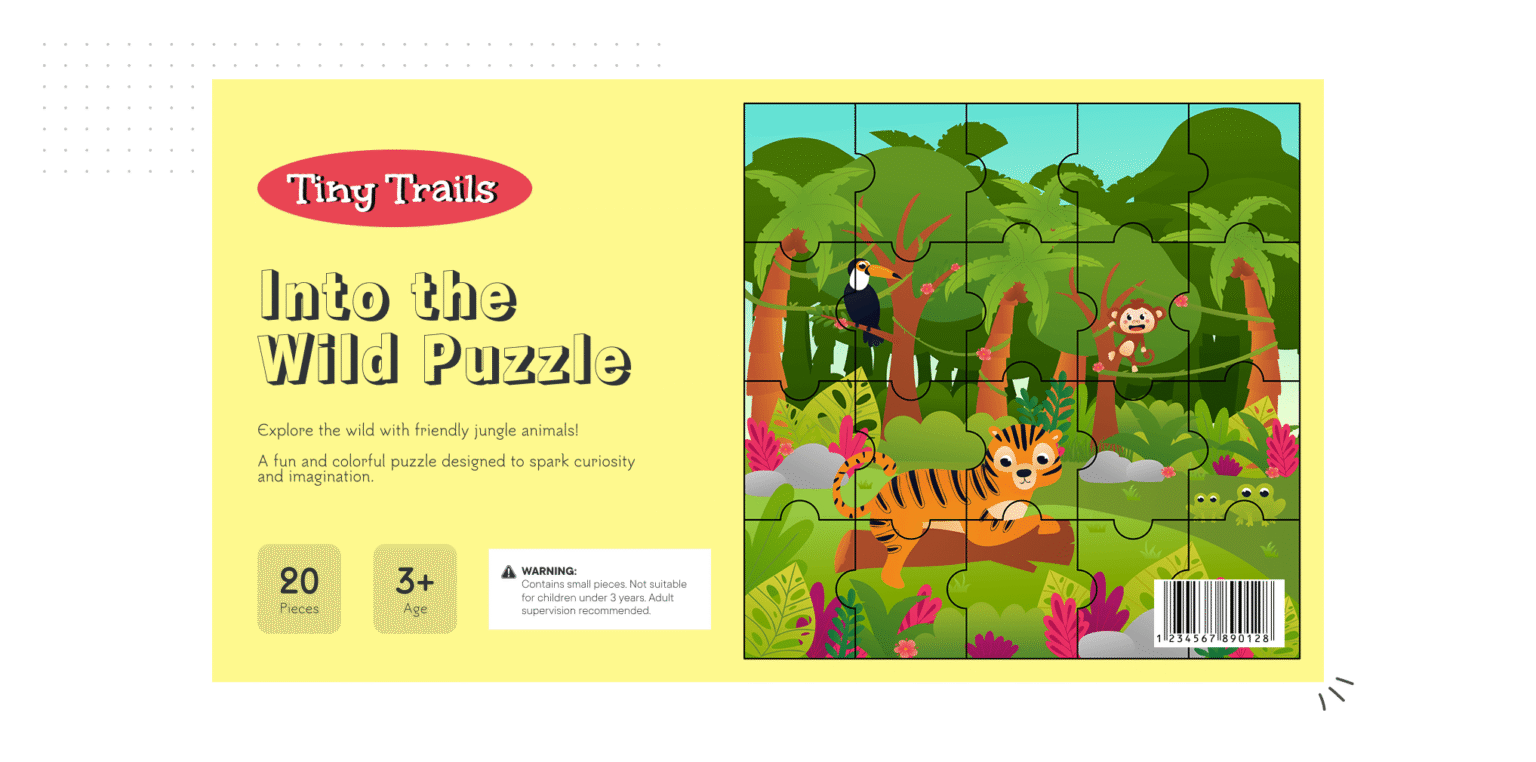
Toy packaging carries a different level of responsibility compared to many other categories:
- Designed for two audiences at once. The packaging needs to grab a child’s attention with colors, characters, and excitement. At the same time, it needs to reassure parents with clear safety and the right information. Striking that balance without cluttering the design is harder than it sounds.
- Safety-first communication is non-negotiable. Age warnings, choking hazards, and battery instructions aren’t optional elements. They must be accurate, visible, and compliant with regulations. Missing even one can lead to serious consequences, from legal notices to recalls.
- Multi-language requirements are common. A single toy often needs packaging variants for multiple regions. Each version comes with its own language, layout adjustments, and regulatory expectations. Managing these variations increases complexity quickly.
- Retail constraints add another layer. Packaging formats and visibility requirements differ across retailers. A product might need multiple packaging formats for different channels. This adds more versions into an already crowded workflow.
Now combine all of this with tight timelines and multiple SKUs, and things get complicated quickly.
Key Packaging Compliance Challenges for Toy Brands
1. Seasonal Launch Pressure
This is where mid-sized teams often feel the most pressure, handling multiple launches without the support of fully scaled systems.
- Launch cycles are tied to seasons. Toy sales peak around specific periods like Christmas and holidays. This creates intense bursts where multiple products need to be finalized at the same time. There’s very little room to push timelines once production is locked.
- Deadlines are never flexible. Retail timelines dictate when products need to hit shelves. Missing a deadline not only leads to lost revenue but also forfeits the selling window entirely. This makes packaging timelines extremely sensitive to delays.
- Multiple SKUs move in parallel. Variants such as colors, bundles, or editions are created simultaneously. Each variant needs its own packaging, often with slight differences. Managing all of them together increases the chances of overlap and confusion.
2. Multiple SKUs and Regional Variants
If your brand is growing and planning to expand to new markets, this is usually the first point where packaging complexity starts to spiral.
- Product variations multiply quickly. A single toy rarely stays singular for long. It expands into multiple variants, each requiring artwork updates. Suddenly, what seemed manageable turns into dozens of files in circulation.
- Regional packaging differences are unavoidable. Different countries require different languages, symbols, and regulatory elements. These variations may seem minor, but they require careful handling in every version. Missing a region-specific requirement can block product distribution.
- Version tracking becomes harder than expected. With multiple versions being edited simultaneously, it becomes difficult to identify the latest file. Teams may end up reviewing or approving outdated versions without realizing it.
3. Fragmented Review and Collaboration
There are many mid-tier brands still relying on tools that worked for them in the start. However, things start breaking when teams and packaging artwork operations start to scale.
- Feedback is scattered across tools. Comments are shared via email threads, annotated PDFs, chat messages, and calls, especially in mid-sized brands. This spreads feedback across multiple locations, making it difficult to consolidate. Important inputs can easily get missed in the process.
- Too many stakeholders are involved. Packaging requires input from teams such as design, marketing, legal, and compliance. Each team reviews from a distinct perspective, often at different times. Without structure, feedback overlaps or contradicts.
- No single source of truth. Different teams may be working on different versions of the same file. This creates confusion during approvals and increases the risk of errors.
4. Regulatory and Safety Compliance
- Mandatory warnings must be accurate and visible. Age grading, choking hazards, and usage instructions must follow strict guidelines. These elements need to be placed correctly and formatted as per regulations. Even small deviations can lead to non-compliance.
- Symbols and icons are regulated. Marks like CE, recycling symbols, and battery icons must meet specific standards. Incorrect usage or omission can result in rejected products. These elements need consistent validation across all SKUs.
- Claims and disclaimers must be validated. Claims like “improves motor skills” need to be supported and properly disclosed. Incorrect or unsupported claims can create compliance risks.
Why Traditional Processes Break Down
Many mid-sized toy brands are still managing packaging workflows using a mix of familiar generic tools. That’s where the cracks begin to show.
1. Manual proofreading is error-prone
Reviewing multiple SKUs and languages manually increases the chances of oversight. Fatigue and repetition make it harder to catch small but critical errors. Over time, this leads to inconsistencies.
2. Version control is difficult to maintain
Files are duplicated, renamed, and shared across platforms. Without structure, it becomes unclear which version is final. This creates confusion during approvals.
3. Approvals lack traceability
Decisions are often communicated informally through email, chat, or worse, verbally. There is no clear record of who approved what and when. This creates challenges during audits or issue resolution.
4. Compliance checks are inconsistent
Teams rely on individuals to spot compliance issues. As complexity increases, this approach becomes unreliable.
What Toy Brands Need in Their Packaging Workflow
To handle scale, speed, and compliance, your workflow itself needs to evolve.
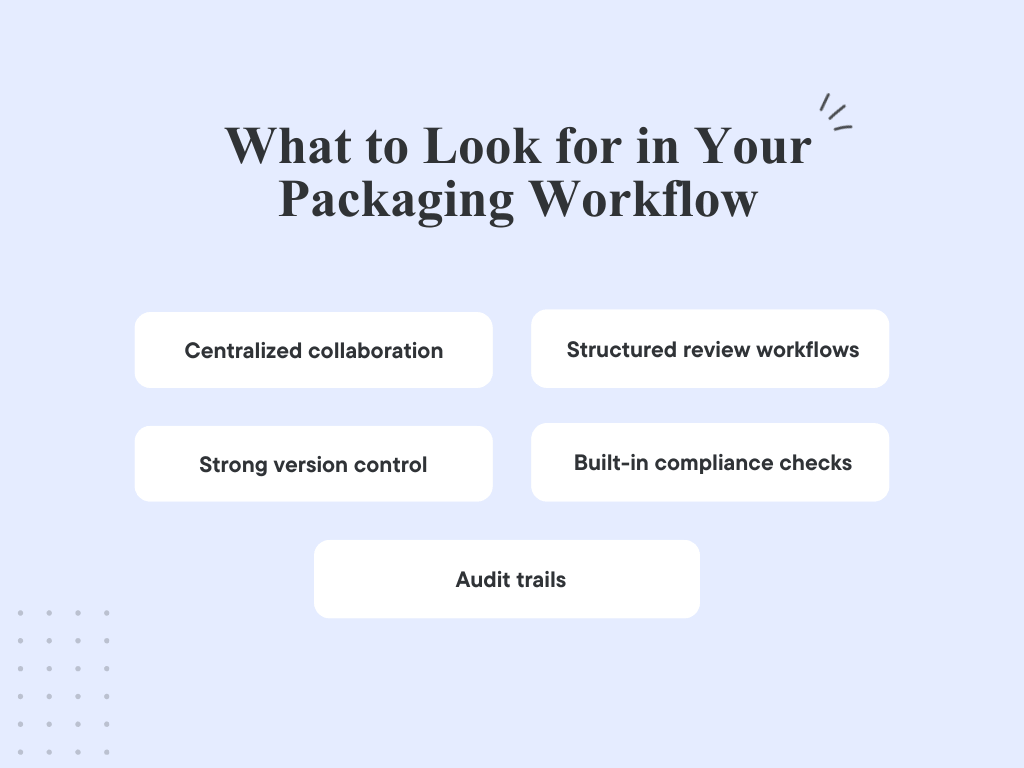
- Centralized collaboration: All artwork files, feedback, and approvals are managed in one place instead of being scattered across tools.
- Structured review workflows: Each stage should have defined ownership and responsibilities. This brings clarity to the process and ensures nothing is skipped.
- Strong version control: Teams should always know which version is the latest. A clear version history helps track changes easily. This reduces the risk of approving outdated files.
- Built-in compliance checks: Reduce reliance on manual reviews by triggering automated checks during specific workflow stages.
- Audit trails: Every action, comment, and approval is recorded within the platform. This is essential for regulatory and internal accountability.
These are typically the gaps growing toy brands start noticing as they scale, when existing tools and processes no longer keep up.
How WebCenter Go Solves Collaboration and Workflow Challenges
WebCenter Go focuses on bringing structure and clarity to packaging workflows of mid-sized brands across industries.
What you get from WebCenter Go
Centralized artwork review environment
All stakeholders access and review artwork within a single platform. This eliminates the need to switch between tools or search for the latest file. It ensures that everyone is aligned with the same version.
Flexible workflows tailored to different packaging needs
With WebCenter Go, your workflows can be configured based on product type, region, or complexity. For example, a simple domestic SKU may require fewer approval stages, while a multi-region product can include additional compliance checks. This flexibility ensures that teams don’t over-process simple projects or under-review complex ones.
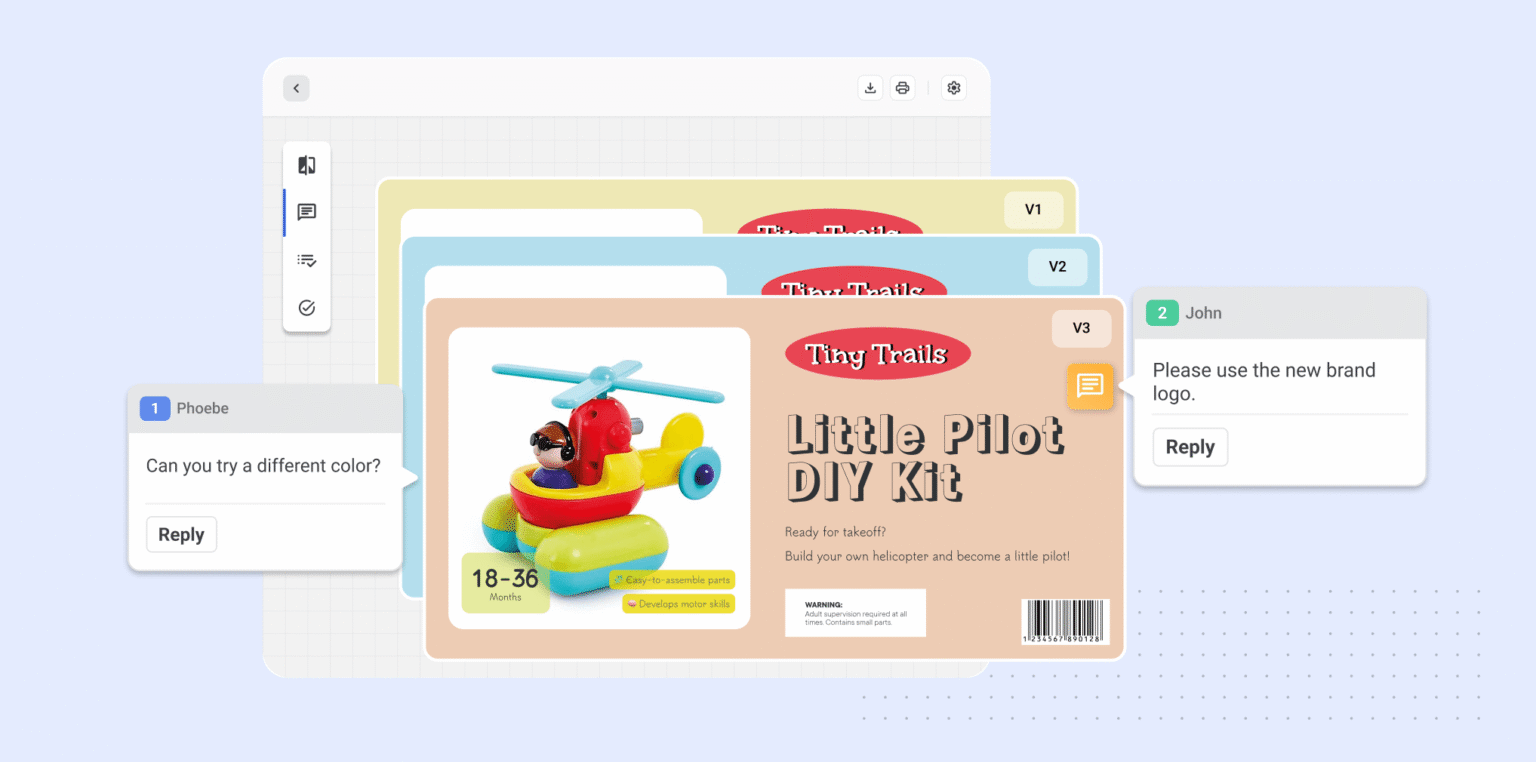
Contextual annotation tools for precise feedback
Comments can be pinned directly to specific areas of the artwork. This removes vague feedback like “fix label.”
For example, a reviewer can highlight a missing “3+ age warning” or flag that the logo color doesn’t match brand guidelines.
Built-in version control with full history
Every label update is automatically tracked and stored. You can revisit previous versions without manual file management. This reduces the risk of working on outdated files.
So, if someone uploads an older file without the updated choking hazard warning, it can be quickly identified and corrected.
Version comparison for quick validation
Different versions of artwork can be compared visually within the platform. This helps your team quickly identify changes between iterations. It is particularly useful when reviewing multiple SKU variants.
Audit trails for accountability and traceability
All approvals and actions are automatically logged within the system. This provides a clear record of decision-making. Moreover, it simplifies audits and ensures accountability across teams.
Adding Automated Compliance into the Same Workflow with Comply
While WebCenter Go brings structure to collaboration and approvals, Comply works within the same workflow to automatically validate packaging for compliance.
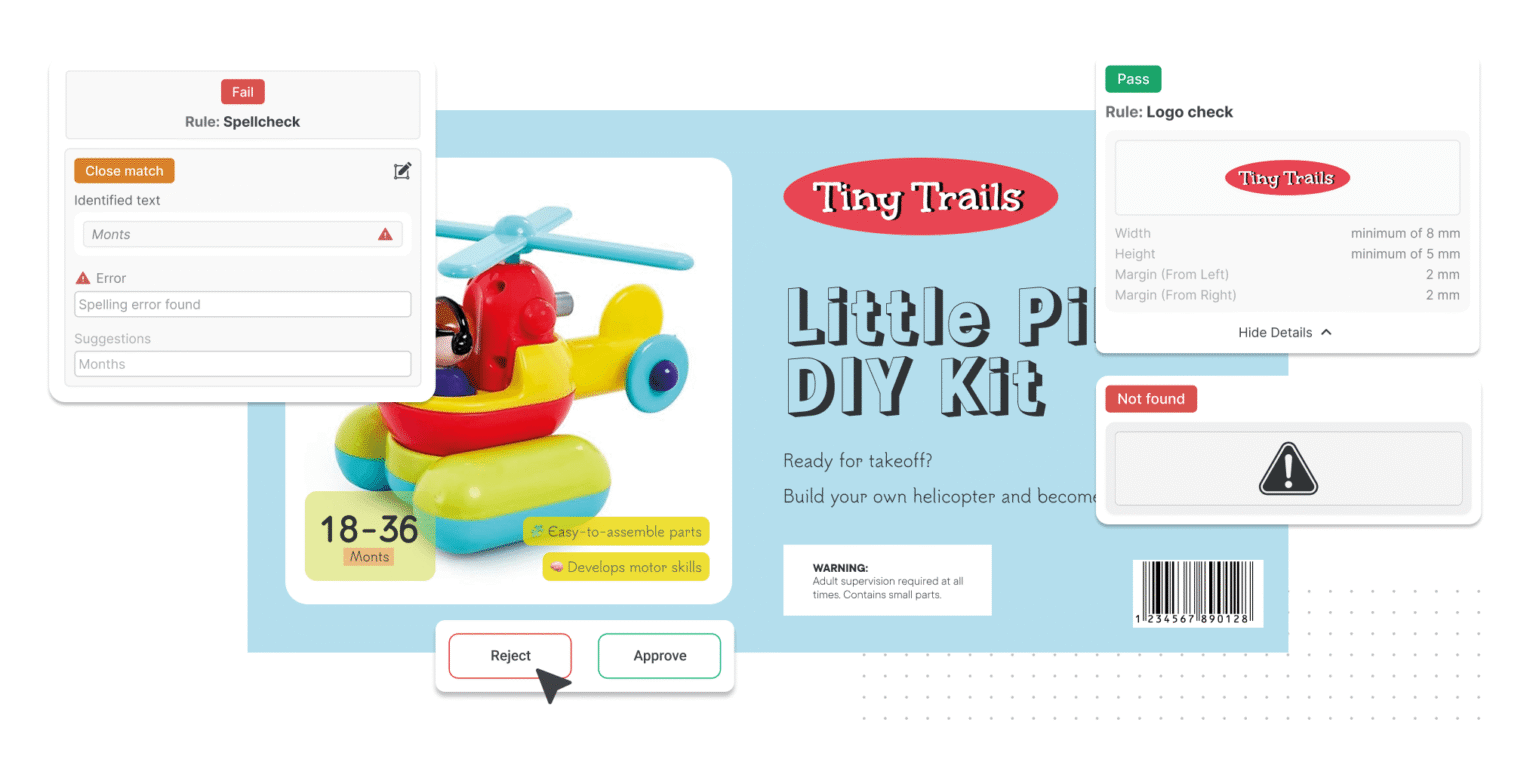
Automated detection of safety warnings and labels
You can finally wave goodbye to manual checks. Comply scans artwork to check for required elements. It verifies their presence, size, and placement.
For example, it can flag if a choking hazard warning is missing or too small.
Validation of regulatory symbols and icons
Comply verifies the presence and accuracy of symbols such as CE marks and battery icons. It ensures that all required elements meet regulatory standards. This helps maintain consistency across regions.
Claim and disclaimer verification
Product claims and disclaimers are checked against predefined rules. The system flags missing or incorrect content. This ensures alignment with regulatory and brand guidelines.
Integration with workflow stages for timely checks
Compliance checks can be triggered at specific points in the workflow. This ensures issues are caught early rather than at the final stage, reducing last-minute rework.
Scalability across multiple SKUs and regions
The same set of rules can be applied across all packaging variants. This ensures consistency even as the number of SKUs increases. It allows your team to scale without increasing manual effort.
Bringing It Together: A Scalable Packaging Workflow for Toy Brands
When structured workflows and automated compliance come together, the process becomes more efficient.
- Centralized workflow from design to approval. Artwork moves through a single system from artwork upload to final approval. This ensures visibility at every stage. Teams always know the status of each SKU.
- Early detection of issues through automation. Compliance checks run during the review process instead of at the end. This allows teams to fix issues earlier. It reduces delays and avoids last-minute surprises.
- Improved alignment across teams. All stakeholders work within the same platform and process. This reduces miscommunication and duplication of effort. It creates a more coordinated workflow.
- Faster turnaround with reduced rework. Clear workflows and automated checks reduce the need for repeated revisions. Teams can move faster without compromising accuracy. This is critical during seasonal peaks.
For most mid-sized toy brands, this kind of structured workflow is where things start to click.
Now, if your team is already operating on a larger scale with more complex workflows or global packaging operations, you might find yourself outgrowing old systems.
In those cases, solutions like WebCenter Enterprise are built to handle that next level of complexity.
Conclusion
Toy packaging is a high-stake balancing act. A more structured approach to your artwork management and compliance can help simplify the entire process.
While WebCenter Go brings order to collaboration, Comply adds a layer of automated validation.
Together, they help toy brands move faster, without sacrificing accuracy or safety.
And in a category where timing and trust both matter, that’s not a small advantage.
If you’re still confused about adopting packaging management software, talk to our team.