1. Volume spikes with no timeline flexibility
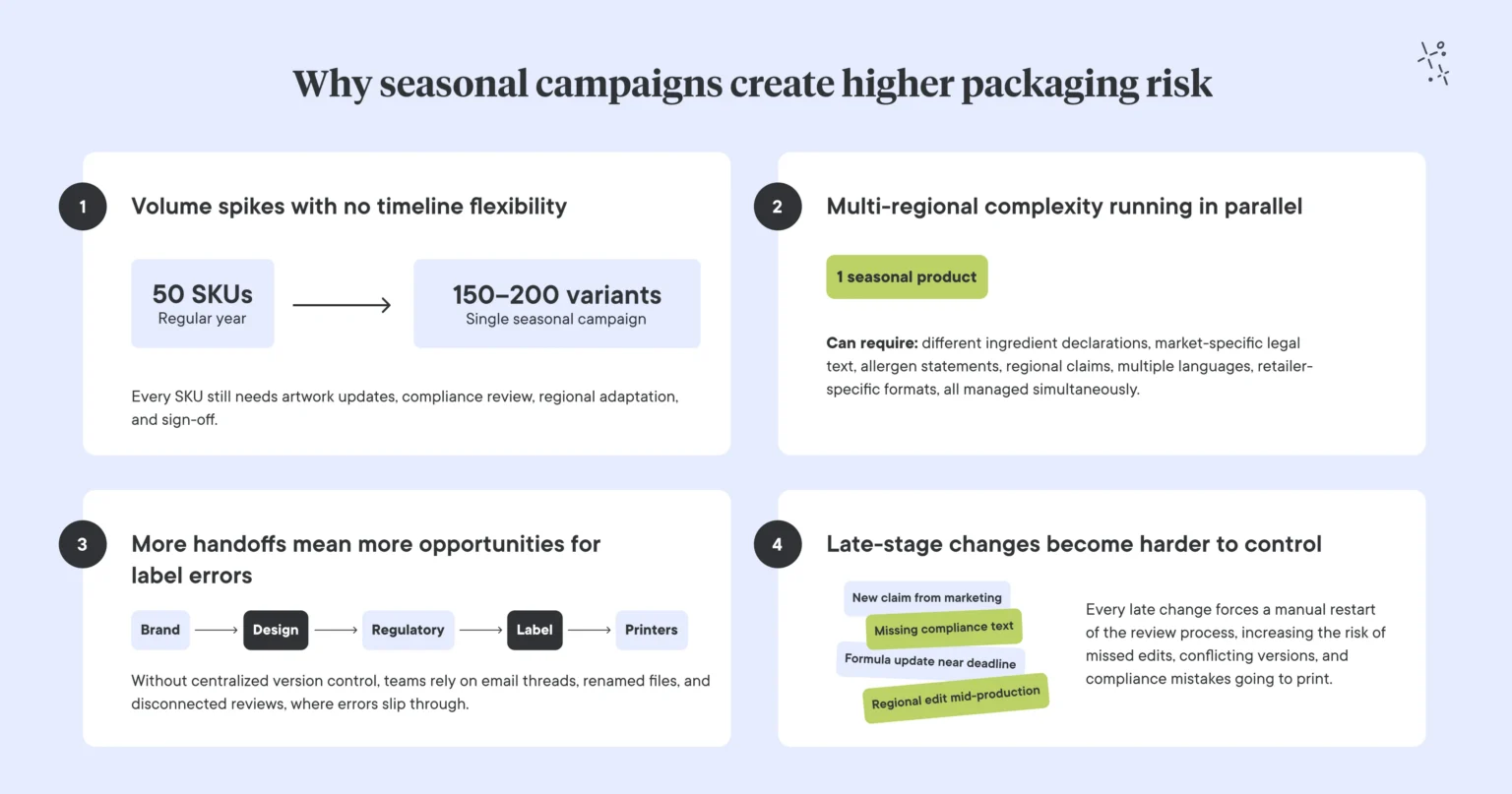
Seasonal campaigns dramatically increase packaging workload in a very short period of time. A brand managing 50 active SKUs year-round may suddenly need to process hundreds of festive or regional variants within a single campaign cycle.
And unlike regular launches, holiday timelines are fixed. Packaging delays do not simply postpone a campaign. Missing a retail window for Halloween, Diwali, or Lunar New Year can mean losing an entire season of revenue.
Every SKU still requires artwork updates, regulatory review, market-specific adaptations, approvals, print validation, and production sign-off.
2. Multi-regional complexity running in parallel
Seasonal campaigns often run across multiple regions simultaneously, creating a surge in packaging variations. One festive product may require different ingredient declarations, market-specific legal text, updated allergen statements, regional claims, multiple languages, and retailer-specific packaging formats.
3. More handoffs means more opportunities for label errors
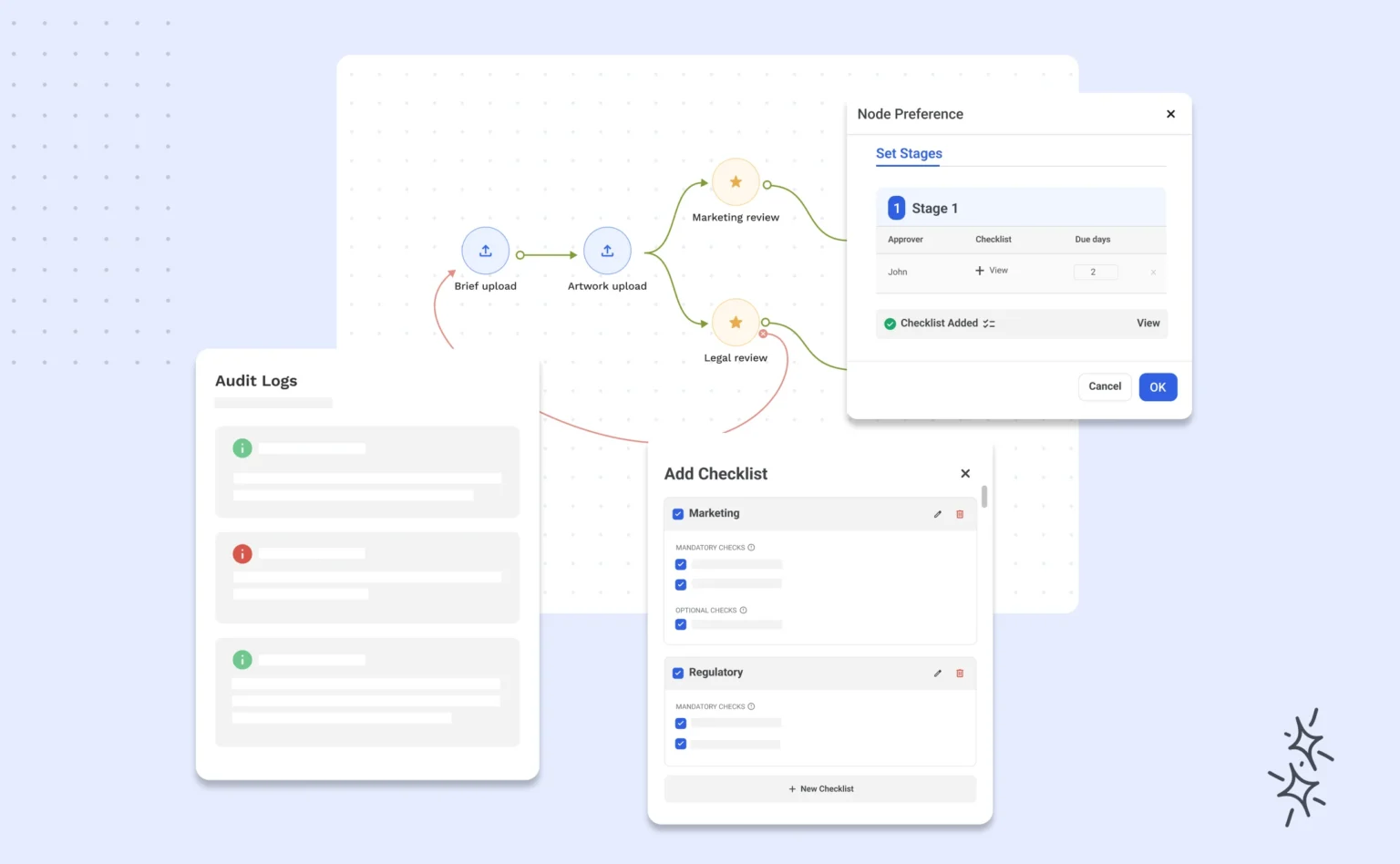
Seasonal packaging campaigns rarely stay within a single team. Brand, marketing, design, regulatory, legal, supply chain, production teams, printers, and external agencies are often reviewing files at the same time. Every new stakeholder introduces another approval layer, another feedback loop, and another opportunity for outdated artwork to move forward accidentally.
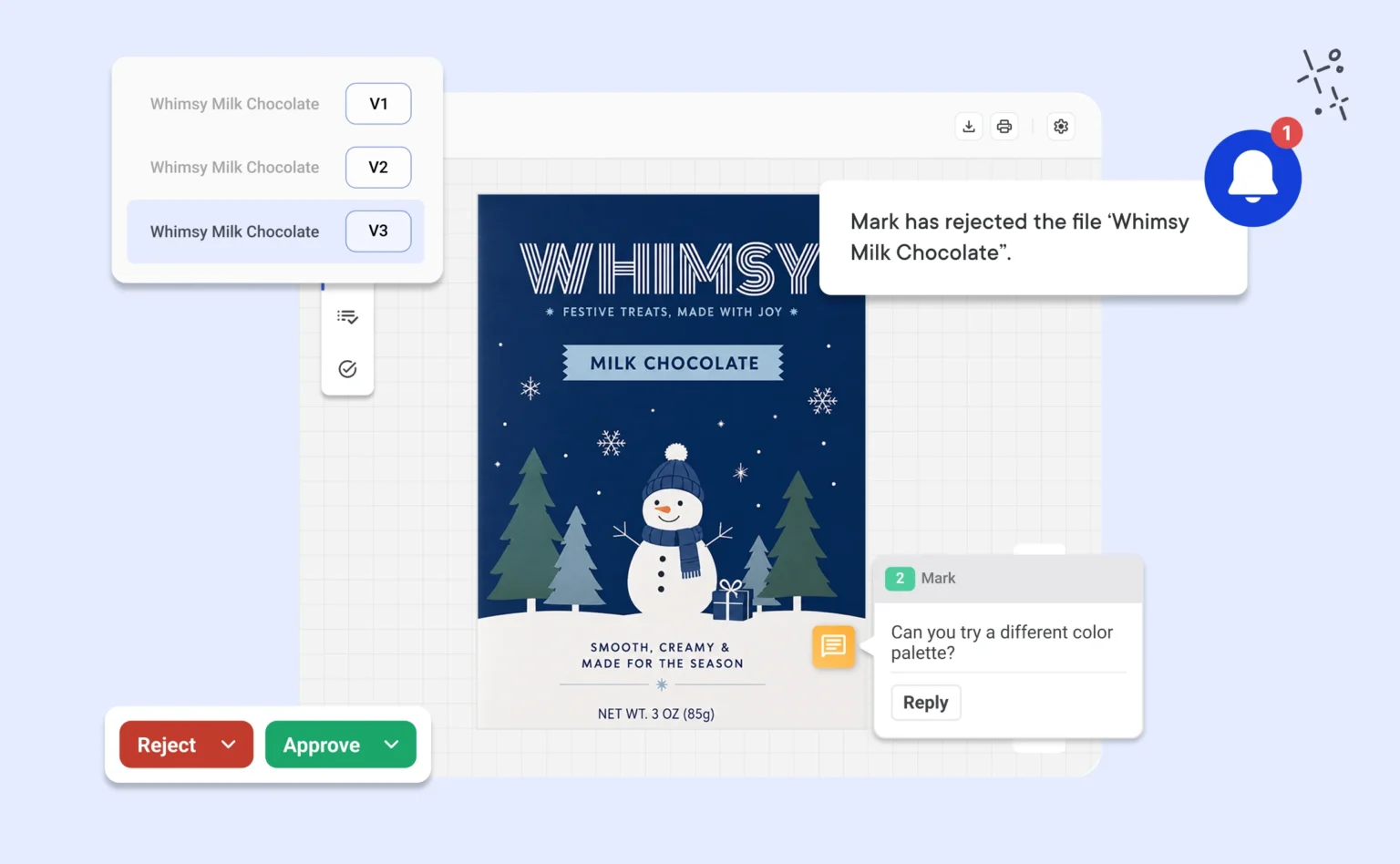
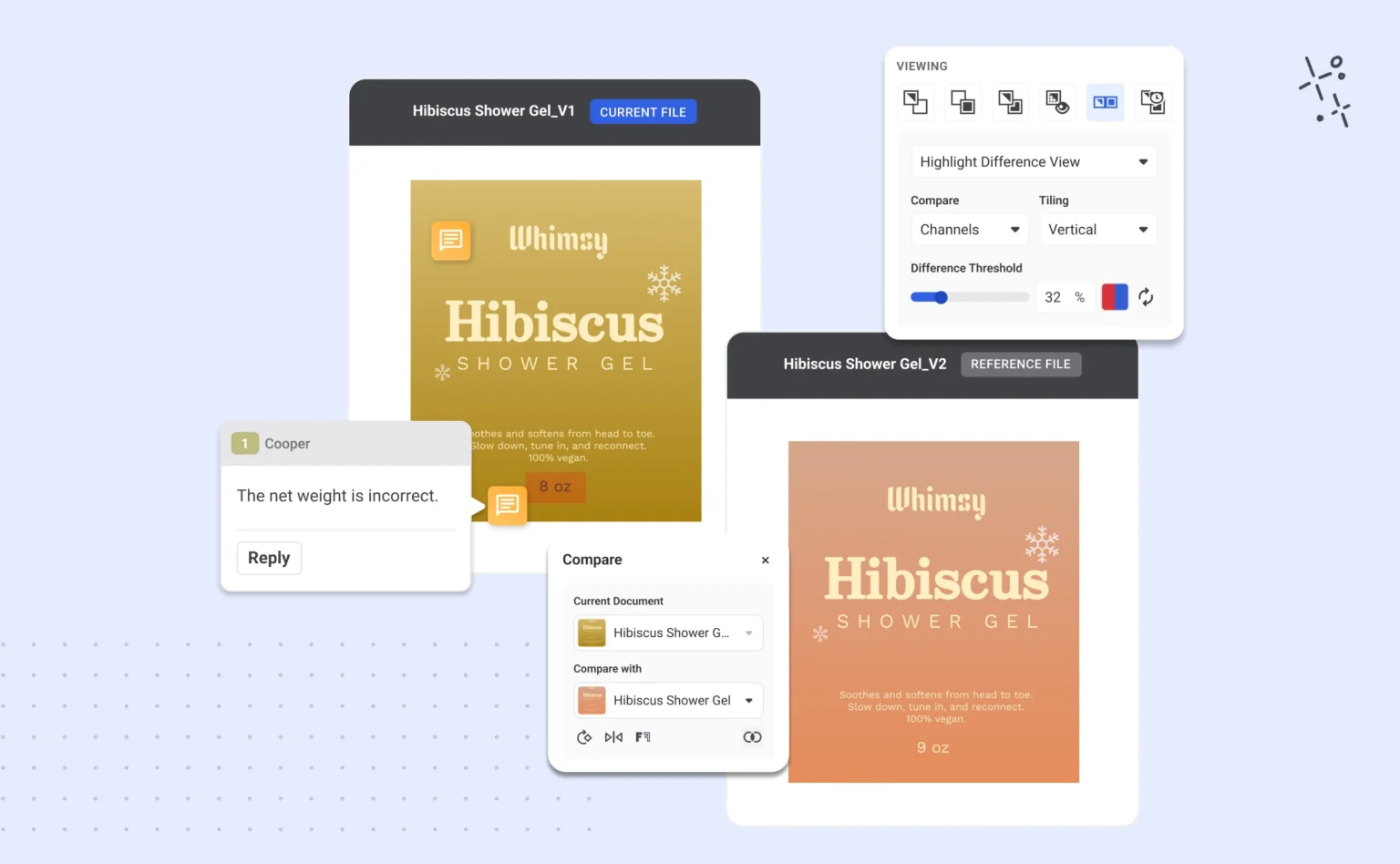
Without centralized version control, teams often rely on email approvals, shared drives, manually renamed files, and disconnected review processes.
That is when outdated claims, incorrect copy, or unapproved artwork versions start slipping into production.
4. Late-stage changes become harder to control
Seasonal packaging workflows are especially vulnerable to late changes.
Marketing may introduce a new campaign claim after approvals begin. Regulatory teams may flag missing compliance text. Ingredient or formula updates can arrive close to print deadlines. Regional teams may request market-specific edits midway through production.
In disconnected workflows, every late-stage change forces teams to manually restart parts of the review process. That increases the likelihood of missed edits, conflicting versions, approval delays, and compliance mistakes making it into print.
Most packaging compliance errors do happen because seasonal campaigns put pressure on processes that were never designed to handle that level of speed, complexity, and volume at once.
And the impact is significant. Labeling issues were the leading cause of US food recalls in 2024, accounting for nearly 45% of all recall events and an estimated $1.92 billion in direct costs. In January 2024 alone, the FDA issued 30 product recalls, 18 of which were linked to undeclared allergens or incorrectly declared ingredients.
The underlying issues behind these recalls tend to look very familiar across seasonal packaging campaigns.
Outdated legal text carried over from the standard SKU without anyone explicitly verifying it was updated for the seasonal variant.
Incorrect ingredient declarations because the product specification and the artwork live in separate systems with no automatic link between them. Someone updates the spec. Nobody updates the file.
Allergen errors at the intersection of regional variants. The core product is the same. Regulatory requirements differ by market. A reviewer approves a label based on one market’s rules without recognizing the target region has different requirements.
Unapproved claims added by marketing after regulatory sign-off, without looping back through the compliance review.
Version control failures. Two versions of the same artwork circulate simultaneously. The wrong one gets approved. It happens more often than most teams want to admit, and it happens most often during high-volume seasonal campaigns when file management is least rigorous.
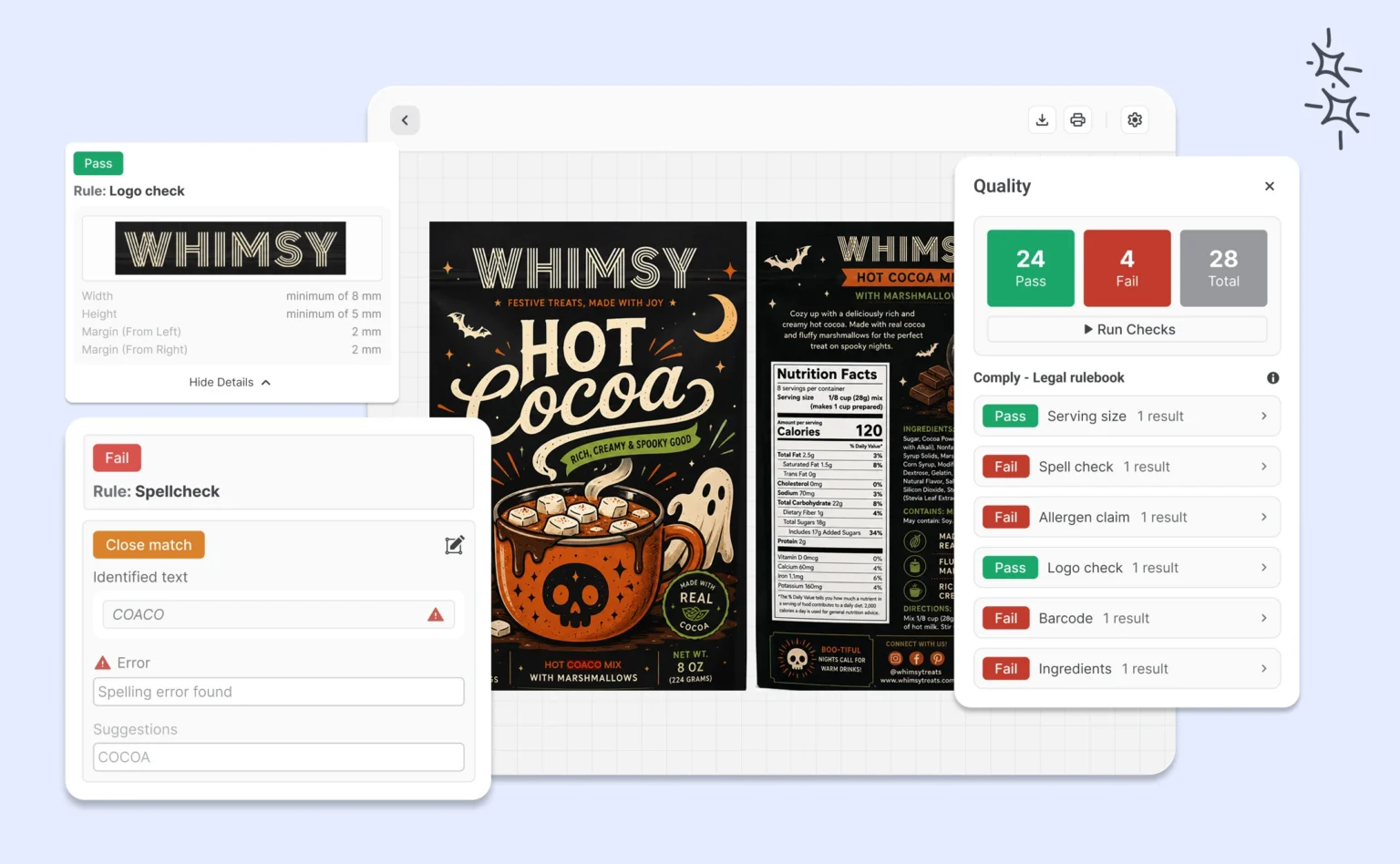
| Tip: The most common seasonal artwork errors are not creative mistakes. They are information management failures. A compliance check tool that runs before human review begins will catch more of them than additional reviewers will. |