Written by Geert de Proost
Director, Software Product Offering – Converters, Esko
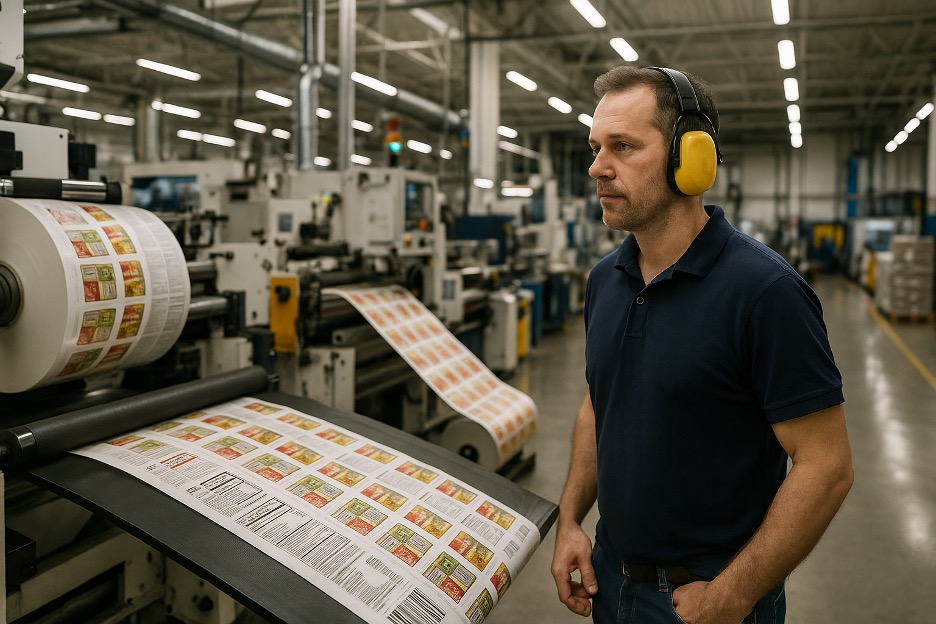
There’s a unique energy that pulses through me every time I walk on the factory floor of a packaging or label converter. It’s where color, content, nutrition facts, and structure all converge seamlessly onto a substrate. This work is far more than manufacturing — it is the craft of earning consumer trust. That trust is built daily by dedicated specialists who leave nothing to chance. Their relentless pursuit of excellence is the backbone of the packaging industry.
Listening Beyond the Surface: The True Voice of the Converter
In product management, the voice of the customer isn’t just a metric — it’s the compass that guides innovation. Over the past few years, global conversations with labels and packaging converters have revealed a new reality where correlated trends of shorter run lengths, increasing job volumes and shorter lead times strengthen one another and fundamentally slow down the next leap in efficiency for converters. The landscape is shifting rapidly, and converters are under immense pressure to adapt to evolving requirements and rising expectations.
A recent visit to a carton converter made this clearer than ever.
The Data and Process Dilemma
When I arrived, the owner proudly shared that business was thriving, and they had recently hired more staff — a customer service representative (CSR), a prepress expert, and a QA engineer — to handle growing job volume. It was encouraging to hear that orders were strong, and talent was being added.
But shortly after, she confessed a growing concern: the current operating model simply isn’t sustainable. Departments work in silos. Communication — internally and with customers — happens almost entirely through email. As inboxes fill, versions multiply; information gets duplicated, and misunderstandings increase. Errors follow.
This isn’t a problem for people. It’s a process problem — and it’s reaching a breaking point.
A Call for Transformation
As requests for quotes (RFQs) and order volumes grow, run lengths shrink, and delivery expectations accelerate, the cracks in the process widen. At the same time, customers are demanding accurate digital data for inks, substrates, and compliance — driven by global regulatory changes. But this information is often missing, scattered, or inconsistent, making transparency and compliance a daily struggle.
Adding headcount is costly and, at best, a temporary bandage.
It becomes clear that this challenge cannot be solved by adding just one more feature or adjusting one more workflow slider. What converters need is a foundational shift: a move toward smart, connected digitization.
A Cloud Platform Enabling Digital Transformation
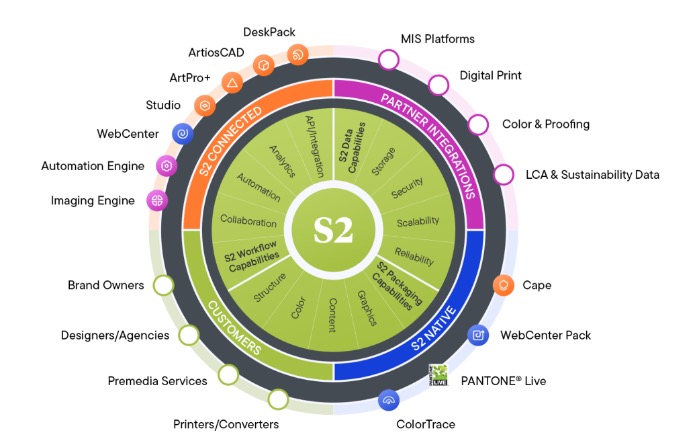
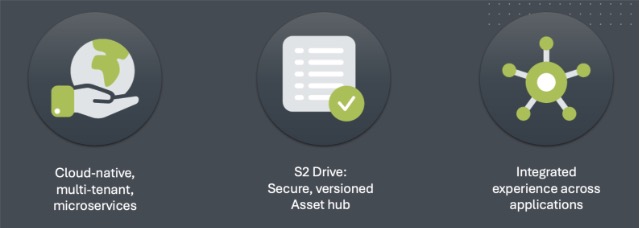
Through continuous Voice of Customer feedback and validation loops, the blueprint for that shift took shape. That vision came to life at drupa 2024 with the introduction of Esko S2. Esko S2 is a modern, secure cloud platform designed to accelerate digital transformation for packaging and label converters, streamlining the process from customer communication to delivery and digitally connecting all stakeholders internally and externally. It is grounded in several core concepts:
S2 Drive
A secure, centralized, version-controlled data hub that enables secure sharing internally and with customers without duplication ensuring a single source of truth.
Connected Ecosystem
Along with all Esko applications, external systems and production devices connect to S2 through public APIs, making data accessible and workflows interoperable across departments and production sites.
Microservices Architecture & cloud native applications
Existing Esko technologies are delivered as flexible microservices on S2 empowering non-expert personas to use them upstream in the process, reducing iteration cycles and enabling rapid innovation. Cad and preflight technologies are prime examples of this.
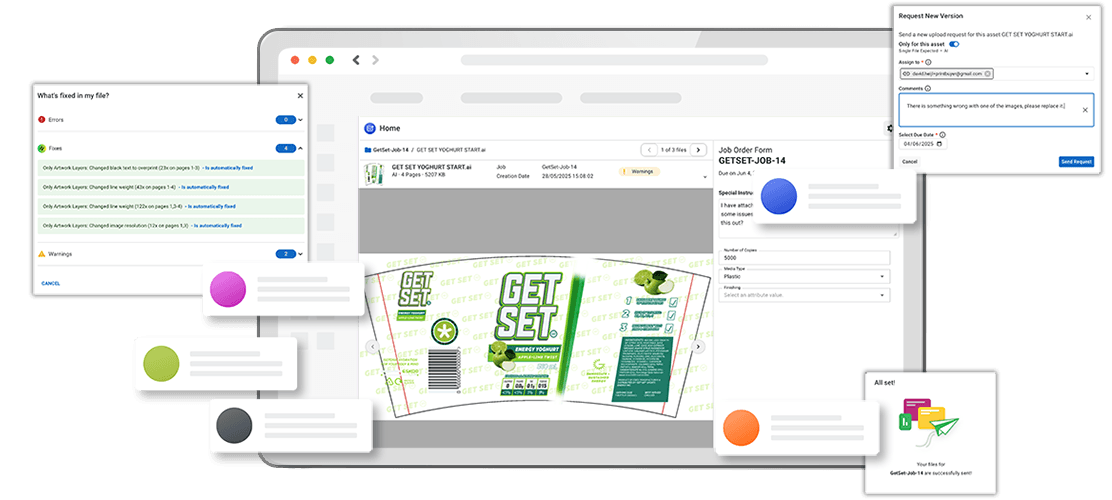
These microservices are also the key building blocks for modern, easy-to-adopt cloud native applications such as WebCenter Pack.
AI-Powered Automation
AI services accelerate intelligent automation by further removing manual touchpoints and elevating decision-making across the workflow. Phoenix and Print Clone are just two examples of this.
Unified Packaging Data Model
A consolidated data foundation ensures maximum interoperability across technologies and applications.
From Milestone to Measurable Impact
The announcement at drupa was a major milestone. But even more powerful is the feedback from converters already experiencing the benefits of S2. They’re validating the vision: a streamlined, intelligent, sustainable packaging process built on a future-proof infrastructure.
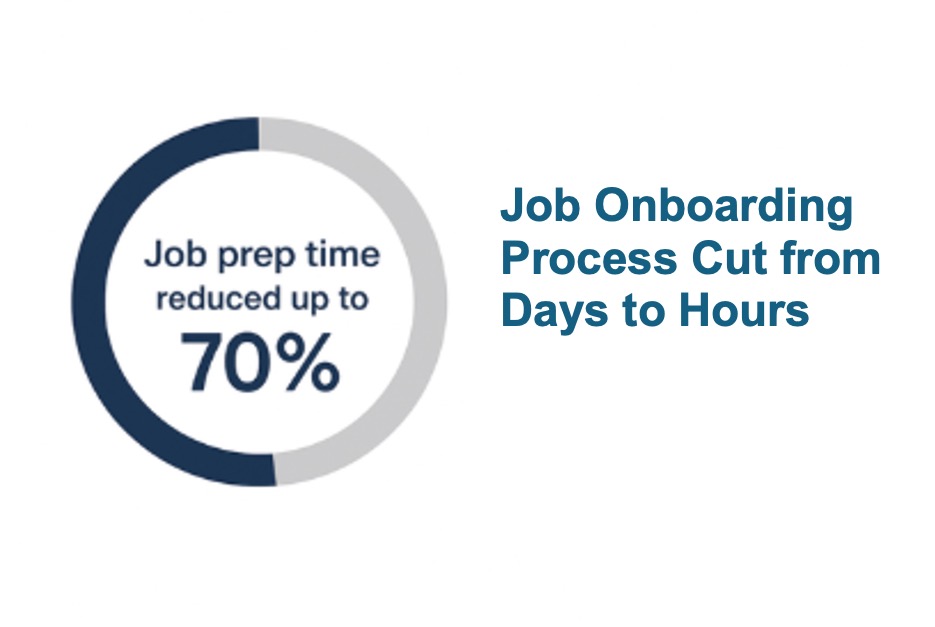
The journey is still unfolding, but the direction is clear — and converters are seeing tangible results. Lead time reductions of 50–80% are not the exception; they are becoming common outcomes of operating in a truly connected ecosystem.
Profitable and Sustainable Business Growth
S2 is more than a platform. It is a catalyst for change — enabling converters to grow profitably and sustainably in a world defined by rapid change and rising expectations.
As job volumes increase, regulatory demands intensify, and speed-to-market becomes non-negotiable, converters need a modern infrastructure that supports smarter decisions, fewer touchpoints, and first-time-right delivery.
S2 delivers that foundation. Throughout the rest of this blog series, I will walk through the converter process from customer communication to press, highlighting the tangible impact of S2 on quality and speed to delivery for converters.