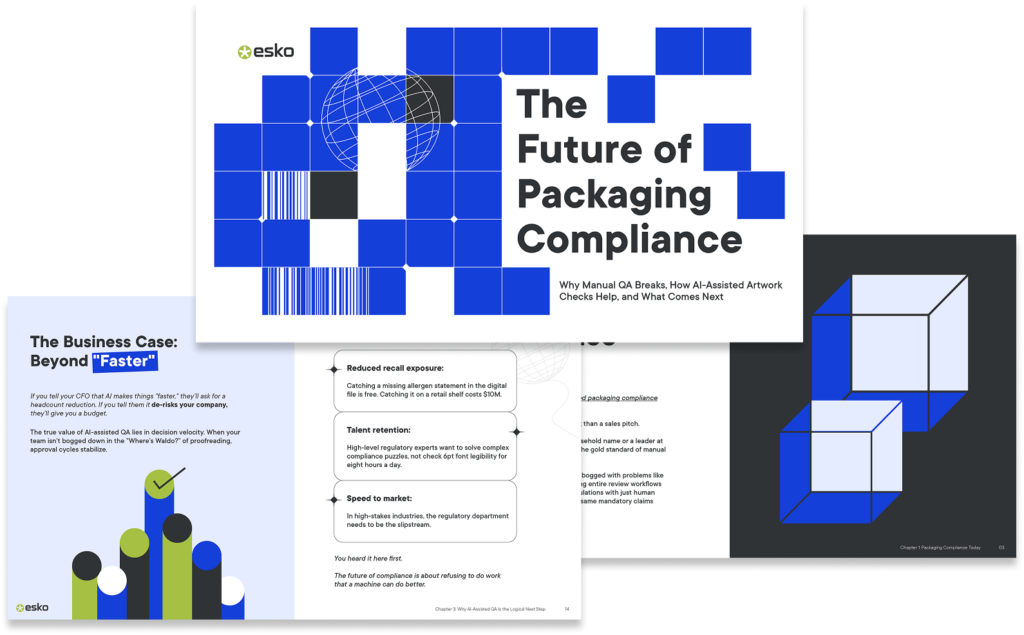
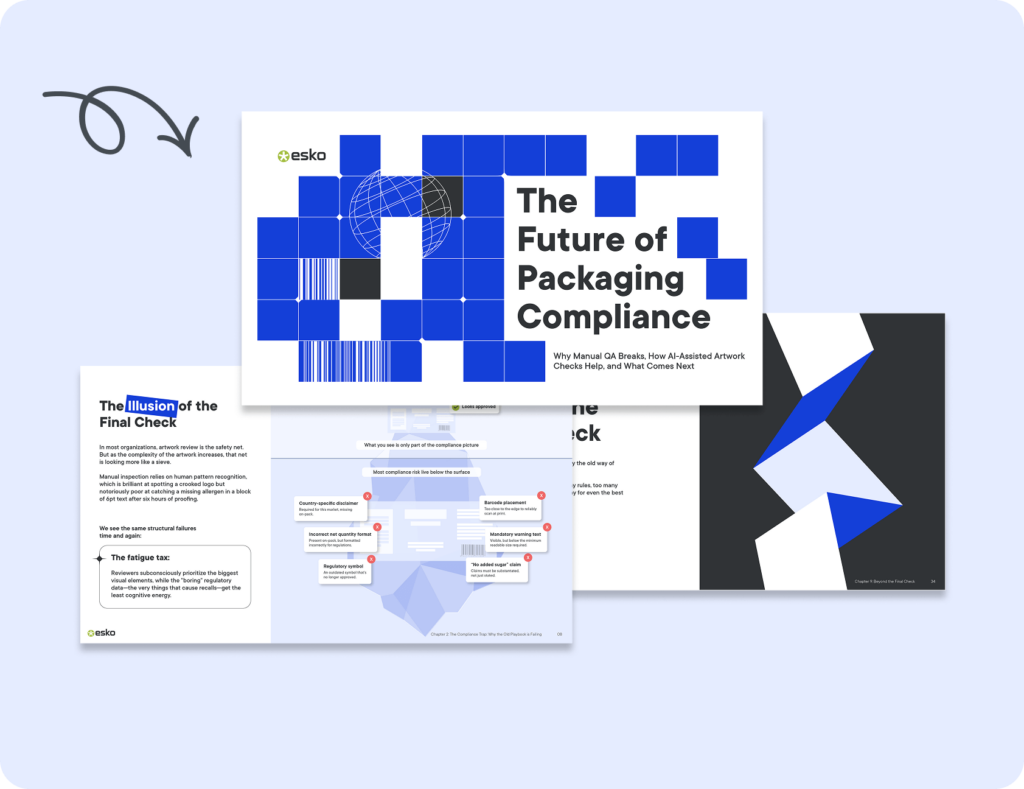
The Future of Packaging Compliance
Why Manual QA Breaks, How AI-Assisted Artwork Checks Help, and What Comes Next
Why This Topic Deserves Attention
Recall Costs
77% of companies that experienced a recall in the past five years estimated financial impacts of up to $30M, with some reporting more.

Rising Recalls
The US FDA reported 400+ food recalls by Q3 2025, with labeling and allergen errors among the leading causes.
SKU Complexity
Large brands now manage hundreds to thousands of SKUs, often across dozens of regulatory environments.
Approval Delays
Artwork files commonly go through 4–6 reviewers and 3–8 versions before approval.

What's Inside
- Why manual proofing is now a systemic risk.
- How small labeling errors quietly turn into recalls.
- How AI-assisted checks can make you launch faster.
- What modern compliance architecture looks like in practice.
- How brands reduce approval loops and late-stage fixes.
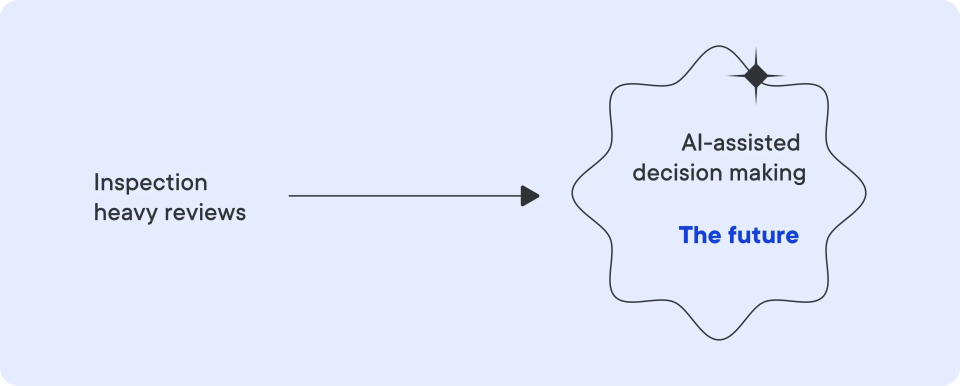
What if artwork QA did not depend on people searching for problems, but on systems surfacing them so you can make a decision?
Who This Is For
Teams Managing Complex Packaging Environments
- Multi-market packaging
- High SKU volumes
- Regulatory-heavy categories
- Frequent artwork revisions
- Tight launch timelines
Roles Responsible for Getting Packaging Right
- Regulatory Affairs
- QA & Compliance Leaders
- Packaging Managers
- Brand & Innovation Teams
- Operations & PLM Leaders

Packaging Compliance Today
Too many high-performing teams are bogged with problems like last-minute artwork changes triggering entire review workflows again, reviewing against multiple regulations with just human eyes, and reviewers checking for the same mandatory claims repeatedly across SKUs.
Why Errors Occur
Repetitive burnout
Human eyes aren’t built to perform the same checks across hundreds of artwork versions without glazing over.
Time pressure
Rework and shrinking launch timelines can lead to human errors.

Signal drift
Different reviewers (or different agencies) interpret the same rule in five different ways, leaving your brand consistency to drift off course.

Where Recalls Really Come From
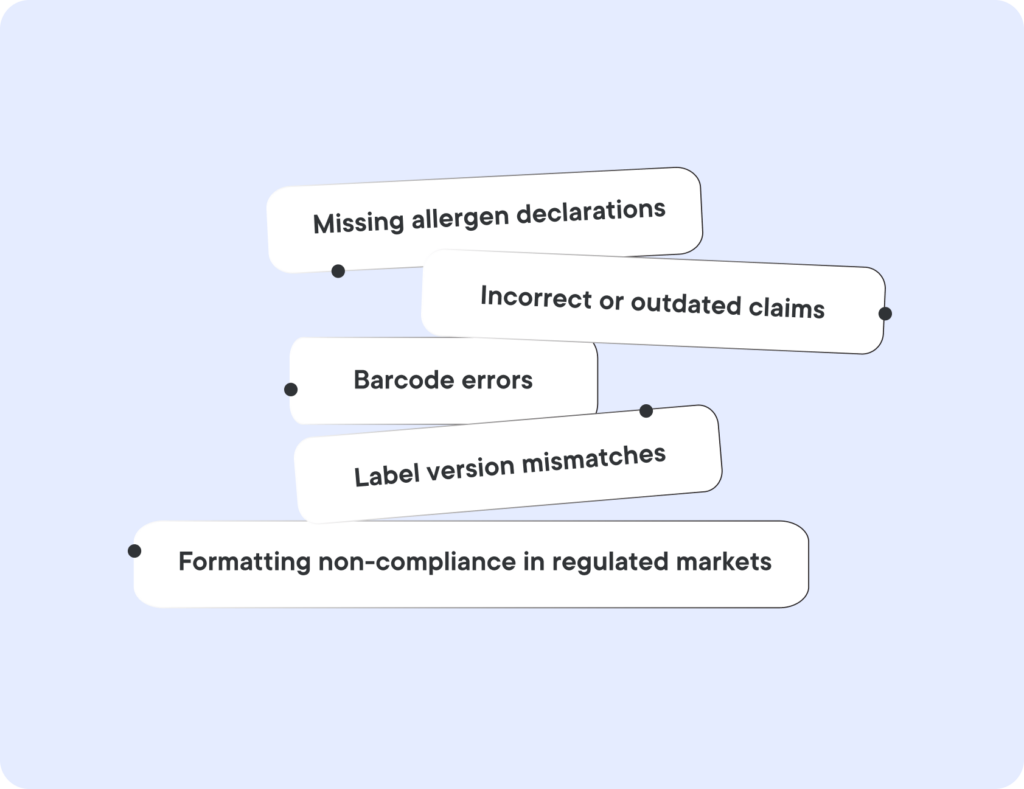
Many recalls are linked to small, repeatable issues.
These errors rarely result from negligence.
They often occur in high-volume, repetitive review environments.
Why AI-Assisted QA Is the Logical Next Step
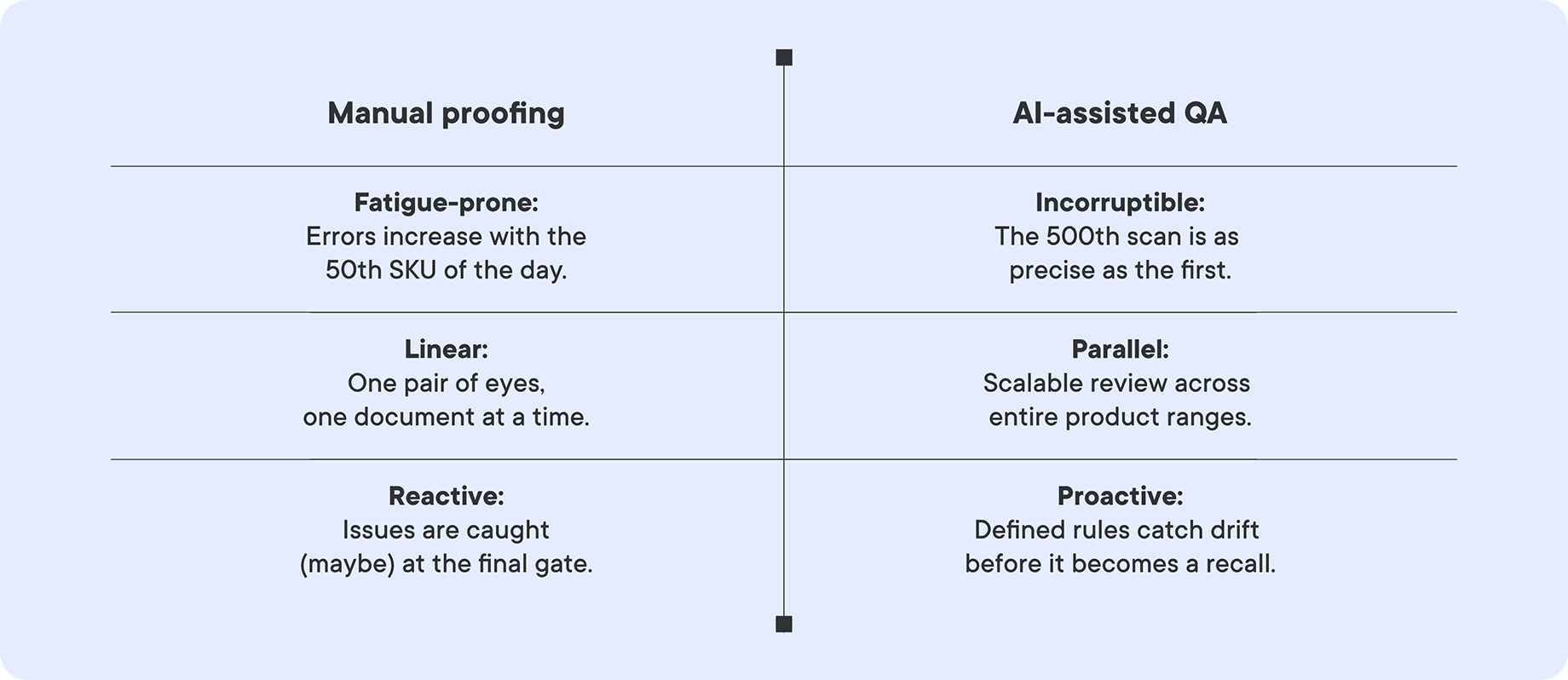
AI is the only tool that scales at the same rate as the complexity. It moves the compliance function from a linear process (one person, one proof, one hour) to a parallel capability.

Why Download the Full Guide
As portfolios and regulatory demands grow, many teams are rethinking how they manage compliance. This guide tells you what they’re doing differently and where they’re seeing results.