
Written by Alexandra Blanck
Content Manager, Esko
If choosing flexo screens feels like ordering from a menu that’s 40 pages long, you’re not alone.
For many flexo teams, the front end of the workflow has quietly become one of the most complicated parts of the job.
Too many screens to test. Too many tools to stitch together. Too many manual steps before you even get close to making a plate.
And all of this is happening while expectations keep rising:
- Faster turnaround times
- Higher print quality
- More consistency on press
- Less waste along the way.
That growing complexity is exactly what Esko set out to tackle with Flexo Front End: a new, smarter approach to flexo screening, calibration, and plate preparation that simplifies decisions, automates the busywork, and helps teams get reliable results faster.
The Flexo Challenge: Too Many Choices, Too Manual
Traditionally, building a flexo front end meant assembling pieces yourself.
You’d start with a Raster Image Processor (RIP), then evaluate multiple screening options, test and trial different configurations, and fine-tune calibration.
Meanwhile, you’re hoping you picked the “right” setup for your specific hardware.
In some cases, customers were testing dozens of screens just to land on a handful that worked.
Add manual plate merging, file handling, and setup steps on top of that, and it’s easy to see how inefficiencies (and errors) creep in.
Flexo Front End flips that model on its head.
Meet Flexo Front End: A Simpler Way to Start Flexo Jobs
At its core, Flexo Front End brings together flexo screening and calibration into a single, unified package, designed specifically for flexo plate making.
Instead of asking customers to build their own solution, Esko has bundled what’s needed and optimized it based on real-world flexo setups.
The solution is made up of two parts:
- Flexo Front End, which focuses on screening and calibration
- Flexo Front End Plus, which adds automation for plate layout
Together, they form a front end that’s easier to implement, easier to use, and far easier to standardize.
One Size Doesn’t Fit All — And That’s the Point
Not all flexo hardware is created equal, and Flexo Front End is built around that reality.
The solution is organized into four clearly defined tiers:
- Core
- Spark
- Crystal
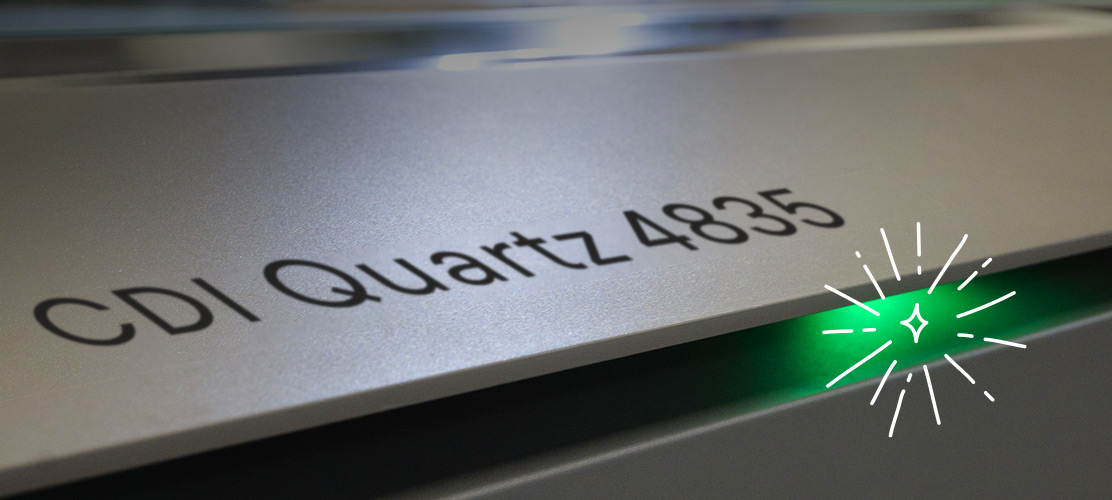
- Quartz
Each tier aligns software, screening, and calibration tools directly with the capabilities of the customer’s CDI and exposure technology.
That means no more guessing, no more endless testing, and no more wondering whether you’re leaving quality on the table.
Instead of 40 or 50 possible screens to trial, customers get a short, curated set of best-in-class options — chosen based on decades of flexo experience and proven performance.
What Changes for Prepress and Plate Room Teams
Day to day, this new approach makes life noticeably easier.
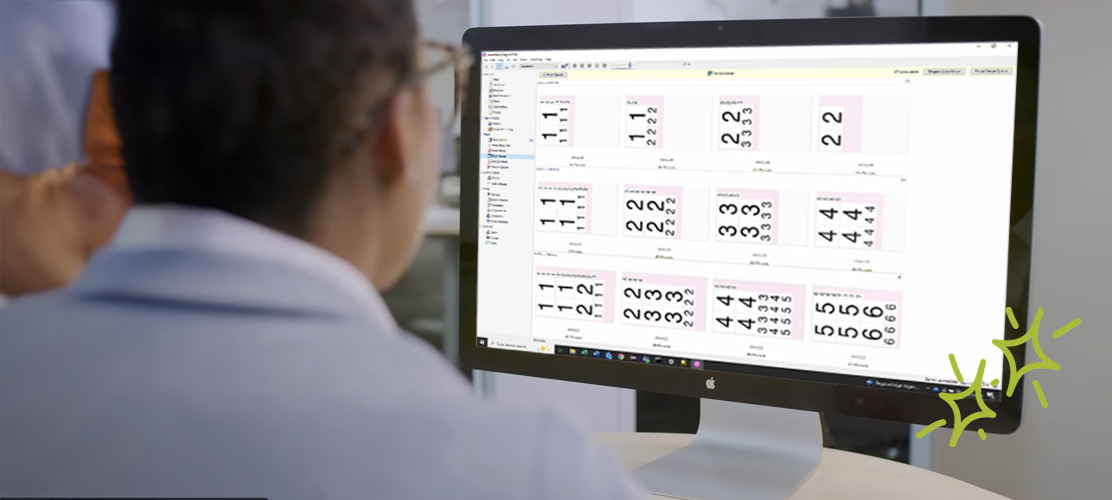
Calibration is guided through wizard-based tools rather than trial-and-error.
Workflows are set up once and reused consistently across jobs.
Manual steps, like searching for files, dragging assets into layouts, and positioning plates by hand, can be automated in the background.
The result? Less setup, fewer mistakes, and far more predictable outcomes.
Speed, Consistency, and Quality — Where it Really Counts
The benefits of Flexo Front End show up quickly:
- Speed: Faster setup, automated plate merging, and reduced press make-ready time
- Consistency: High-quality plates that are easier to print and more stable on press
- Quality: Screens optimized for specific applications, whether that’s labels or corrugated
By generating plate-ready files that are tailored to both the print application and the hardware imaging them, Flexo Front End helps enable faster, more reliable press performance.
Where Customers See Immediate Value
Early customer feedback highlights tangible improvements:
- Easier adoption of new substrates and inks
- Improved speed to market
- Less time spent merging flexo plates
- Reduced waste and solvent consumption thanks to automation
- Lower ink usage on press
- Faster press speeds and smoother setup
It’s not just about saving time in prepress. It’s about creating plates that perform better throughout the entire flexo process.
Built for Today — and Designed for What’s Next
Flexo Front End also supports teams that are looking to scale, automate, or standardize their flexo operations across sites.
By locking in decisions upfront and relying on consistent workflows, teams can reduce variability and confidently grow their flexo capabilities.
And this is just the beginning.
The roadmap aligns with Esko’s broader vision, including future cloud-based workflows through S2 and increased use of AI to drive even more automation and simplicity over time.
The Bottom Line
Flexo Front End helps flexo teams automate the manual, simplify the complex, and deliver the high-quality plates today’s brands and retailers demand — without the guesswork.
Less time choosing. Less time fixing. More time printing.
Explore the Flexo Front End ecosystem.
Want to see how Flexo Front End fits your current flexo setup? Request a demo today!