Mitha Shameer is a content specialist who writes for various SaaS platforms across Esko, bringing nearly six years of experience in writing
Have you ever wondered why certain ingredients banned in the EU are perfectly fine to use in the US? Or why product labeling requirements seem far more demanding across the Atlantic?
The numbers tell the story quickly. The FDA restricts or bans around 11 ingredients in cosmetics. The EU has prohibited over 1,300. That gap shapes everything, from how you formulate a product to how you label it, document it, and report on it after it hits the shelf.
But the picture is more complicated than a simple ingredient count.
The US regulatory environment has changed significantly since the Modernization of Cosmetics Regulation Act (MoCRA) came into force, introducing facility registration, product listing, safety substantiation requirements, adverse-event reporting, and mandatory recall authority. The old shorthand of “light-touch FDA oversight” no longer holds. Learn what MoCRA means for your compliance obligations.
There is also a practical reality that many comparison guides miss: the US is not a single-rule environment. State-level restrictions layer on top of federal requirements, particularly around ingredient bans and animal testing. That fragmentation is one of the most important practical differences from the EU’s more centralized regime, and it is something your compliance team needs to account for.
“Artwork is really the point where a lot of things converge.”
Samantha Turff, Senior Artwork Manager at Pharmanovia
Whether you are developing a product for one market or both, understanding these differences is what keeps you out of trouble and on schedule.
Here are 23 distinctions that could make or break your product’s launch.
Differences Between US and EU Cosmetic Regulations
1. Ingredient Listing Order
EU: Ingredients must be listed in descending order of concentration. Any ingredient present at less than 1% can be listed in any order at the end of the list. Colorants can also be listed at the end regardless of their concentration.
US: The US similarly requires ingredients to be listed in descending order of concentration. But there is no equivalent flexibility allowing ingredients present at less than 1% s to appear out of order unless the FDA has specifically approved it.Ordering is only part of the challenge; terminology matters just as much. The EU’s common ingredient glossary was significantly updated in 2025 and now contains more than 30,000 entries. Using the wrong name for an ingredient, even if it is listed in the right position, can create compliance problems. If you are managing labels across both markets, terminology governance is not optional. See how the 2025 EU glossary update affects beauty-packaging compliance.
2. Allergen Labeling
EU: Specific fragrance allergens, commonly found in perfumes and essential oils, must be individually named on the label if present above defined concentration thresholds. The framework has moved well beyond the older “26 allergens” shorthand that many teams still reference. Expanded disclosure expectations and updated transition timelines mean the list of substances requiring named declaration is broader than it was even a few years ago.
US: Companies can list “fragrance” or “flavor” as a single generic term, without identifying individual components, including potential allergens. That gap remains significant. MoCRA-related discussions are introducing more attention to allergen transparency on the US side, so this is an area to watch rather than treat as static.
3. Product Expiry and Shelf Life
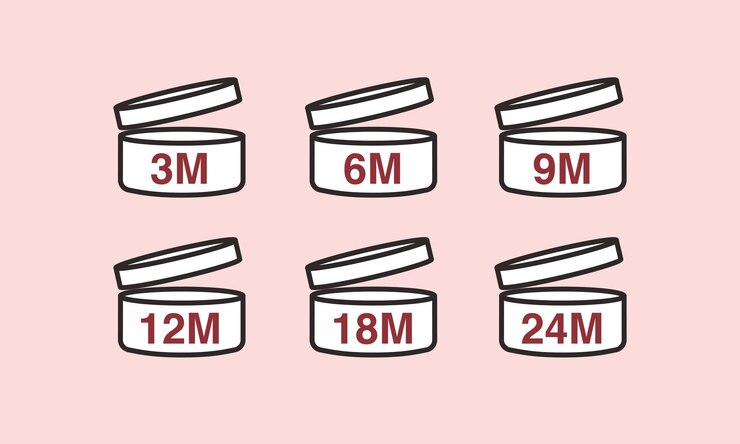
EU: If a cosmetic product has a shelf life exceeding 30 months, it must carry a “period after opening” (PAO) symbol indicating how long it remains safe to use once opened. Products with a shelf life of 30 months or less require a minimum durability date instead.
US: Cosmetics are not legally required to carry expiration dates or PAO symbols, except for products that also make drug claims, such as SPF products. Manufacturers can include this information voluntarily, but there is no federal mandate.
4. Language Requirements
EU: All required label information, such as ingredient lists, safety warnings, and usage instructions, must appear in the official language or languages of the country where the product is sold. Selling across multiple EU member states means managing multiple language versions.
US: Cosmetic labeling must be in English. The exception is Puerto Rico, where Spanish must also be included. For brands used to managing multilingual EU label sets, the US requirement is simpler, but it can create accessibility gaps for non-English speakers.
5. Responsible Person Information
EU: EU Regulation 1223/2009 requires the name and address of the “Responsible Person”, the individual or company legally accountable for the product’s safety and compliance, to appear on the label. This is a defined legal role with specific obligations attached.
US: The US has historically required only the name and address of the manufacturer, distributor, or packer. MoCRA introduced a “responsible person” concept into US cosmetics law, though it functions differently from the EU model.
Under MoCRA, the responsible person has obligations around adverse-event reporting and must ensure that domestic contact details are available for FDA communication. The roles are not equivalent, but the gap has narrowed.
6. Country of Origin
EU: If a cosmetic product is manufactured outside the EU, the country of origin must appear on the label. This gives consumers clear information about where the product was made.
US: There is no blanket requirement to declare the country of origin on US cosmetic labels unless the product is imported. If a product claims to be “Made in USA,” it must comply with Federal Trade Commission (FTC) guidelines on what that claim requires.
7. Batch Number
EU: Every cosmetic product sold in the EU must display a batch number or lot code. This is a traceability requirement, which makes it possible to identify and recall specific production runs if a safety issue arises.
US: There is no legal requirement for a batch number on US cosmetic labels. Many companies include one voluntarily for internal tracking and recall readiness, but it is not mandated.
8. Good Manufacturing Practices (GMP)
EU: GMP compliance is mandatory for cosmetics sold in the EU. Manufacturers must follow established standards that ensure consistent product quality and safety throughout production.
US: US GMP guidelines for cosmetics have historically been voluntary. MoCRA set the stage for mandatory FDA GMP requirements, and rulemaking is underway. Describing US GMP as purely optional no longer reflects where the regulatory direction is heading.
9. Packaging Symbols
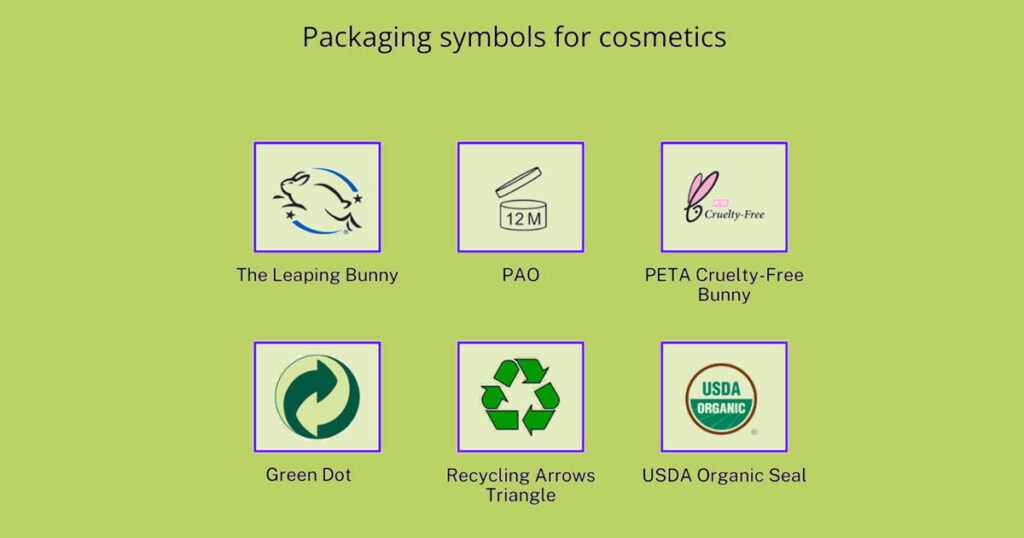
EU: Several standardized symbols are required on EU cosmetic labels where relevant. These include the “e-mark” for volume or weight accuracy, the PAO symbol, and recycling symbols. Each has a defined meaning and placement expectation.
US: These symbols are not mandatory in the US. Brands may voluntarily include symbols such as the “leaping bunny” for cruelty-free certification, but there is no regulated symbol system equivalent to the EU’s
10. Warning Labels and Precautionary Statements
EU: Specific warnings or precautionary statements are required on labels for products that carry any risk, hair dyes, products containing certain chemical categories, and others. These warnings must be visible and legible.
US: Precautionary statements are required only when a product contains a known hazardous ingredient. The requirements are narrower than in the EU and apply most clearly to products regulated as drugs, such as sunscreens, or to categories like hair dyes.
11. Serious Adverse Event Reporting and Post-Market Surveillance
This is one of the most important differences that older comparison guides consistently miss.
EU: EU cosmetics law has long required post-market surveillance. If a serious undesirable effect occurs, it must be reported to the competent authority of the member state where it happened. Brands are expected to maintain records and respond to safety signals after a product is on the market.
US: MoCRA introduced mandatory serious adverse event reporting for the first time. Responsible persons must now report serious adverse events to the FDA within 15 business days of receiving the information and maintain records for six years. This is a significant shift from the pre-MoCRA environment, where post-market reporting was largely voluntary.
The practical implication: compliance does not end at launch. Your team needs processes for capturing, documenting, and escalating adverse event information, not just for getting a product onto shelves.
12. Animal Testing Regulations
EU: Animal testing for cosmetics has been banned in the EU since 2013. No product tested on animals after that date can be sold in the EU, and the prohibition extends to animal-tested ingredients as well.
US: There is still no federal ban on animal testing for cosmetics. Brands can and do voluntarily avoid it, but products tested on animals remain legally sellable.
The US picture is more fragmented than this federal position suggests. A growing number of states have introduced their own restrictions on cosmetic animal testing, so compliance increasingly depends on where you are selling, not just what federal law says.
13. Natural or Organic Claims
EU: The EU tightly regulates marketing claims on cosmetic packaging. Any claim must be backed by evidence, must not mislead consumers, and must reflect the actual composition of the product. Authorities can and do request proof.
US: The FDA does not have standardized definitions for “organic” or “natural” in cosmetics, which gives brands more flexibility. However, flexibility is not the same as freedom. The FTC monitors misleading claims, and the risk of enforcement action is real if claims cannot be substantiated.
The practical difference between the two markets is less about one having a definition and the other not, and more about the rigor of the substantiation expected and the likelihood of scrutiny.
14. Nanomaterial Labeling
EU: Any cosmetic product containing nanomaterials must identify them in the ingredient list, with the word “nano” in parentheses immediately after the ingredient name, for example, titanium dioxide [nano]. This applies regardless of concentration.
US: There is no mandatory nanomaterial labeling requirement. The FDA encourages companies to consider labeling when it is relevant to consumer safety, but it remains a voluntary decision.
15. Sunscreen Products
EU: Sunscreens are classified as cosmetics. Labels must meet specific requirements including UVA and UVB protection indicators, and SPF labeling must follow EU guidelines.
US: Sunscreens are regulated as over-the-counter (OTC) drugs by the FDA. That classification triggers a completely different labeling regime: Drug Facts panels, active ingredient listings, dosage instructions, and drug-specific warnings. A product that qualifies as a cosmetic in the EU becomes a drug in the US.
16. Cosmetic vs. Drug Labeling
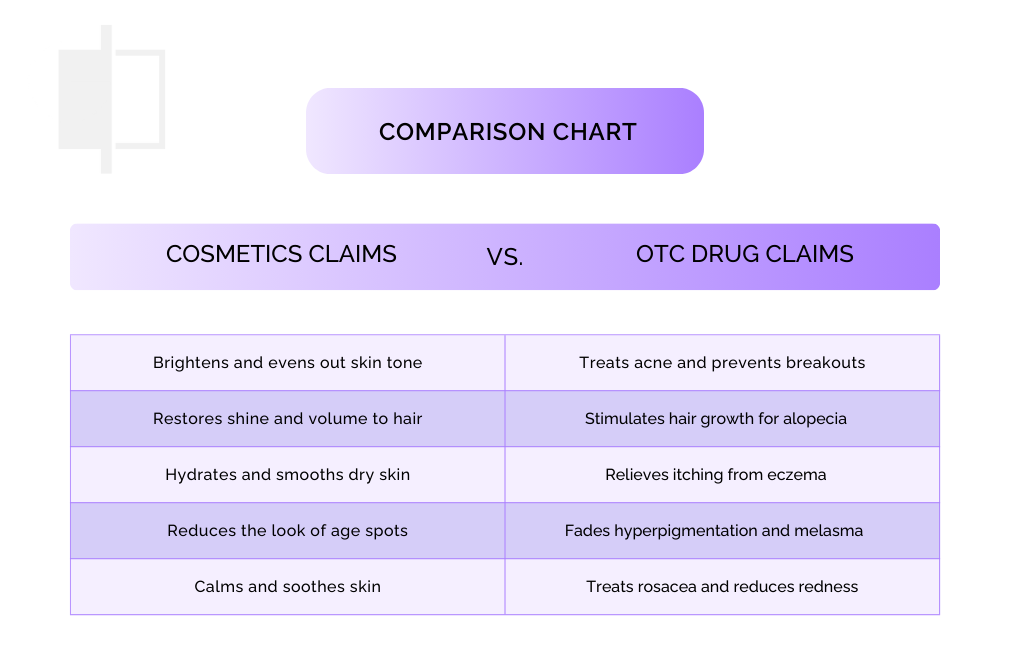
EU: EU regulations draw a clear line between cosmetics and drugs. A cosmetic product cannot make medicinal claims, such as “treats eczema”, without being reclassified as a drug or therapeutic product, which brings an entirely different regulatory framework into play.
US: Products that straddle the cosmetic-drug boundary, such as acne treatments, anti-dandruff shampoos, and fluoride toothpastes, must comply with drug labeling requirements. That means active ingredient declarations, usage warnings, and instructions for use. The FDA monitors this category closely.
17. Environmental Claims
EU: Any environmental claim on a cosmetic label, “biodegradable,” “eco-friendly,” “sustainable packaging”, must be substantiated and must not mislead consumers. The enforcement climate around these claims has intensified significantly. Anti-greenwashing pressure in Europe is real, and beauty brands that use sustainability messaging on-pack are under greater scrutiny than the older regulatory language implies.
US: The FTC’s Green Guides provide a framework for environmental marketing claims, but the standards are less prescriptive than the EU approach. Varying interpretations of terms like “eco-friendly” or “sustainable” remain common, and enforcement is less consistent.
18. Cosmetic Notification Portal
EU: Before a cosmetic product can be sold in the EU, it must be submitted through the Cosmetic Products Notification Portal (CPNP). This means uploading product information, labeling details, and formulation data to a centralized system before market entry.
US: While the US historically did not require pre-market cosmetic notifications, MoCRA introduced mandatory facility registration and product listing requirements. Cosmetic manufacturers and processors must register their facilities with the FDA, and responsible persons must submit product listings that include ingredient information.
It is not the same as the EU’s pre-market notification model, but it is a material step away from the pre-MoCRA position of no federal notification at all.
19. Pre-Market Approval
EU: Every cosmetic product must undergo a safety assessment before it can be sold. A qualified safety assessor reviews the formulation and produces a Cosmetic Product Safety Report (CPSR). This document, along with the full Product Information File (PIF), must be maintained and made available to authorities on request.
US: The US does not require pre-market approval for most cosmetics, with the exception of color additives. But MoCRA has raised the bar on safety substantiation. Brands are now expected to maintain adequate safety records and may face mandatory recall authority if the FDA determines a product poses a safety risk.
AI is a valuable assistant in the compliance process, simplifying tasks that were once complex and time-consuming.
David Smith, Esko Product Manager
The gap between EU and US pre-market rigor remains real, but the US side now carries more documentation and accountability expectations than it did before MoCRA.
20. Safety Substantiation and Technical Documentation
This is one of the most operationally significant differences, and one that rarely gets enough attention in market-entry discussions.
EU: The Product Information File (PIF) is a mandatory, structured dossier that must exist before a product goes to market. It includes the CPSR, the product formulation, manufacturing method, evidence supporting claims, and records of any adverse effects. The PIF must be kept for ten years after the last batch of the product is placed on the market and must be accessible to authorities on demand.
US: Under MoCRA, brands must now maintain records that substantiate the safety of their products and their ingredients. There is no equivalent to the EU’s PIF format, but the expectation of documented safety evidence is now explicit in US law in a way it was not before. If the FDA requests records, brands must be able to produce them.
You can’t fake digital trust. You have to show it, explain it, prove it – every day.
Marc Vael, Chief Digital Trust Officer, Esko
The documentation burden is lower than in the EU, but it is no longer negligible. If you are managing dual-market compliance, your packaging and labeling content management workflows need to support both the structured EU PIF model and the more flexible but increasingly scrutinized US safety-record requirements.
21. US Federal vs. State-Level Regulation
One thing this comparison cannot fully capture in a single entry: the US is not one uniform market.
EU: Cosmetic regulations are centralized under a single regulatory framework that applies across all EU member states, giving brands one primary compliance standard to follow.
US: Federal law sets the baseline, but individual states can and do layer additional requirements on top. California’s Proposition 65, for example, requires warnings for products containing chemicals known to cause cancer or reproductive harm. Several states have enacted their own ingredient restrictions or animal testing bans that go beyond federal requirements.
The result is a patchwork that can make US compliance more complex than a federal-only view suggests, particularly for brands selling nationally.
You may need to track multiple state-level obligations alongside federal requirements.
When market rules, language requirements, and approval logic are built into the artwork workflow, compliance stops being subjective and becomes something teams can see and manage in real time
Tabrez Shaikh, Director of Sales & Customer Success at Esko
22. Claims Substantiation
EU: Any performance or benefit claim, “anti-aging,” “skin firming,” “reduces wrinkles”, must be backed by evidence. Regulatory authorities can request proof, and claims that cannot be substantiated are not permitted.
US: Cosmetic product claims must not be misleading, but the FDA is less likely to intervene unless a claim creates a public health risk or crosses into drug territory. The FTC regulates false advertising and can pursue brands whose claims cannot be supported.
The substantiation bar exists on both sides of the Atlantic. The difference is in how rigorously it is applied and who is watching.
23. Core Cosmetic Label Elements
EU: EU-mandated label elements include:
Full INCI ingredient list in descending order
Expiration date or PAO symbol
Responsible Person’s name and address
Country of origin (if manufactured outside the EU)
Batch number
Net quantity
Function of the product
Required warnings or allergen disclosures
US: US cosmetic labels must include:
Ingredient list in descending order of concentration
Net quantity of contents
Name and address of the manufacturer, distributor, or packer
Any required warnings
There is no federal requirement to list allergens or expiration dates unless the product also makes drug claims, such as SPF or acne treatment. For a detailed checklist of what the FDA requires, see the FDA cosmetic labeling compliance checklist.
Meet US and EU Cosmetic Regulations with AI-Led Label Compliance
Managing cosmetic label compliance for a single market is demanding. Managing it across the US, EU, and other regions simultaneously, each with its own ingredient rules, allergen thresholds, symbol requirements, and documentation expectations, is a different challenge entirely.
As Jan De Roeck, Director Industry Relations & Strategy at Esko, explains:
“Ensuring artwork compliance has traditionally been a time-consuming and error-prone process, involving multiple rounds of manual reviews and approvals.”
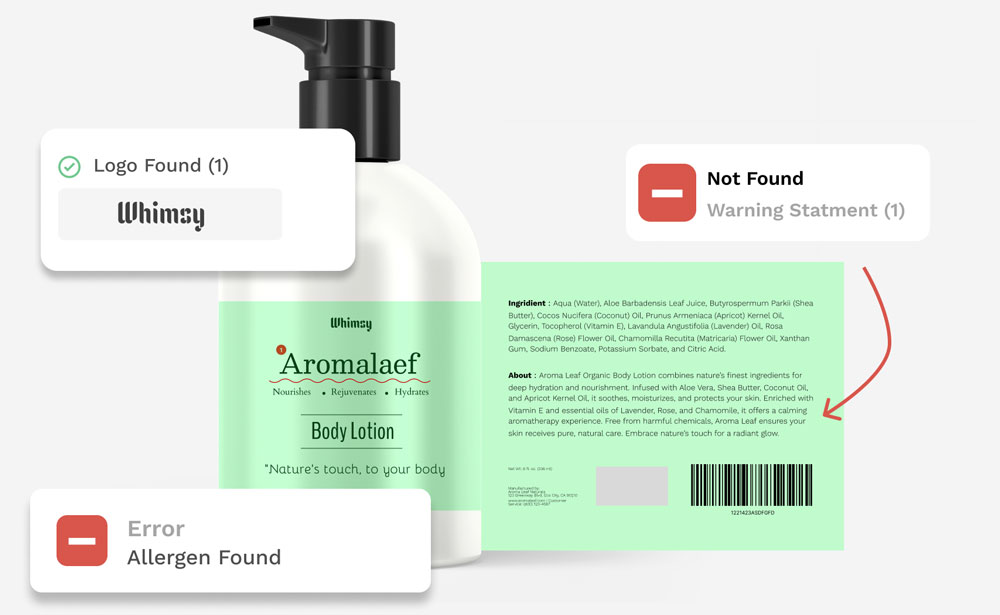
WebCenter Go’s Comply helps you automate label compliance checks so that nothing slips through before a product goes to market.
Here is how it works:
Build rulebooks for each region, covering ingredients, allergens, text size, required symbols, claims, and more.
Run all rulesets in a single compliance check, no need to review each requirement manually.
Get instant flags on errors and discrepancies, before they become costly corrections or market delays.
Make corrections and confirm compliance, so your final label is accurate and ready for market.
Whether you are navigating the EU’s PIF requirements, MoCRA’s new US obligations, or the growing complexity of state-level restrictions, a systematic compliance process is what keeps labels accurate and launches on schedule.