
Skip to content
English
My AccountCart
Artwork Management

Prep for a Holiday Packaging Season That Delivers

Holiday in July banner
Mitha Shameer headshot

Written by Mitha Shameer

Content Specialist, Esko

Every now and then, a holiday package hits the shelves that makes us pause mid-aisle and think, “Wow, they nailed it.”

Maybe it’s the cozy illustrations on a Target-exclusive hot cocoa tin.
Maybe it’s the snowy Budweiser can that somehow tastes more festive.
Or maybe it’s that first sighting of Starbucks’ red cups—cue the real start of the holiday season.

These seasonal packaging designs may look effortless on the outside, but behind the scenes?

Think hundreds of SKUs, last-minute design tweaks, and legal teams triple-checking festive labels that still need to meet compliance. And the kicker? It all starts way earlier than you’d think.

In fact, nearly a third (31%) of U.S. consumers say they start their holiday shopping in October or earlier, and another 29% kick things off in early November, before Thanksgiving even rolls around. That means over 60% of shoppers are already in buying mode before Black Friday hits.

Across the Atlantic, European shoppers are equally tuned into seasonal flavors and packaging. In countries like France, Germany, the UK, and Spain, up to a third of consumers cite seasonal or limited-edition flavors as key purchase drivers.

With interest growing across markets and categories, seasonal packaging has evolved into a global opportunity and a year-round planning effort.

So, if you’re part of a packaging, design, or brand team, this is your cheat sheet to keeping your seasonal launches as efficient (and creative) as possible.

Why Brands Start Prepping Holiday Packaging in June

Reese’s tree-shaped treats, Coca-Cola’s Christmas campaign, or Maxi Babybel’s giant red-and-white ‘Big Cheesemas’ comeback don’t happen overnight. They go through months of creative tweaks, compliance checks, and stakeholder reviews before landing in your cart.

And it’s not just Christmas. Halloween brings candy brands like M&M’s and KitKat in spooky costumes. Even back-to-school season sees limited-edition lunchbox snacks and juice packs.

So why go through all this effort?

Because it works.

It boosts visibility. Seasonal packaging breaks the pattern. It gets noticed—on shelves, on social media, and in carts.

It creates urgency. Limited-time packs encourage impulse buys. When something screams “only for the holidays”, people tend to purchase it.

It builds connection. Personalization and cultural relevance show your brand gets it. And when a shopper feels seen, they’re more likely to come back.

It drives sales. If your product blends in most of the year, a holiday makeover could finally get it off the shelf and into someone’s home.

But to capture that opportunity, you need to be ready well before the holiday rush begins. With 82% of shoppers starting their purchases before or during Thanksgiving weekend, waiting until November to prep your campaigns could mean missing out on the bulk of holiday spending.

And it’s not limited to in-store either. In fact, around 63% of consumers now shop for holiday gifts online, according to Deloitte. That’s why brands are starting their campaigns earlier, not just to catch attention on shelves, but to build visibility across e-commerce and social platforms well before the season peaks.

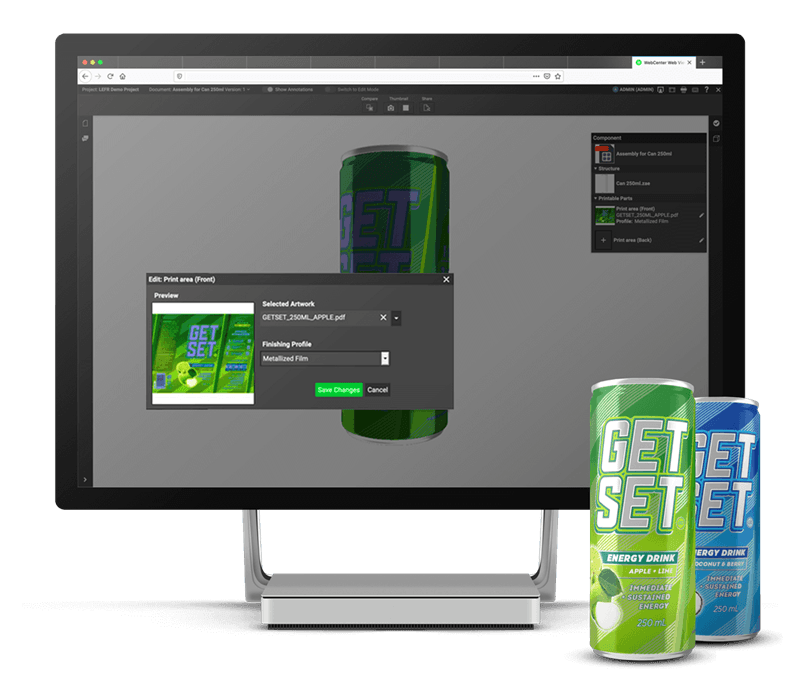
To make that possible, many teams now rely on 3D design tools to generate realistic packshots before production even begins. These assets can be used to launch omnichannel campaigns ahead of time, speeding up approvals, reducing production delays, and helping brands stay one step ahead of the holiday rush.

But none of this happens without serious planning. Holiday campaigns often involve hundreds of packaging variations, each tailored to specific SKUs, formats, regions, and languages.

Getting all of it ready in time means starting early and staying coordinated.

What Holiday Packaging Prep Actually Looks Like

Western Europe leads the way in limited-edition and seasonal food product launches, accounting for 39% of global activity. This isn’t a passing trend. Launches in these categories have seen strong growth, with limited-edition products growing at a 14.8% CAGR and seasonal ones at 16.1% over the past five years.

It’s clear: holiday packaging is big business. It’s not just about designing something festive and calling it a day. Holiday packaging is a full-blown project with layers of complexity, and the most successful brands know that the real magic starts months before the season kicks in.

So, what does holiday packaging prep involve?

Here’s what brand and packaging teams are working on right now:

1. Lock In Key Campaign Themes and Messaging
Before a single snowflake gets placed on a label, marketing and brand teams define the creative direction. Is this year about nostalgia, sustainability, or something playful?
You’ll see brands like Coca-Cola tying in big themes like family, kindness, and togetherness, while others go playful or hyperlocal. The clearer the message early on, the smoother the design process.

2. Audit Your SKUs and Identify Seasonal Opportunities
Holiday packaging usually isn’t a one-size-fits-all solution. If you have 150+ SKUs, not all of them need a holiday version.

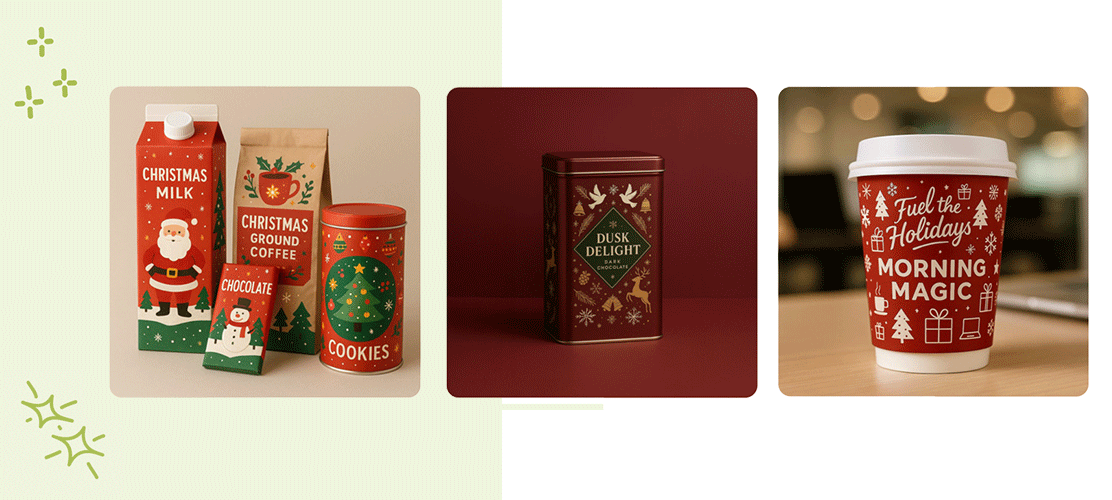
Brands need to audit which products perform best during the season and decide which ones get a festive makeover. Think: limited-edition cookie tins, themed multipacks, or new seasonal flavors (like pumpkin spice everything in October).

To save time and effort, many brands reuse previously approved assets from a digital library, modifying existing designs rather than starting from scratch. This not only speeds up production but also ensures brand consistency across SKUs.
Planning Your Holiday Packaging

3. Align with Legal, Regulatory, and Supply Chain Early
This isn’t the most glamorous part but it’s critical. Every label still needs to meet local compliance standards, especially when claims or formats change.

Meanwhile, your supply chain team needs to coordinate timelines for printing, shipping, and launch. A minor artwork delay can cause missed deliveries or worse, missed shelf space.

4. Build In Time for Feedback and Version Control
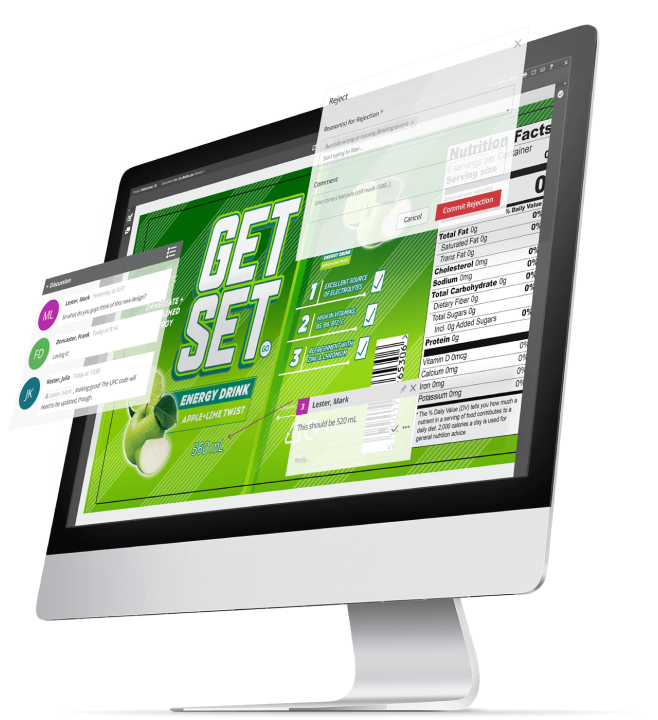
Here’s where a lot of brands struggle. Seasonal artwork goes through many hands—brand, design, marketing, quality, and external partners like agencies or co-packers. And it only takes one missed comment or version mix-up to derail everything.

Smart brands bake in buffer time, set clear approval deadlines, and use centralized tools.

Computer screen

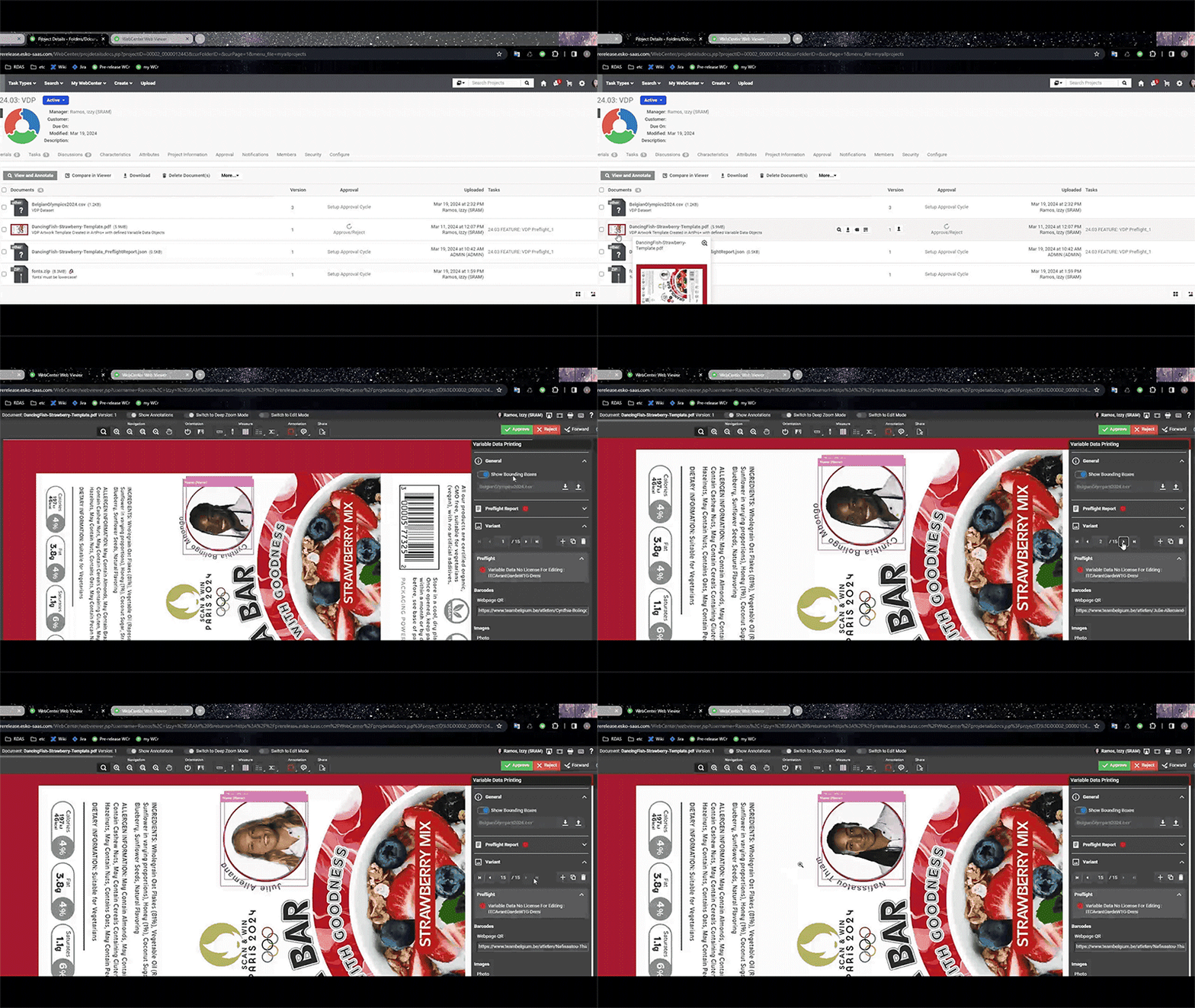
5. Plan for Personalization and Variable Data
Customized packaging stands out. “Share a Coke” bottles, Nutella’s Unica campaign, or Cadbury’s 200th anniversary campaign all rely on Variable Data Printing (VDP).

Why go this route?
Because personalization builds emotional connection. When shoppers feel like a product was made for them, they’re more likely to pick it up and post about it. During high-traffic seasons like Christmas and Halloween, that kind of shareability and word-of-mouth is gold.

But here’s the catch: personalization at scale takes prep. You need the right artwork structure, the right print tech, and plenty of lead time for setup and testing. One misstep and you risk printing thousands of flawed labels or blowing your launch date.

6. Support Creative Teams with the Right Tools
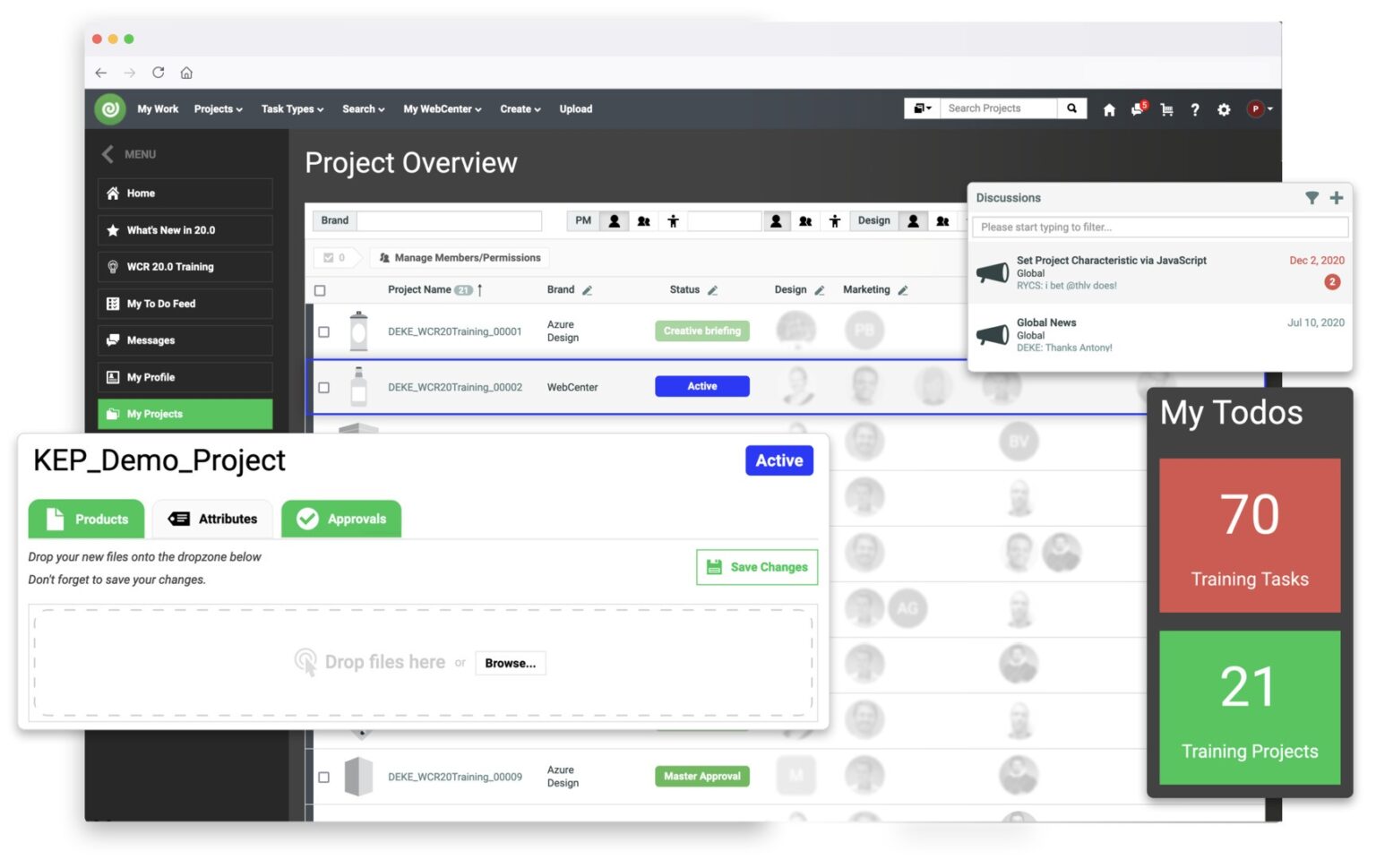
Designers are often juggling multiple deadlines across markets. To keep pace, they need systems that help manage artwork versions, reduce repetitive work, and streamline reviews, especially when producing multiple variants. Features like scalable workflows, built-in annotation tools, and automated content population allow teams to move faster and with fewer errors.

Why Holiday Packaging Launches Are Chaotic (and How the Right Tech Can Simplify Things)

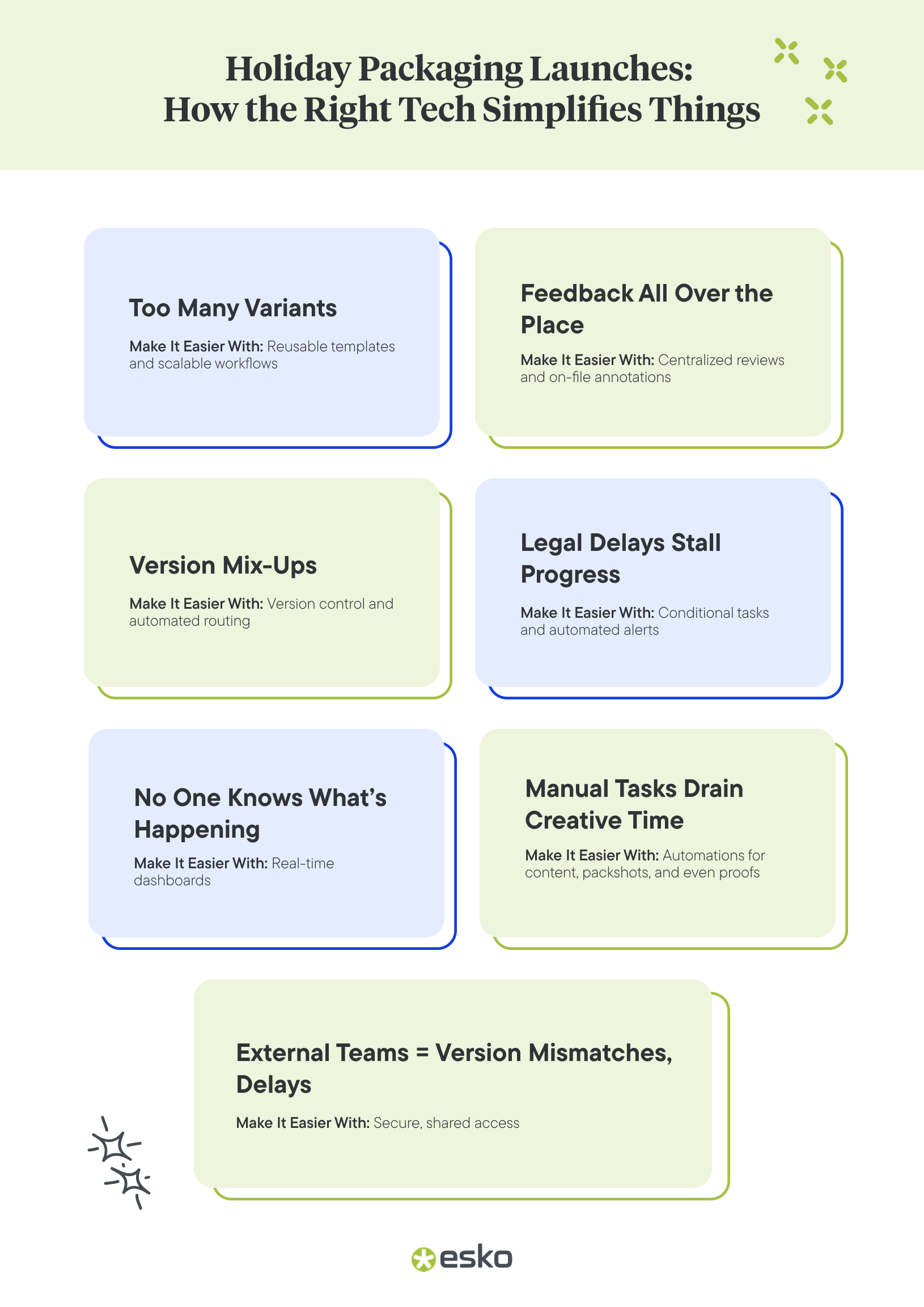
Seasonal packaging is exciting for customers, but internally, it often feels like controlled chaos. Deadlines are tighter, teams are stretched, and the margin for error shrinks. Here’s what tends to go wrong and how the right tech can help:

1. Endless Variants and Tight Timelines
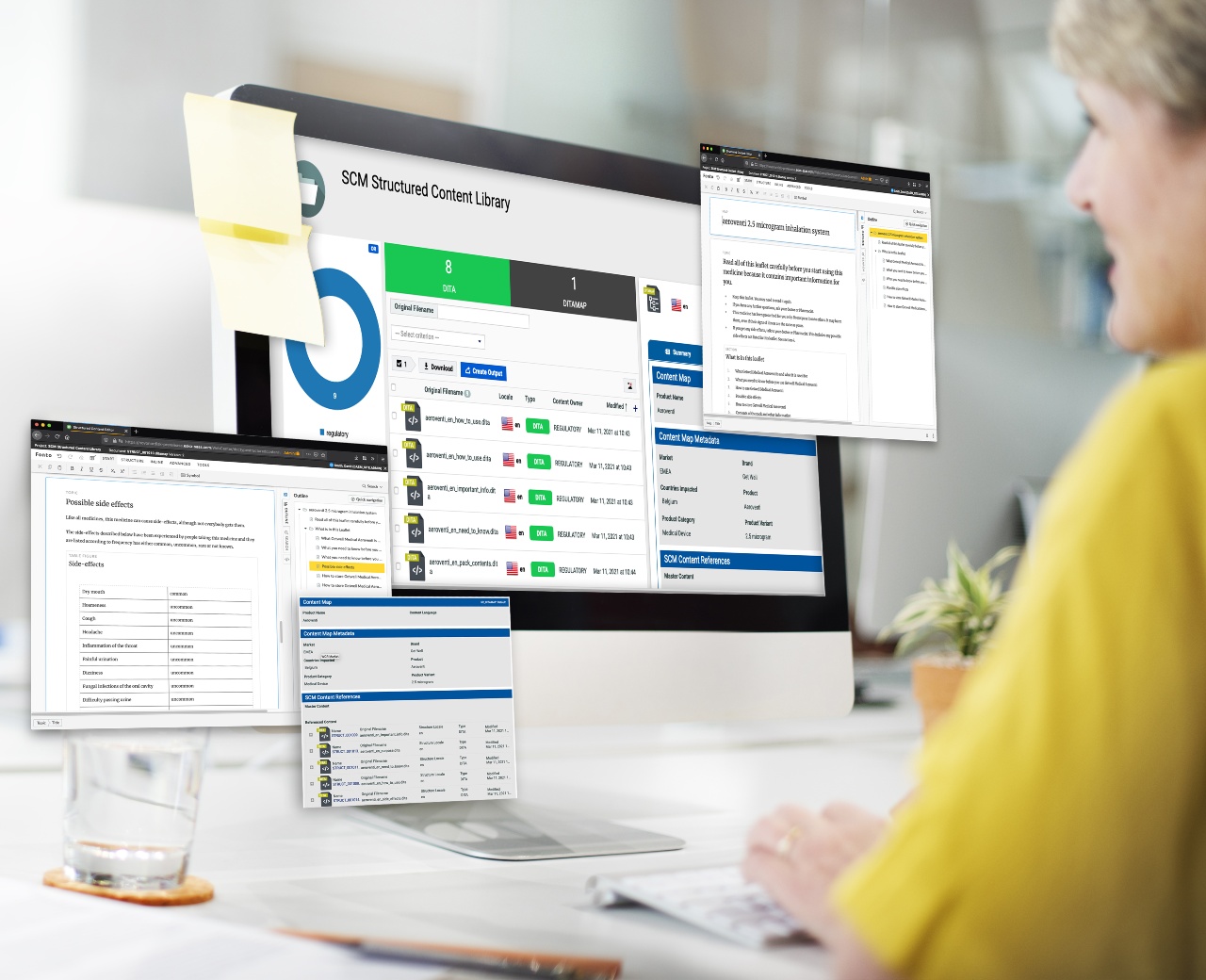
Holiday campaigns often involve rolling out a core concept across dozens of SKUs, formats, and markets fast. Copy, claims, and packshots need to be customized while keeping everything on-brand.

woman at a screen with content management on the desktop

The solution: Platforms that offer reusable templates, scalable workflows, and content management features can help you build once and adapt quickly. Automating content updates ensures consistency across formats, and team members see only what’s relevant to their SKU or region.

2. Disjointed Feedback Loops
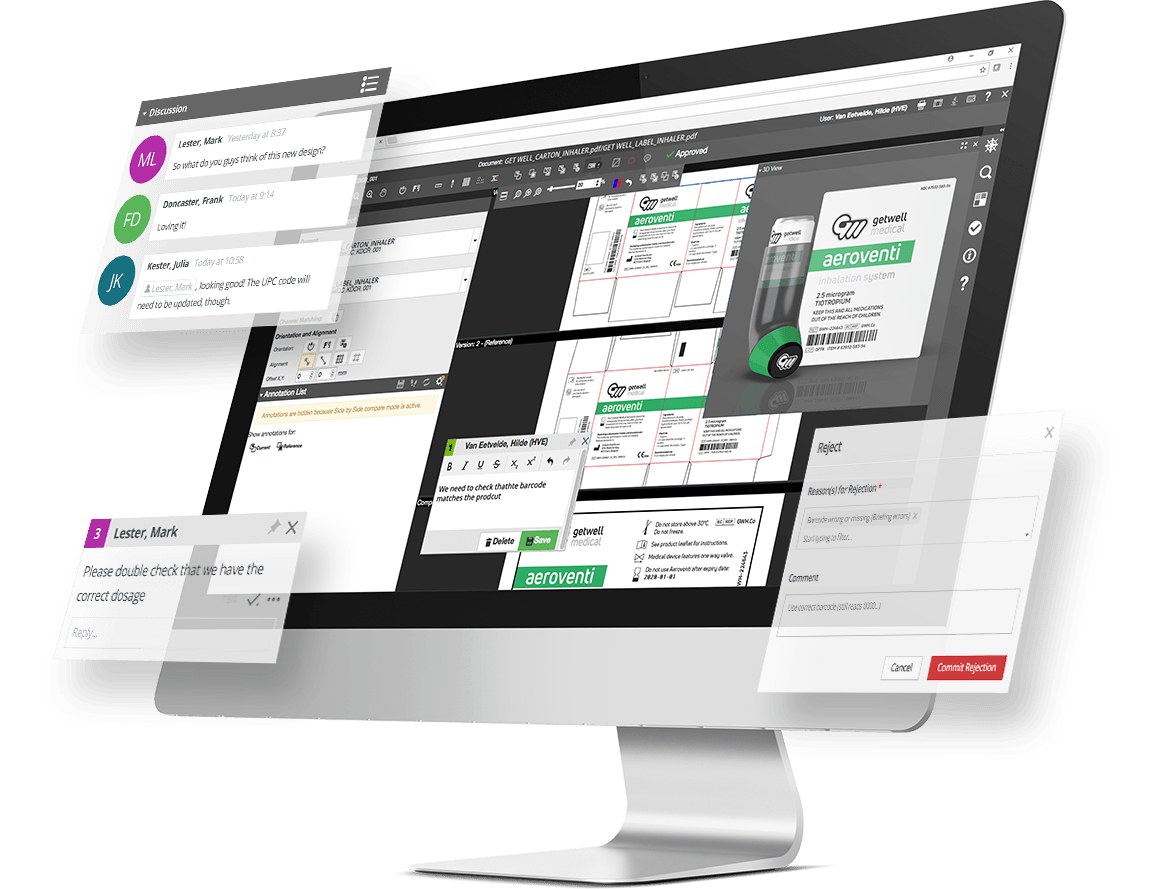
Feedback flies in from all directions: emails, chats, PDFs with sticky notes. Important comments get missed. Reviewers aren’t always looking at the same version.

computer with webcenter content management

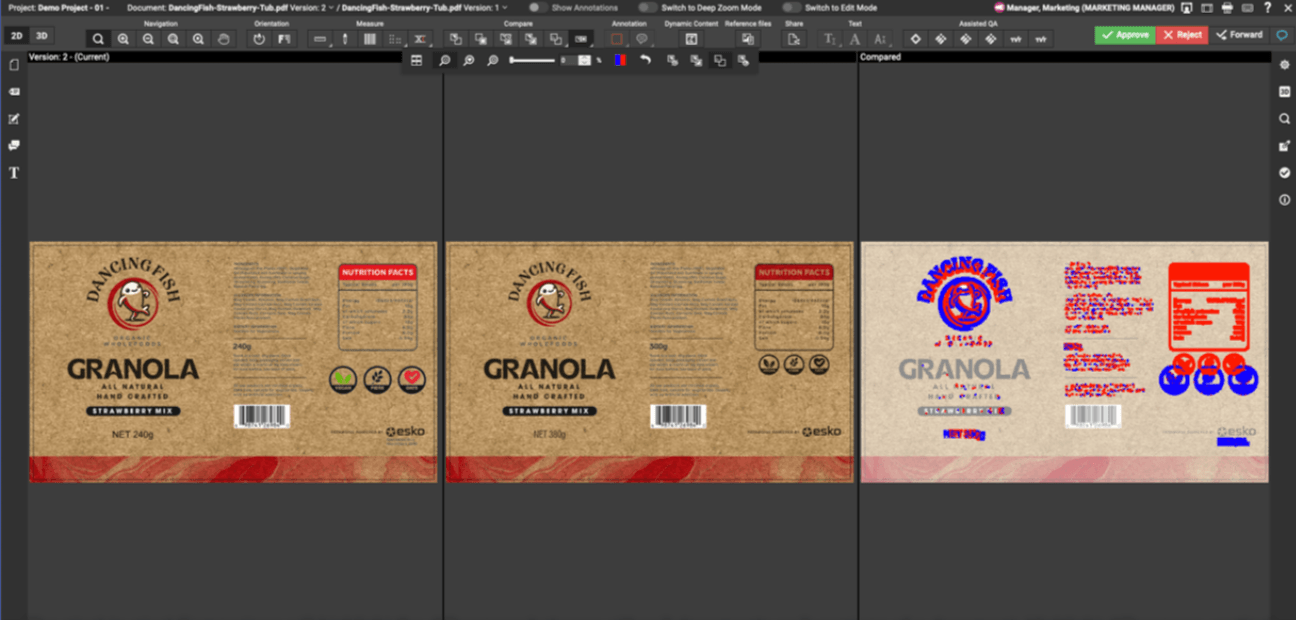
The solution: Centralized review platforms solve this by letting stakeholders annotate directly on files, compare versions side-by-side, and leave comments in one place. You’ll cut down on confusion, duplicate work, and the dreaded “final-final-v2-revised-final” file names.

3. Version Confusion and Costly Mistakes
With multiple designers and approvers involved, it’s easy to lose track of the final approved version. Sometimes, the wrong file gets sent to print or worse, shipped.

The solution: Built-in version control and automated routing ensure only the latest, approved artwork moves forward. Reviewers can quickly compare revisions, track who made what change, and ensure only the latest version is shared post-approval to prevent last-minute swaps

4. Legal and Regulatory Delays
Holiday claims or visuals often need legal and regulatory clearance, which can slow everything down, especially if they’re looped in late or manually.

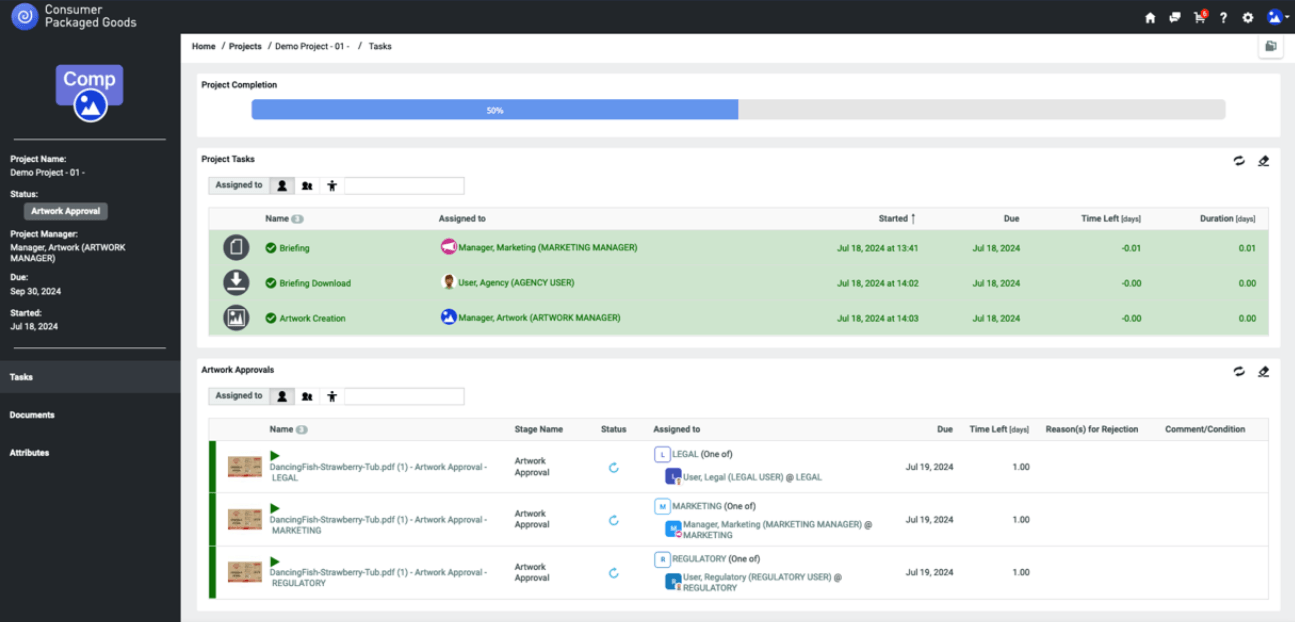
The solution: Workflow tools that allow you to assign conditional tasks to specific reviewers (like regulatory teams) keep things moving. Automated notifications and clear approval paths mean no one is left out or holding things up without realizing it.

5. Poor Visibility into Project Status
With so many moving parts, it’s hard to know where a project stands. Is the artwork approved? Who’s reviewing it? Are we on track?

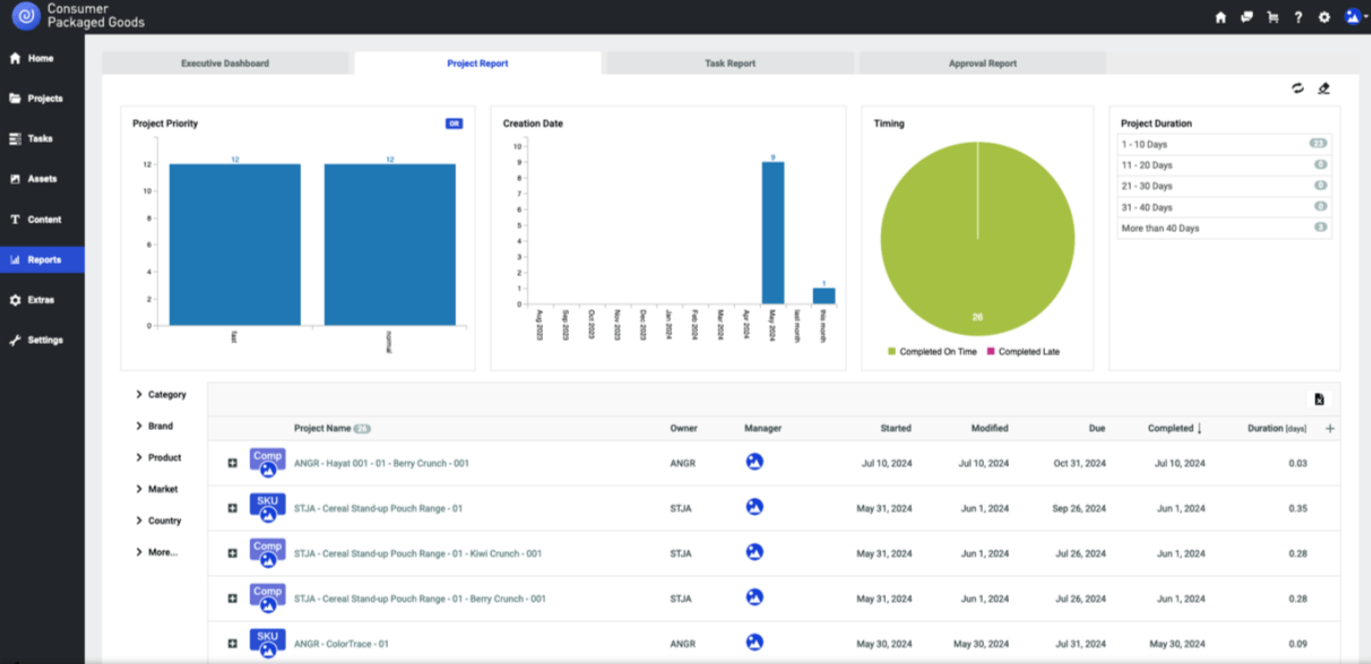
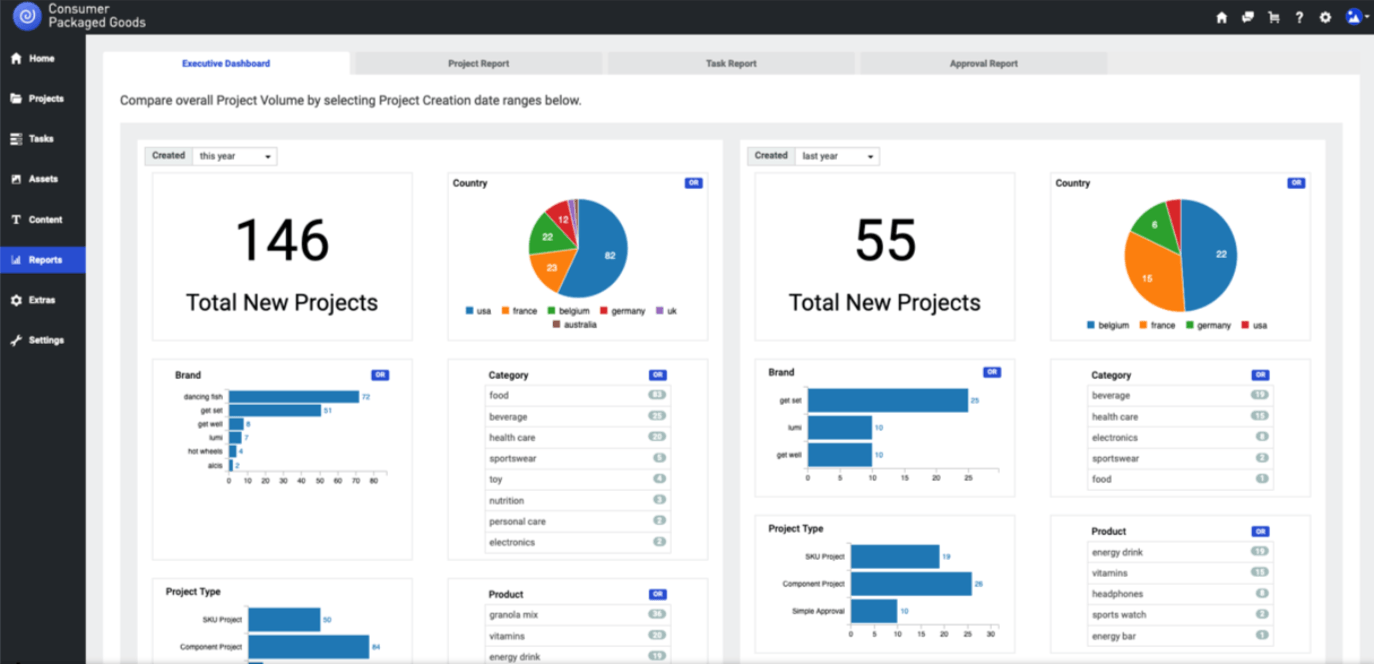
The solution: A central dashboard gives everyone a real-time view of project status. You can see bottlenecks, missed deadlines, and approval lags at a glance so you can course-correct before it’s too late.

6. Repetitive Manual Tasks Eat Up Creative Time
Designers and project managers often waste hours updating metadata, repackaging files, or manually generating product images.

The solution: Automation tools can handle content population, metadata syncing, and even generate packshots or digital proofs, freeing your team to focus on the creative work that actually drives the campaign.

7. External Partners Slow Things Down
Agencies, printers, or co-packers often operate on different systems and timelines. File-sharing delays and version mismatches are common.

The solution: Tech that allows you to loop in external partners securely without giving full system access streamlines collaboration. Everyone works from the same source of truth, with clearly assigned tasks and deadlines.

8. No Post-campaign Learnings
Once the holiday rush is over, teams rarely stop to evaluate what worked and what didn’t because there’s no data to look at.

The solution: Built-in reporting lets you track project timelines, approval delays, and error rates across campaigns. You can spot where things broke down and improve your next launch.

And if you’re thinking, “This all sounds great, but where do I even start?”, well, we know a platform that quietly checks all the boxes. (We’d say WebCenter, but you probably saw that coming.) From review tools to automated workflows and real-time dashboards, it’s built to take the seasonal chaos out of packaging launches.

Wrapping Up

Seasonal packaging isn’t just about putting snowflakes on your label or swapping your brand colors for red and green. It’s an opportunity, one that helps brands boost sales, connect emotionally with consumers, and create serious shelf impact during the busiest retail months of the year.

But to pull it off? You’ve got to start now.

About the Author

Mitha Shameer is a content specialist who writes for various SaaS platforms across Esko, bringing nearly six years of experience in writing. She’s passionate about creating content that resonates deeply with audiences and drives performance. When she’s not working on her next piece, she’s probably binge-watching crime documentaries or overthinking something she said five days ago.

Mitha Shameer headshot