Skip to content
English
My AccountCart
Packaging Compliance

Pharmaceutical Labeling 101: FDA Drug Labelling Regulations Guide  [2026 UPDATED]

Gouri Sasidharan

Written by Gouri Sasidharan

Content Specialist, Esko

Gouri, a content specialist at Esko, loves adding a dash of creativity to everything she writes.

Disclaimer: This blog post derives information from the U.S. Food and Drug Administration (FDA) website. It reflects developments including the ACNU final rule (December 2024), the FDA’s uniform 12-digit NDC format final rule (effective March 2033, preparation window from March 2026), and current DSCSA traceability requirements. Do refer to the FDA website for final and updated information regarding regulations. WebCenter Go is a software designed to streamline compliance for brands, not a service providing legal or regulatory advice.


Pharmaceutical and healthcare companies operating in the US are strictly regulated by the Food and Drug Administration (FDA). The FDA oversees processes related to pharmaceutical drugs, biopharmaceuticals, healthcare, and more, with a massive emphasis on product safety.

That makes pharmaceutical labeling a crucial element of every product in this space.

Creating an FDA-compliant pharmaceutical label is a meticulous process, and a minor mistake can have grave consequences. Beyond the public health risk, over 22% of detentions in the US occur because of labeling mistakes.

All manufacturers, big or small, must adhere to FDA rules to get their product approved. All human prescription drugs and biological products must follow the guidelines in 21 CFR 201.56(d) and 201.57, which cover what information labels must contain and how they should be formatted.


What Products Need Pharmaceutical Labeling?

A large section of products fall under FDA classification as pharmaceutical products. Even a simple over-the-counter anti-dandruff treatment or a skincare product must adhere to the FDA’s strict code. The FDA regulates these products because they affect the structure and function of the human body.

The FDA considers a substance a drug if it falls under any one of the following categories:

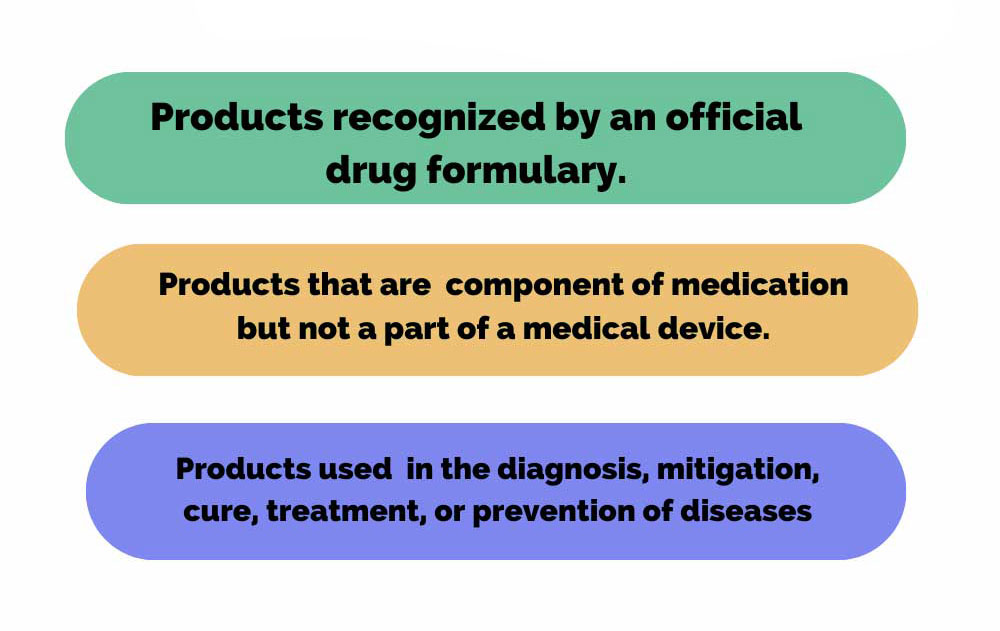
  • The substance is recognized by an official drug formulary, including analgesics, anti-inflammatory agents, antibacterials, anticonvulsants, and others.
  • The substance is used in the diagnosis, mitigation, cure, treatment, or prevention of diseases. This category also includes supplements.
  • The substance is a component of medication but not part of a medical device. Medical devices include items such as respirators and masks.
  • The substance is not a medical device, but it is used in healthcare.
  • The substance is a biological product such as tissues, vaccines, or recombinant proteins.

This list makes clear that not all drugs are products sold in pharmacies. The FDA also regulates toiletries and hand sanitizers, and all require FDA-approved labeling.

One important distinction: a cosmetic product becomes a drug under FDA rules when its intended use or labeling claims suggest it affects the structure or function of the body. A moisturizer is a cosmetic; a moisturizer marketed to treat eczema is a drug.

Dietary supplements are generally regulated as foods rather than drugs, unless a manufacturer makes a disease claim, at which point FDA drug rules apply. Getting this classification right from the start determines which labeling framework you are working under.

Recent Changes in FDA Medicine Labeling Requirements

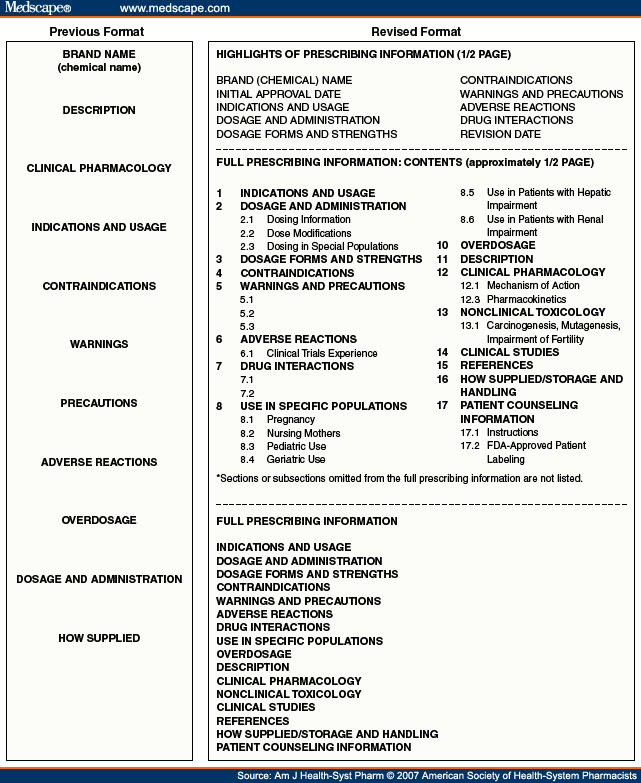
Changes in the medicine labeling scheme from MedScape
Changes in the medicine labeling scheme from MedScape

In June 2006, the FDA made significant changes to pharmaceutical labeling requirements for drugs and biological products (source). The goal was to reduce risks in medical product use by specifying what information a label must contain and how it should be organized. 

Key changes introduced include: 

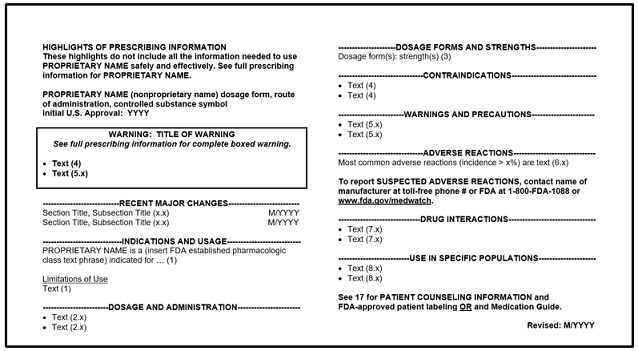
  • Highlights: Labels must now include a highlights section, a half-page summary of essential drug information. Manufacturers must also print a limitations statement informing readers that the highlights section is incomplete and that they should read the Full Prescribing Information (FPI). 
  • Boxed Warning: Labels must include a boxed warning stating possible adverse drug reactions and other health risks. 
  • Recent Major Changes: A new section listing all FPI sections that the manufacturer has recently changed. 

For example, if a drug causes an adverse effect by interacting with a new drug introduced to the market, the manufacturer must update the pharmaceutical labeling and note that update in the Recent Major Changes section. Other sections introduced include patient counseling information and drug interactions. 

The Broader Prescription Labeling Picture

The 2006 PLR reorganization remains the structural foundation for prescription drug labeling today. However, FDA’s current framing is broader than the Prescribing Information alone.

FDA now explicitly describes prescription labeling as spanning three distinct components:

  1. Prescribing Information (the professional insert)
  2. Carton and container labeling
  3. FDA-approved patient labeling

Each is treated as a separate compliance layer with its own requirements, checklists, and review considerations. Industry teams working on prescription products should be familiar with all three, not just the PI.

Where to Find Current FDA-Approved Labeling

Knowing what a label should contain is only part of the picture. Knowing where to find the current, authoritative version matters just as much for compliance teams.

FDA maintains several digital resources for this purpose. DailyMed and FDALabel display the most recent Structured Product Labeling (SPL) content submitted by manufacturers. Drugs@FDA reflects the last labeling that the FDA formally approved as part of a drug application.

These two sources are not always identical. A manufacturer may submit revised labeling that is current and in use in the market before that revision has been formally reviewed and reflected in the approval record. For compliance purposes, understanding which version is the operative one in your workflow matters.

Structured Product Labeling (SPL) is the XML-based format FDA requires for electronic submission of labeling content. It is the mechanism through which label text is submitted, updated, and published to DailyMed. If your team is managing label revisions or tracking safety updates across a product portfolio, SPL submissions,

DailyMed publication timelines, and structured systems such as WebCenter Content Management are part of the operational picture you need to understand.

What Information is Necessary on a Pharmaceutical Label?

The FDA states all labeling requirements in the Title 21 of the Code of Federal Regulations, Part 201. The FDA is strict with these rules and can misbrand drugs if manufacturers do not comply. Requirements differ between prescription drugs and over-the-counter drugs.

1. For Prescription Drugs

Prescription drugs carry information on both the primary label and the packaging insert.

A. Primary Label

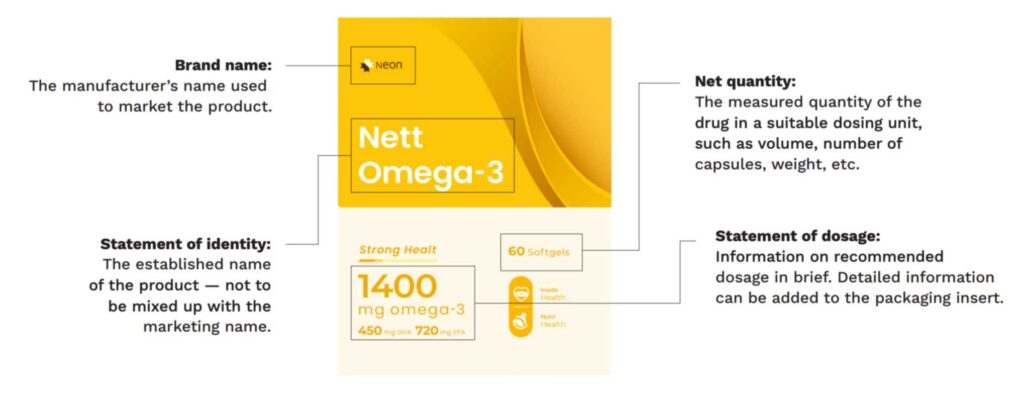
  • Statement of Identity: The established name of the drug, which differs from the marketing name.
  • Brand Name: The name under which the manufacturer markets the drug.
  • Net Quantity: The quantity measured in the appropriate dosing unit, such as volume, number of capsules, or weight.
  • Statement of Dosage: The recommended dosage information. Manufacturers may add a “see packaging insert” note to direct readers to further detail.

B. Packaging Insert

The packaging insert contains the FPI for the drug. Required information includes:

  • Boxed Warning: Any strong warning about serious side effects or health risks.
  • Indications and Usage: The purpose of the medicine and the conditions it can treat.
  • Dosage and Administration: How much to take and how to take it.
  • Dosage Forms and Strength: The physical form of the drug and the concentration of key ingredients.
  • Contraindications: Conditions that may be worsened by the medication.
  • Warnings and Precautions, Adverse Reactions, Drug Interactions: Risks associated with taking the drug, including effects on other medications.
  • Controlled Substance: Whether the drug contains any restricted or prohibited substance.
  • Overdosage: Possible adverse reactions from taking the drug beyond the recommended dosage.
  • Description and Ingredients: Active compounds and every additive with its proportion.
  • Pharmacology and Toxicology: The medicine’s actions, including any risk of disease with long-term use, such as cancer or infertility.

The packaging insert must also include a clinical study summary, storage and handling information, and patient counseling information.

C. Pregnancy, Lactation, and Reproductive Potential Labeling (PLLR)

One of the most significant shifts in prescription labeling in recent years is the replacement of the old pregnancy letter categories (A, B, C, D, X) with the Pregnancy and Lactation Labeling Rule (PLLR) framework.

For prescription drugs and biological products, the FPI must now include dedicated subsections for Pregnancy, Lactation, and Females and Males of Reproductive Potential. Each subsection provides a narrative risk summary, clinical considerations, and available data, rather than a single letter grade.

If your label still carries the old letter categories, it needs to be updated. The PLLR applies to prescription drugs approved on or after June 30, 2001.

D. FDA-Approved Patient Labeling: Medication Guides, PPIs, and IFUs

Prescription labeling does not stop at the professional insert. For many products, FDA requires or authorizes additional patient-facing documents as a formal part of the approved labeling package.

Medication Guides are FDA-required documents for drugs that carry serious risks that could affect a patient’s decision to use the product or that require specific instructions for safe use. They are written for patients, not clinicians, and must be dispensed with every fill.

Patient Package Inserts (PPIs) serve a similar purpose for certain drug classes, providing plain-language information about the product directly to the patient.

Instructions for Use (IFUs) are required when a drug product involves a device component or delivery mechanism that the patient must operate correctly, such as an auto-injector or inhaler. Getting the IFU right is a patient-safety issue, not just a formatting one.

If you manage labeling across a portfolio of prescription products, tracking which documents are required for each product and ensuring every version stays synchronized with the current PI is a real operational challenge. For a closer look at how automation supports leaflet and IFU management, see How Automation is Reshaping Leaflet Management in Life Sciences.

FDA has also signaled a future shift toward a standardized one-page Patient Medication Information (PMI) document for outpatient prescription use. A proposed rule published in May 2023 would, if finalized, replace Medication Guides and PPIs with a single standardized patient document. That rule is not yet final, but it is a directional development worth tracking if you are planning labeling system investments.

2. For Over-the-Counter Drugs

Over-the-counter (OTC) drugs generally do not require a prescription and mostly do not have packaging inserts. Their labels are usually large enough to carry all necessary material.

The principal display panel of OTC drugs must include a statement of identity, brand name, company logo, net quantity, and dosage details.

OTC labels also include a “Drug Facts” section covering:

  • Active ingredients and their purpose (such as pain relief or fever reduction)
  • Specific uses and potential side effects
  • Details on when to contact a doctor

The FDA requires the following warning headings on OTC labels:

  • “Do not use”: States the contraindications.
  • “Ask a doctor before use if you have”: Advises patients with certain medical conditions to consult an expert before use.
  • “Ask a doctor or pharmacist before use if you are”: Informs patients about potential drug-drug or drug-food interactions.
  • “Stop use and ask a doctor if”: Contains signs of toxicity. Manufacturer contact information must also appear here.

Additional required warnings include pregnancy and breastfeeding warnings, external-use-only statements where applicable, and allergen information.

OTC Additional Condition for Nonprescription Use (ACNU)

A meaningful new development in OTC labeling came into effect on December 23, 2024, when FDA finalized the rule for nonprescription drug products with an Additional Condition for Nonprescription Use.

ACNU creates a new regulatory pathway for OTC products that are safe and effective for self-use, but only when the consumer completes an additional step before selecting or using the product. That step might be a screening questionnaire, a self-test, or another condition the manufacturer specifies.

Products approved under ACNU will carry labeling that reflects this requirement. If you are working on OTC label design for products in this category, the ACNU labeling requirements are a distinct layer on top of the standard Drug Facts framework.

A Note on Readability

The FDA guidelines also cover how to make the text on a drug label readable. Since most prescription drugs carry their information in packaging inserts, font sizes are small, and the FDA has specific typeface and text formatting rules to keep small text legible.

Readability is a medication-error-prevention issue, not just a formatting concern. FDA guidance on carton and container labeling emphasizes that critical information, particularly drug name, strength, and concentration, must be prominent and consistent across all label components. The same information appearing differently on the carton versus the container is a known source of dispensing errors.

FDA also recommends the use of Tall Man lettering for look-alike drug names (for example, hydrALAZINE versus hydrOXYzine) to reduce confusion at the point of dispensing. Avoiding error-prone abbreviations and expressing strength or concentration clearly and unambiguously are equally important. These are not stylistic choices. They are safety requirements that FDA reviewers and inspectors look for.


Barcodes in Pharmaceutical Labeling

Counterfeiting is a massive problem in the pharma industry. In the United States, counterfeit steroids killed 18 and affected about 100 individuals in 2012. In another instance that same year, a cancer drug imported into the US contained no active ingredients.

The US is a particularly lucrative target, accounting for 40% of annual prescription drug sales worldwide. Protection and traceability are therefore critical, and barcodes are essential to adding those protective features to packaging.

1. Product Identification and FDA Listing

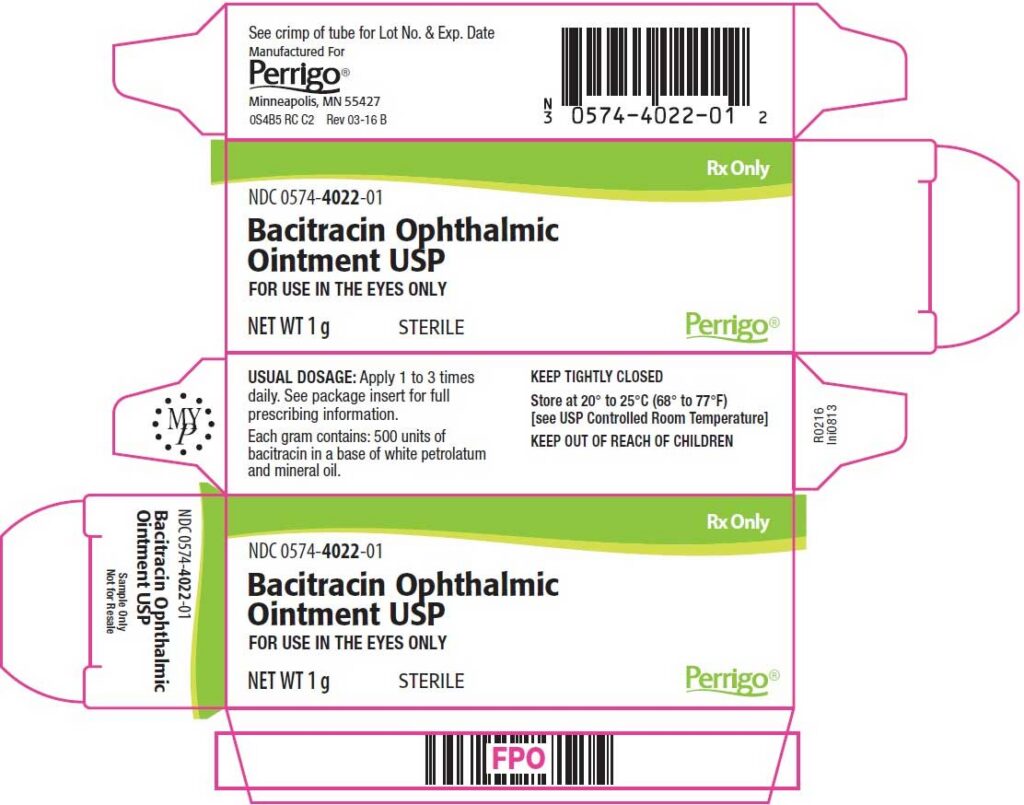
The FDA assigns a National Drug Code (NDC) number and barcode to every drug. Manufacturers, repackers, and labelers use this code to identify the product and support FDA listing requirements. The NDC is currently a 10-digit code with three segments: a labeler code, a product code, and a packaging code.

One important clarification: an NDC is an identifier and a listing artifact, not proof of FDA approval or legal marketability. A product can have an NDC and still not be legally marketed. Compliance teams should not treat NDC assignment as a substitute for confirming that a product has the required approval or exemption status.

FDA has also finalized a move to a uniform 12-digit NDC format. The rule takes effect on March 7, 2033, but the preparation window opened on March 5, 2026. Packaging and labeling teams working on long-cycle products or system updates should be accounting for the 12-digit format now, not when the deadline arrives.

2. Makes Health Data Documentation Easier

Barcodes make it easier to check lot numbers, expiration dates, and other data digitally. This protects patients by helping prevent adverse events before they occur.

3. Adds Traceability and DSCSA Has Raised the Bar

Barcodes improve the traceability of products, helping to detect contamination or adulteration and enabling FDA to recall products and halt future production.

The current traceability standard for prescription drugs goes well beyond traditional barcode scanning. The Drug Supply Chain Security Act (DSCSA) requires interoperable electronic tracing of certain prescription drugs at the package level. Each saleable unit must carry a product identifier encoding the NDC, serial number, lot number, and expiration date, typically in a 2D data matrix format.

Trading partners across the supply chain are required to exchange this data electronically, with FDA pointing the industry toward GS1 EPCIS as the standard for enhanced secure data exchange. This is a much more specific and demanding requirement than a barcode that simply encodes an NDC.

If your labeling workflow does not yet account for DSCSA product identifier requirements, that is a compliance gap worth addressing. For a detailed look at 2D traceability requirements and their packaging implications, see Decoding Compliance: Your Guide to 2D Traceability in Packaging 2023-2030.

Choosing Appropriate Material for Labels

The FDA does not regulate label materials for pharmaceutical products. Manufacturers commonly use multi-layer labels to fit a large amount of text into a small area.

Labels that can withstand chemical exposure, UV light, and humidity are best for pharmaceutical applications. Laminated sheet labels and freezer stickers are also widely accepted.

Effect of COVID-19 on Pharmaceutical Labeling

We all know that the coronavirus pandemic put a strain on the global economy, with businesses of all sizes feeling the fallout.

1. Doubled Manufacturing

While large pharma companies raced to make vaccines available, many small pharmaceutical companies also grew across the US, Canada, and other regions to keep up with increased medical requirements.

2. Increased Use of Digital Tools

Pharmaceutical industries worldwide accelerated their manufacturing processes during the pandemic. Companies increasingly relied on digital tools, including workflow management software, to navigate the crisis. Labeling design and approval projects came to depend heavily on artwork and label management software that allows stakeholders to collaborate and bring products to market faster.

3. Invested in Automated Labeling

The pandemic increased the need for clinical trials, which carry their own distinct labeling regulations and requirements. Manufacturers adopted automated labeling software for clinical trials to make it easier to administer and track new and experimental drugs.

The Lasting Shift

By 2026, the more durable pressures on pharmaceutical labeling shifted from pandemic-era emergency conditions to digital labeling governance, current-label management, and supply-chain traceability.

DSCSA compliance, SPL submission accuracy, and the ability to track which label version is live in the market at any given moment are the operational challenges that define the current environment. The teams that have built systematic, auditable labeling workflows are better positioned to handle both routine updates and urgent safety changes.

For a grounded look at where AI fits into this picture, read ‘AI in Labeling: Separating Compliance Reality from Vendor Hype’.

Meet Your Pharma Labeling Requirements Easily with Comply

Accurate drug labeling is critical to safeguarding human health. Drug labels are more than product information. They communicate to the consumer exactly what is in the drug and how to use it safely.

Any inaccuracy, even a seemingly minor one, can jeopardize consumer safety and lead to hospitalization or death. With WebCenter Go’s Comply, you simply build your rulebooks, and the AI engine handles the rest.

With this latest solution, we’re transforming compliance from a bottleneck into a competitive advantage by helping teams identify and address issues early and move faster with confidence.

Jan de Roeck, Director Industry Relations & Strategy

Here is how Comply works in practice. Take a labeling change for TECARTUS (brexucabtagene autoleucel) which was previously made, that noted serious T-cell malignancies with outcomes including death and hospitalization.

You can build your rulebook using “TECARTUS (brexucabtagene autoleucel)” as the preferred term. The AI engine runs across all your labels and flags every instance where that preferred term is absent. You update the label copy, and the correct information reaches your customers.

Accurately labeling your drugs is not a choice. When it comes to human health, there is no room for error. Make all your FDA-compliant drug labels with WebCenter Go’s Comply. Book a demo today.