
Skip to content
English
My AccountCart
Artwork Management

The Specification-to-Shelf Handshake: Closing the Loop Between TraceGains and WebCenter Go

Shruti Ramanujam

Written by Shruti Ramanujam

Content Marketing Manager, Esko

If you’ve spent any time in NPD, you know the post-formula hangover. R&D has finally nailed the recipe. Regulatory has triple-checked the allergens. The specs are sitting pretty in the system, and everyone’s ready to celebrate.

Then comes the handoff to Packaging.

This is usually where the wheels fall off. It starts with an email that says, “See attached for final specs (v4).” Then someone else Slacks with “Wait, use v4_updated_FINAL instead.” By the time that data reaches the creative agency, it’s been copied, pasted, and misinterpreted three different times.

A few weeks later, you’re looking at a beautiful proof with an ingredient list that’s based on a draft from several versions back.

The Two Worlds That Need to Talk to Each Other

There’s a useful way to think about what’s actually happening inside a typical NPD cycle. Every product you launch has two distinct sources of truth. What’s inside the pack — the formulation, the allergens, the nutrition values — and what’s written on it — the label copy, the claims, the artwork that goes to print.
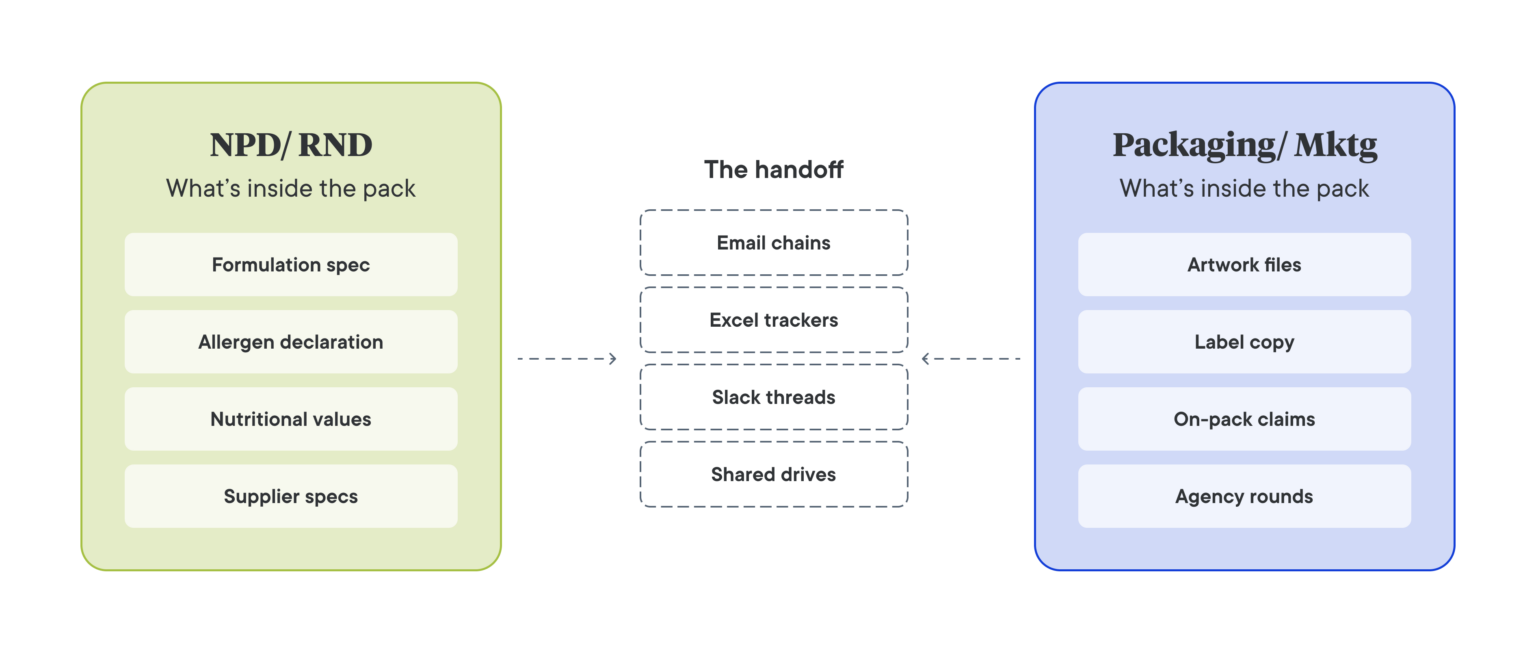
The first lives with R&D, regulatory, and quality. The second lives with packaging, marketing, and your creative agency. In most mid-size brands, these two teams don’t share a system. They share a Slack channel and hope for the best.

What the Gap Actually Costs

The cost of this disconnect is easy to underestimate.

Think about what happens when a formulation changes mid-project, which is not as uncommon as we’d like. Someone needs to update the spec in the product system. Then someone needs to flag it to packaging. Then someone needs to brief the agency. Then the artwork needs to go back through review. Each of those handoffs is a potential delay. And each delay can snowball into missing a retail slot penalty that can run into tens of thousands of dollars.

Then there’s the compliance risk. A missed allergen declaration or an inaccurate on-pack claim leads to a recall. It’s expensive and it’s the kind of event that shows up in the press, causing reputational damage.

What a Connected Workflow Actually Looks Like

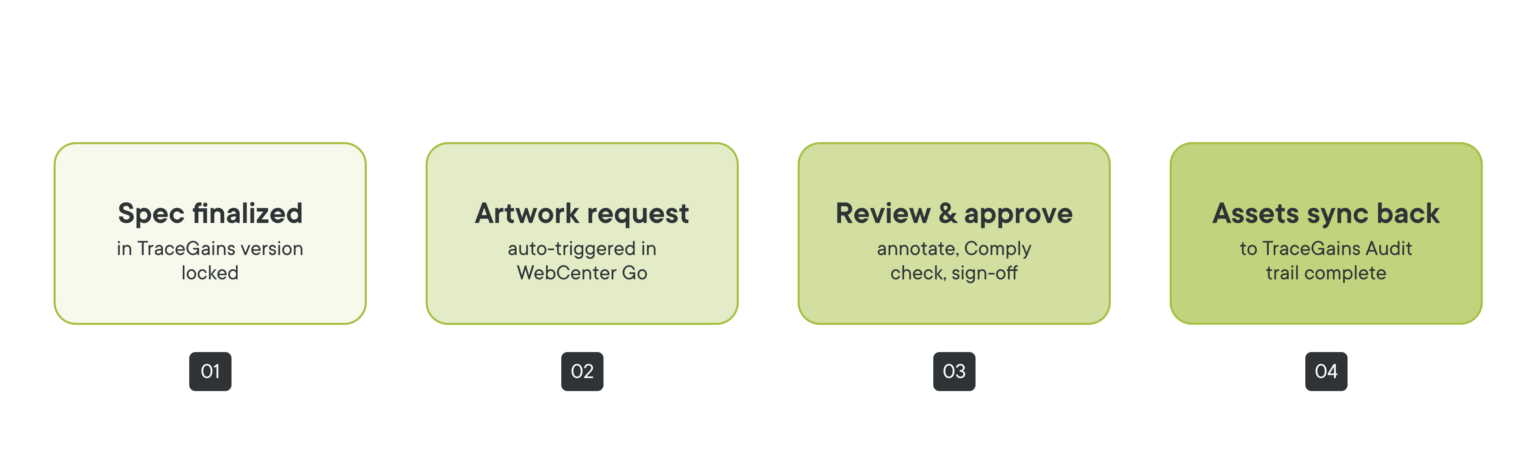
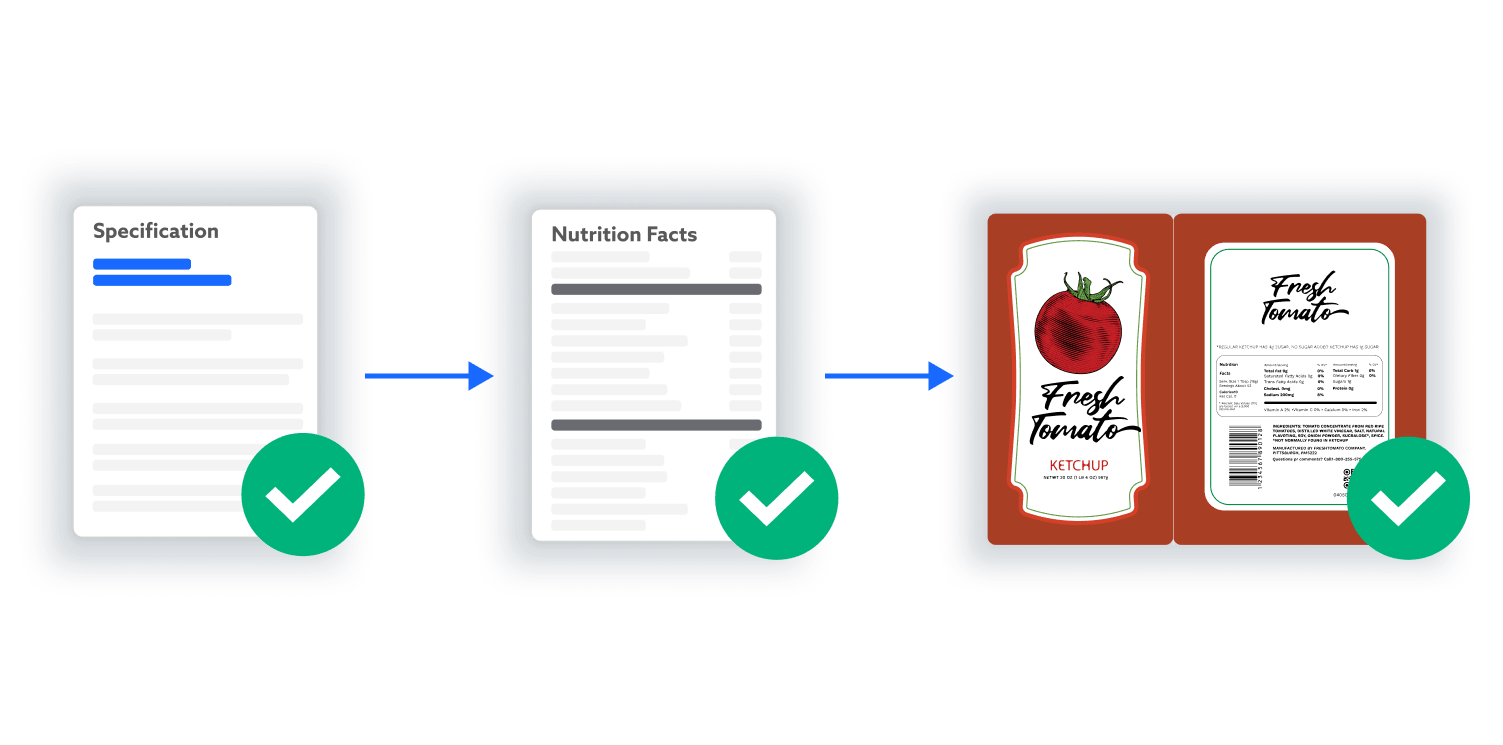
We recently integrated WebCenter Go with TraceGains to fix this gap. The integration is built around one idea: when a product spec changes, packaging should know immediately.

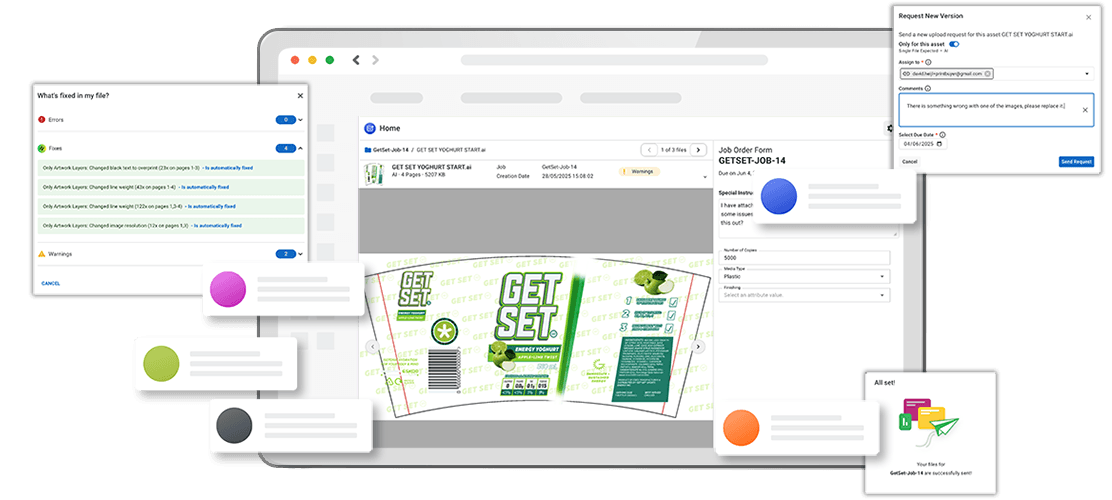
When R&D approves a spec in TraceGains, the system triggers an artwork request in WebCenter Go immediately. This move eliminates the manual ferrying of data that usually leads to errors.

What the integration gives you:

Automated Data Transfer

Specifics that usually get fat-fingered during manual entry like ingredient lists, allergen declarations, and nutritional panels flow directly from the source of truth into the packaging workflow.

Visual Verification

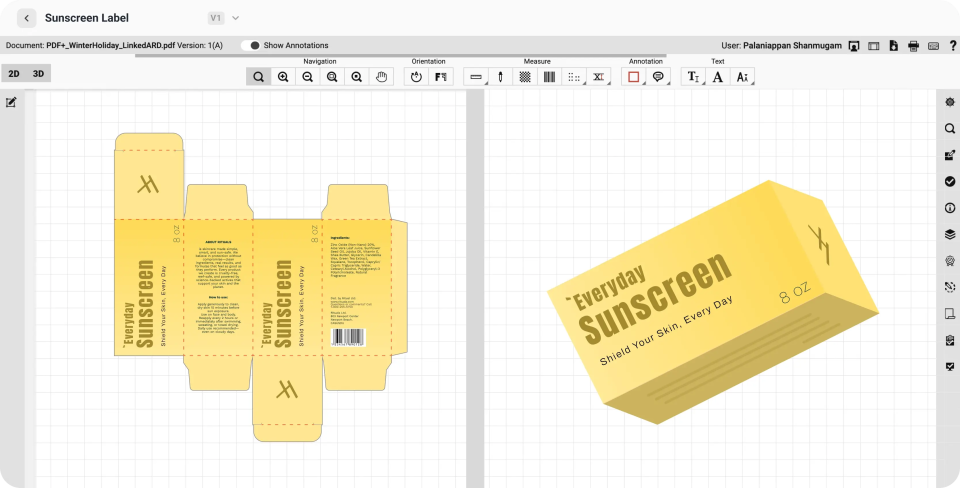
The platform includes a 3D viewer, allowing you to check how a label wraps around a bottle or folds on a carton before committing to a physical prototype.

Version Comparison

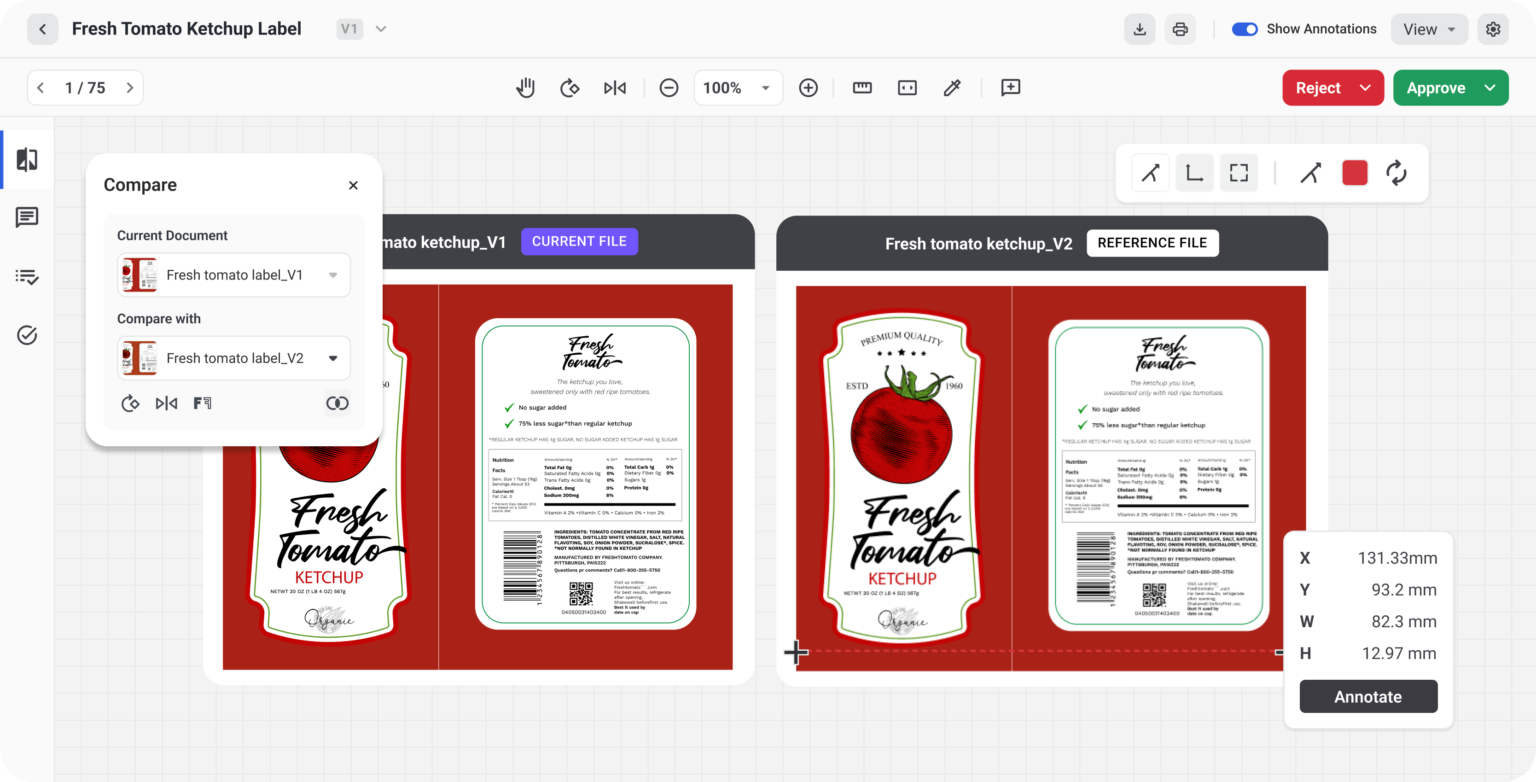
An automated side-by-side tool highlights every change between versions. It catches the subtle shifts in font size or copy placement that a human reviewer might overlook.

AI-powered Content Checks

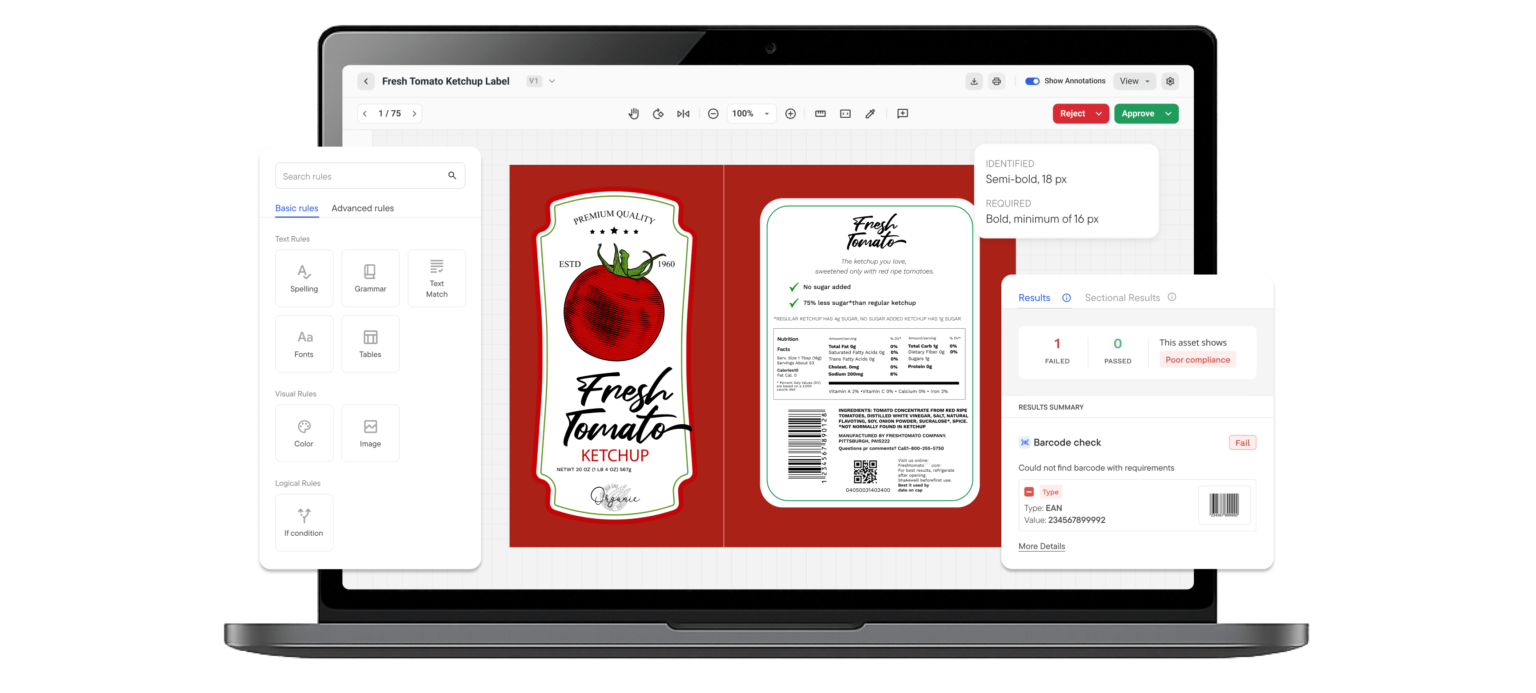
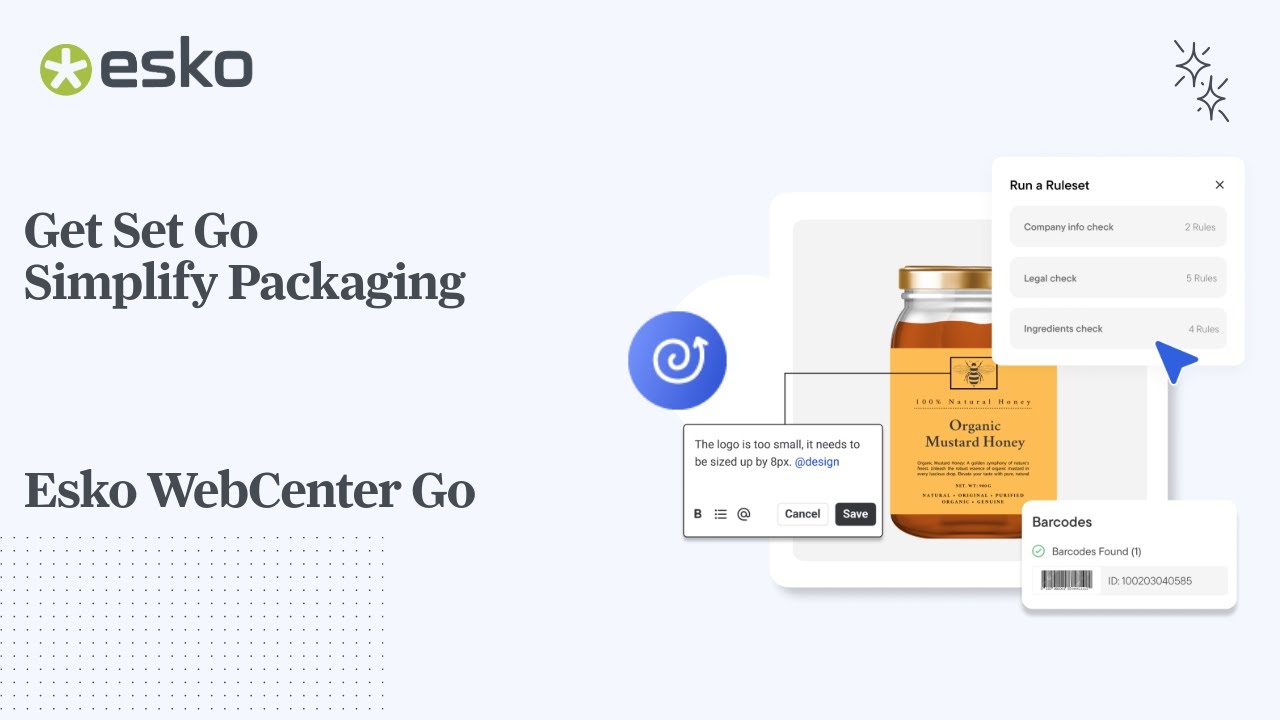
The Comply module scans your artwork against a rulebook you define. It flags missing mandatory statements or restricted claims, acting as a final technical check before the files reach the printer.

Full Accountability

Every approval, comment, and change is recorded in a centralized audit trail. You can see exactly who signed off on the final assets, providing a clear history for regulatory audits.

The Result

This setup is designed for teams managing dozens of SKUs with limited bandwidth. It allows your staff to focus on product innovation while the system handles the data integrity between the lab and the shelf. If you want to see how this sync looks in practice, get in touch with us today!

About the Author

Shruti Ramanujam is a content leader who writes for SaaS, marketing, and packaging audiences. At Esko, she leads a Content Marketing team, balancing creativity and sharp storytelling with performance goals. When she’s not doing that or writing about herself in the third person, she’s reading fiction with no intent to optimize a thing.

Shruti Ramanujam