
The role of packaging in food safety is changing.
Growing consumer expectations around transparency, stricter regulatory oversight, and the continued rise in allergen-related recalls are forcing manufacturers to rethink how labels are created and managed. For the millions of Americans living with food allergies—an issue linked to more than 30,000 emergency room visits, 2,000 hospitalizations, and nearly 150 deaths each year—accurate on-pack information is a critical control point in protecting consumer health.
Consider this: undeclared allergens remain one of the leading causes of food recalls worldwide, and the leading cause in the U.S., accounting for 41% of all FDA food recalls in the first quarter of 2026 alone.
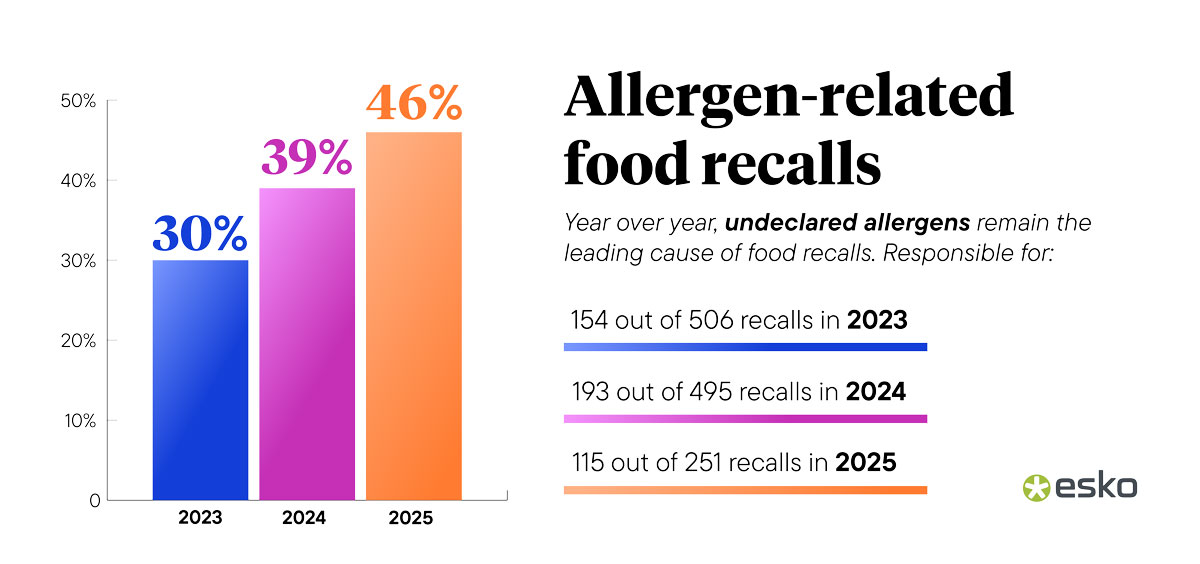
For many manufacturers, the challenge in allergen management lies in keeping on-pack information aligned with the latest product, supplier, and regulatory data. As regulations tighten and products become more complex, labels, artwork, and packaging can no longer be solved in siloed departments or treated as downstream marketing deliverables. They must be managed collaboratively, with the same discipline as any other food safety process.
Why Are Packaging and Labels Critical to Food Safety?
Every label is a promise to consumers.
Ingredient statements, allergen declarations, nutrition facts, claims, and usage instructions all help consumers make safe purchasing decisions. When any of this information is inaccurate or outdated, the consequences can extend far beyond a costly reprint. Consumer safety, regulatory compliance, brand reputation, and food waste are all at stake.
That’s why many food manufacturers are beginning to treat label and artwork approval with the same rigor as HACCP controls. Every change must be reviewed, validated, and connected to the latest approved product information before packaging reaches production.
Whether the driver is new regulation, sustainability commitments, origin or benefit claims, supply chain disruption, or changing consumer expectations, companies need packaging processes that can keep up
What Causes Packaging and Labeling Errors?
Most packaging failures aren’t caused by a lack of expertise.
They’re caused by disconnected information.
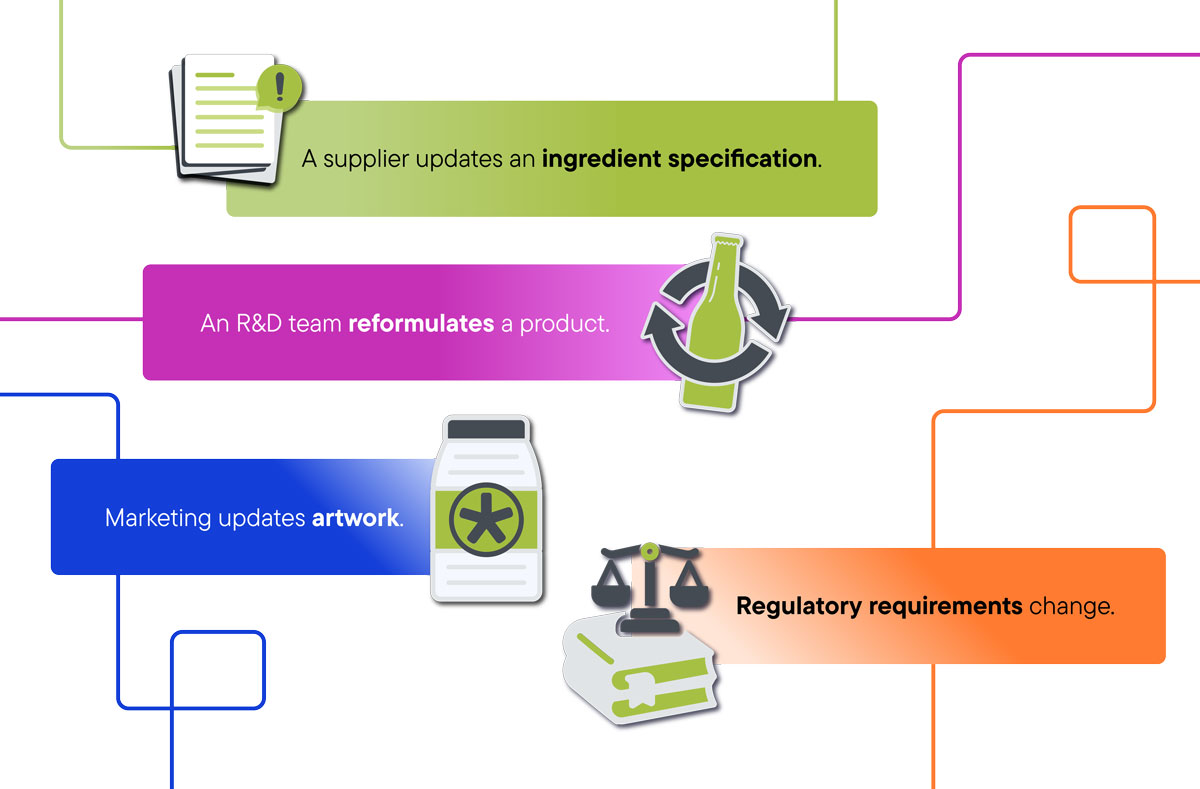
If those changes happen across separate systems, spreadsheets, emails, and approval processes, the risk of printing outdated or incorrect information increases dramatically.
Packaging teams often become the last checkpoint in a process that has already lost alignment.
Keeping compliant labels connected to the underlying product data throughout the product lifecycle—the digital thread—helps ensure packaging stays accurate as changes occur.
How Can Connected Data Reduce Food Safety Risk?
Food safety depends on trusted information.
A connected source-to-shelf ecosystem ensures that supplier data, formulations, specifications, nutrition calculations, packaging, and artwork all reference the same approved product information.
When a change occurs upstream, downstream teams have immediate visibility into what has changed and what actions need to be taken before a product reaches the shelf.
Instead of manually comparing documents and chasing approvals, teams can focus on reviewing exceptions and managing risk.
Connected data helps reduce:
- Packaging and artwork rework
- Manual approval bottlenecks
- Allergen and ingredient declaration errors
- Version control issues
- Cross-functional communication gaps
- And ultimately, waste
What Does a Connected Source-to-Shelf Ecosystem Look Like?
Modern food safety isn’t managed by one department.
It spans sourcing, product development, regulatory, nutrition, packaging, quality, and suppliers.
Together, TraceGains, NutriCalc, and Esko create a connected ecosystem that keeps critical product information moving with the product itself.
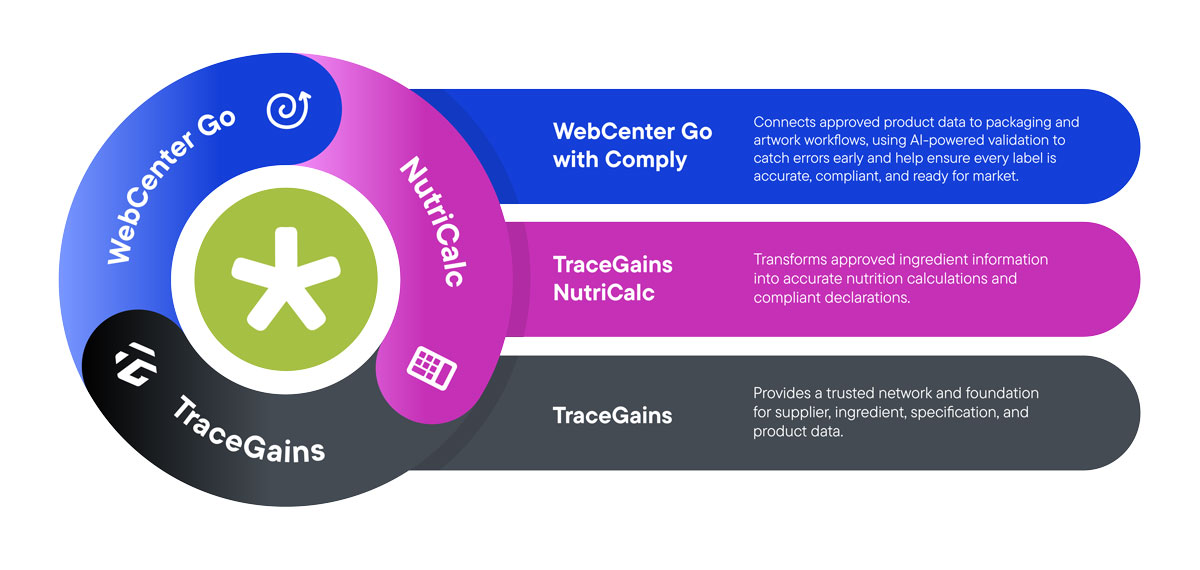
- TraceGains provides a trusted foundation for supplier, ingredient, specification, and product data.
- TraceGains NutriCalc transforms approved ingredient information into accurate nutrition calculations and compliant declarations.
- Esko WebCenter Go with Comply connects approved product data to packaging and artwork workflows, using AI-powered validation to catch errors early and help ensure every label is accurate, compliant, and ready for market.
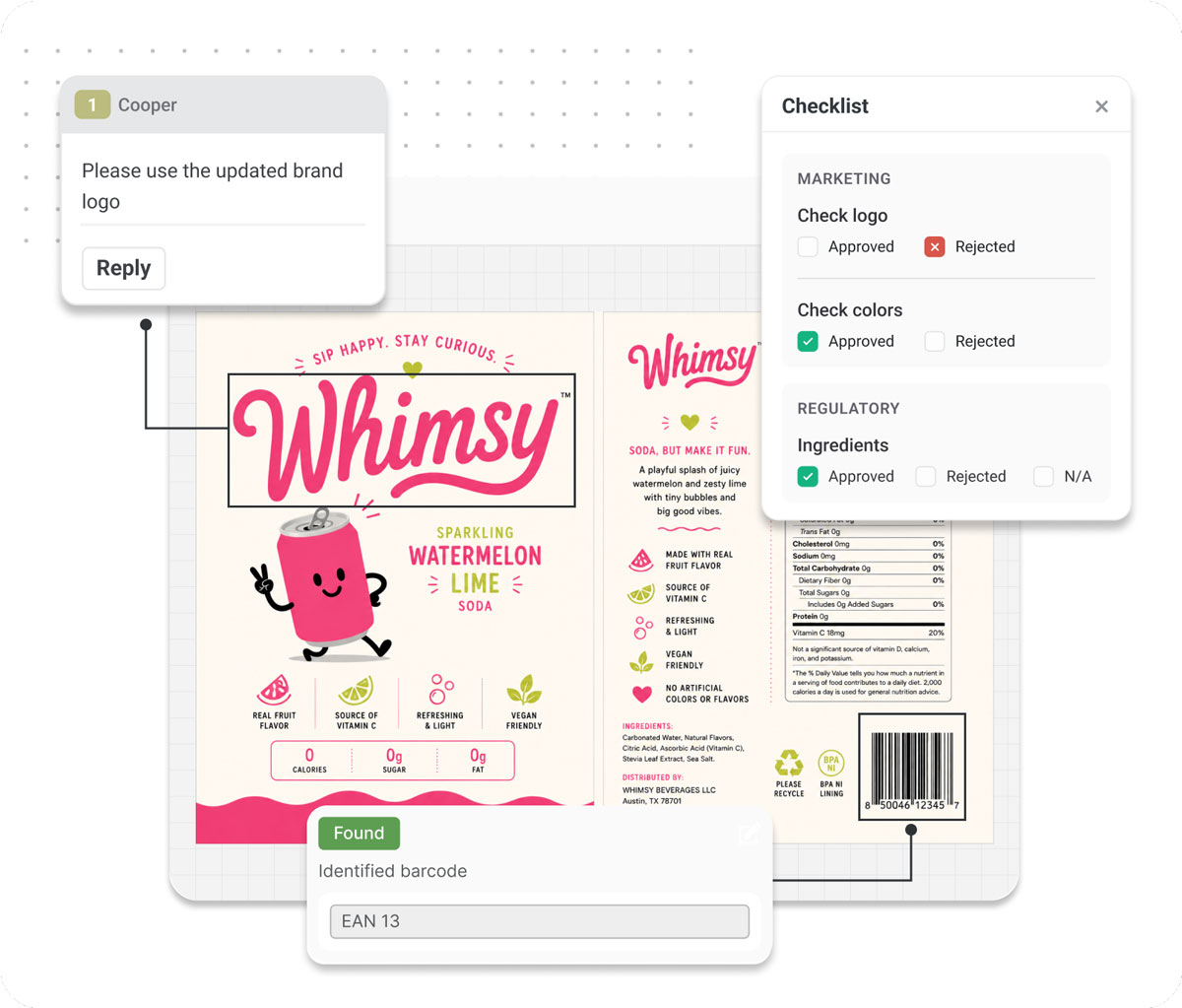
Rather than handing information from one team to another, organizations can maintain a continuous digital thread from source to shelf.
Every packaging update depends on accurate, verified, and trustable product information. The real value of Source-to-Shelf comes when product data, packaging content and production workflows operate as one ecosystem, enabling brands to execute change at a speed that simply wasn’t possible before
Why Packaging Is Becoming the Next Frontier of Food Safety
As products, regulations, suppliers, and consumer expectations continue to evolve, disconnected systems are struggling to keep pace, making food safety more complex than ever.
The manufacturers best prepared for the future won’t simply create compliant packaging. They’ll build connected workflows that keep packaging aligned with product data from concept through commercialization.
When product information stays connected, food safety becomes stronger, packaging becomes more accurate, and consumers gain greater confidence in every product that reaches the shelf. And being trusted is the purest definition of having a brand.
See the Source-to-Shelf Ecosystem in Action
Discover how Esko, TraceGains, and NutriCalc connect product, nutrition, packaging, and artwork data into one trusted workflow; helping food manufacturers reduce risk, improve quality, and accelerate time to market.
Book a demo today to see how connected data powers safer packaging from source to shelf.