Written by Gouri Sasidharan
Content Specialist, Esko
When you hear about product recalls, the usual suspects come to mind: contamination, defect, or faulty manufacturing. But another major cause sits right on the packaging itself: artwork mismanagement. A single line of missing allergen information or an outdated claim can force an entire product line off the shelves, costing companies millions in logistics, reprints, and reputation damage.
Regulators consistently report that undeclared allergens are among the top three causes of recalls across food, cosmetics, and consumer goods. In recent cases as of October 2025, a batch of salted caramel popcorn product was pulled from shelves for missing peanuts on its label. Another recall was eggs. And then, once again…peanuts.
Different brands, different products, but the same story on repeat: one missed line in the artwork file.
The formulations may have been correct in these cases, but the artwork didn’t reflect them—proof that the weakest link often lies not in production, but in packaging governance.
What Do We Mean by Artwork Mismanagement?
Artwork mismanagement refers to slip-ups in how packaging content (text, graphics, barcode, regulatory statements, logos etc.) is reviewed, versioned, approved, and maintained. It does not arise from the design per se, but from the process, traceability, and governance issue.
Here are common failure modes:
1. Uncontrolled version circulation
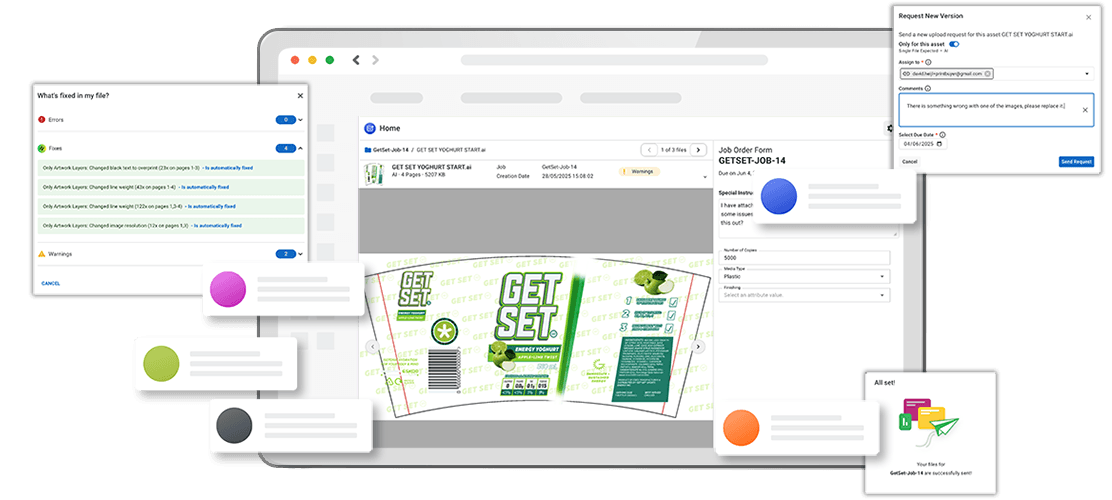
It starts with the designer saving an artwork file as “v3_final.” After marketing provides feedback, the designer creates “v3_final. final.” The regulatory team then adds comments, resulting in another file, “v3_final_final feedback.” With each round of edits, multiple versions pile up, and eventually, no one knows which file is approved. So, the wrong one goes to print, missing a key allergen warning.
2. Scattered feedback & comments
Feedback after artwork review arrives via emails, chats, PDFs, and sticky notes without a consolidated record in the artwork file. Some corrections may not be applied, or you’ll find conflicting instructions. Keeping your team on the same page can be a hassle when compliance is involved, especially when every department has a different version of the truth.
3. Manual proofreading & oversight
As a reviewer, you check every element including nutritional values, claims, barcode sizes, and regulatory symbols under tight time pressure. This is error-prone, especially when you have to handle it across multiple markets or languages.
4. Lack of rule-based validation
Let’s say your brand always requires the logo to be at least 15mm wide, or allergen warnings to appear in bold font. Without automated checks, your designer might accidentally shrink the logo or miss the bold formatting on the allergen line. The biggest challenge here is that the designer may not even realize it, leaving reviewers to manually scan every line and detail to catch such errors. That not only increases the risk of non-compliance but also slows down the entire review cycle.
Over time, these mismanagement issues compound, especially for companies with many SKUs, multiple markets, and frequent label updates (e.g. new formulations, regulation changes, seasonal variants).
How Artwork Errors Trigger Recalls
Below are realistic scenarios illustrating how even small artwork errors escalate to major recall events:
- Missing allergen or “may contain” warning
Suppose a cookie packaging does not say “may contain nuts”, but the production line handles cross-contact and is unaware of the fact. That omission can lead to allergen mislabeling. An immediate health hazard and regulatory recall. - Incorrect or inconsistent dosage/instruction
In a nutraceutical label, if a dosage change isn’t correctly updated in the artwork (e.g. “take 12 tablets” vs “1-2 tablets”), it could lead to overdosing risks. - Regulatory symbol misuse
Some markets require specific symbols (e.g. recycling icons, veg, non-veg, cruelty-free, eco logos). If the wrong symbol or no symbol is used, regulators may reject the product. - Wrong barcode format or scaling
A barcode printed too small or misaligned might not scan at point-of-sale, causing supply chain or recall logistics issues. - Out-of-date claims or nutritional panels
Suppose a formulation changed (from no sugar to some sugar), but the packaging still claims, “no sugar.” That becomes a misbranding issue under regulatory law. - Regional labeling mismatch
A product intended for the EU market is printed with US-style labeling (e.g. serving sizes, mandatory language, units in US customary). That causes noncompliance in the region and forces recalls or repackaging.
How Comply Prevents Recall Risks
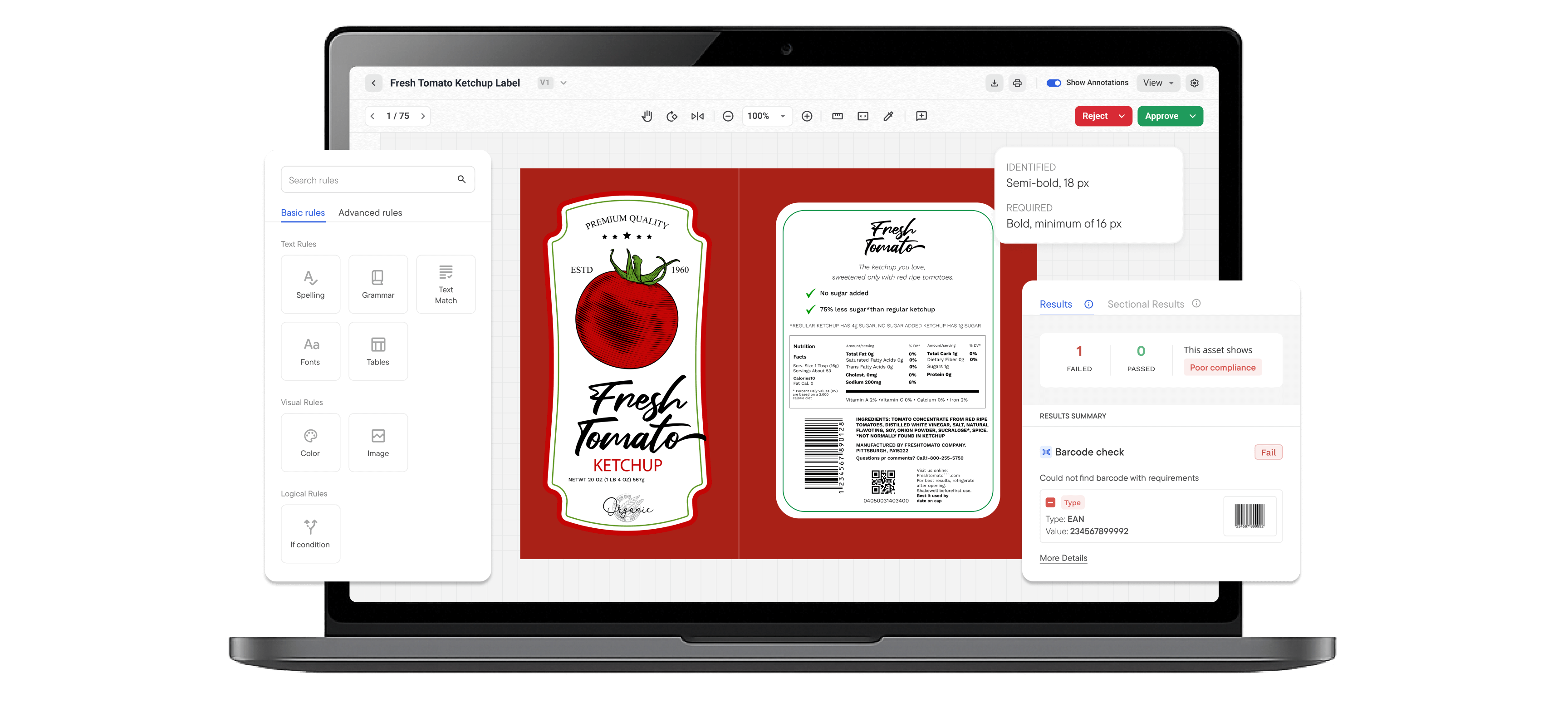
Traditional tools like spreadsheets, shared drives, or even generic project trackers cannot scan compliance on your labels. They lack rule-based checking, version integrity, and traceability. This is where Comply makes a huge difference.
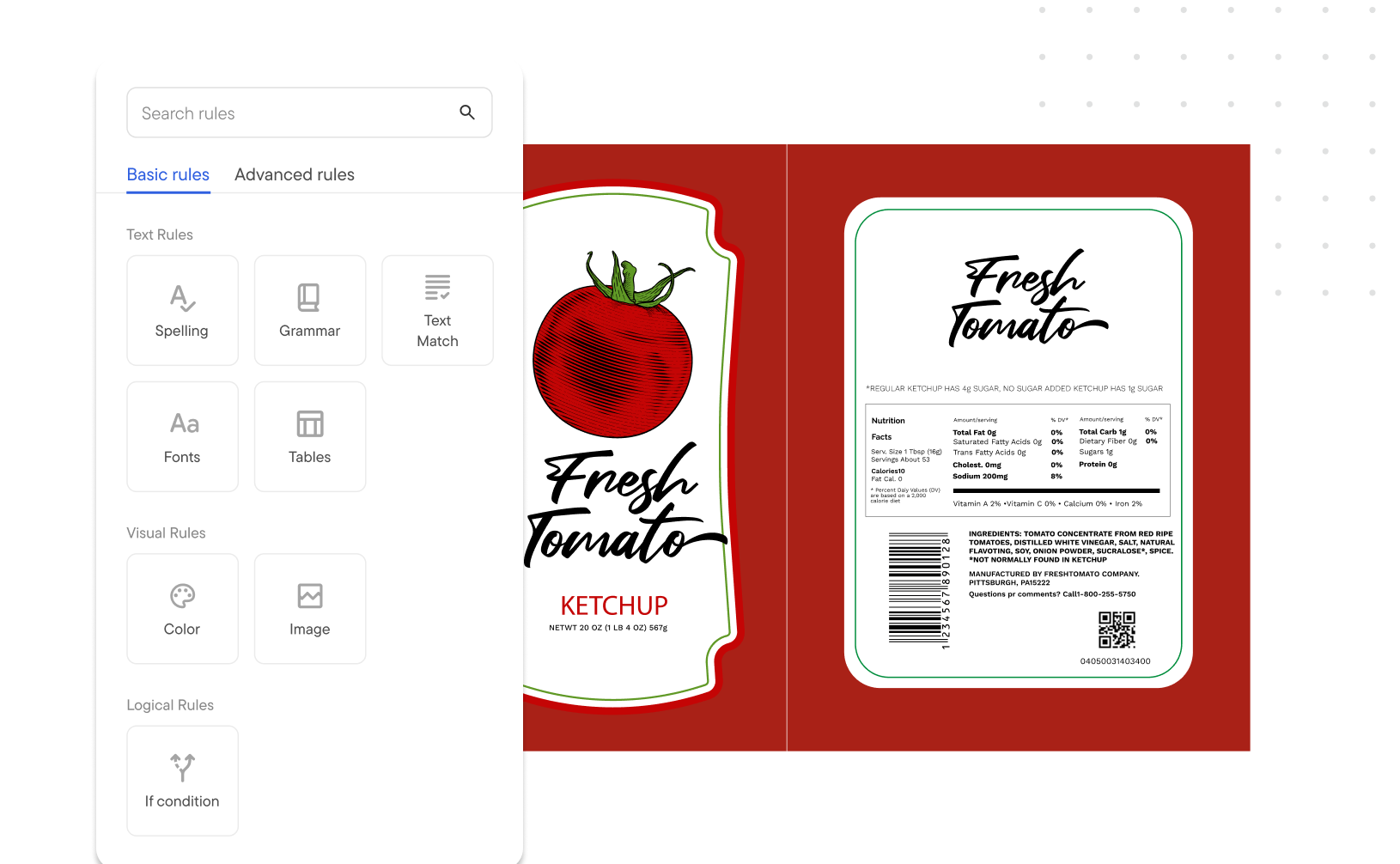
1. Rulebooks Built for Packaging and Compliance
- With our rulebooks, define brand-specific and regulatory rules for each market: mandatory allergen statements, ingredient panels, font sizes, placement of logos, barcode dimensions.
- Maintain different rulebooks for different geographies such as EU, US, and Asia.
- Ensure the artwork always reflects the latest formulation and regulatory data.
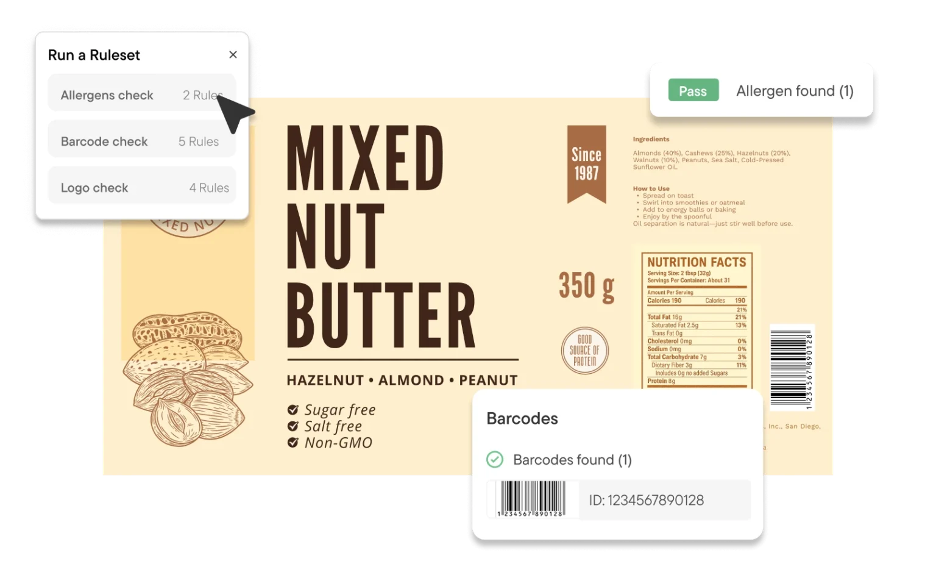
2. AI-Powered Compliance Checks
- Automated scans catch missing allergens, incorrect dosage instructions, or font sizes below the legal minimum.
- Detect formatting errors like misaligned barcodes, wrong colors, or missing recycling symbols.
- Reduce reliance on manual proofreading under tight deadlines.
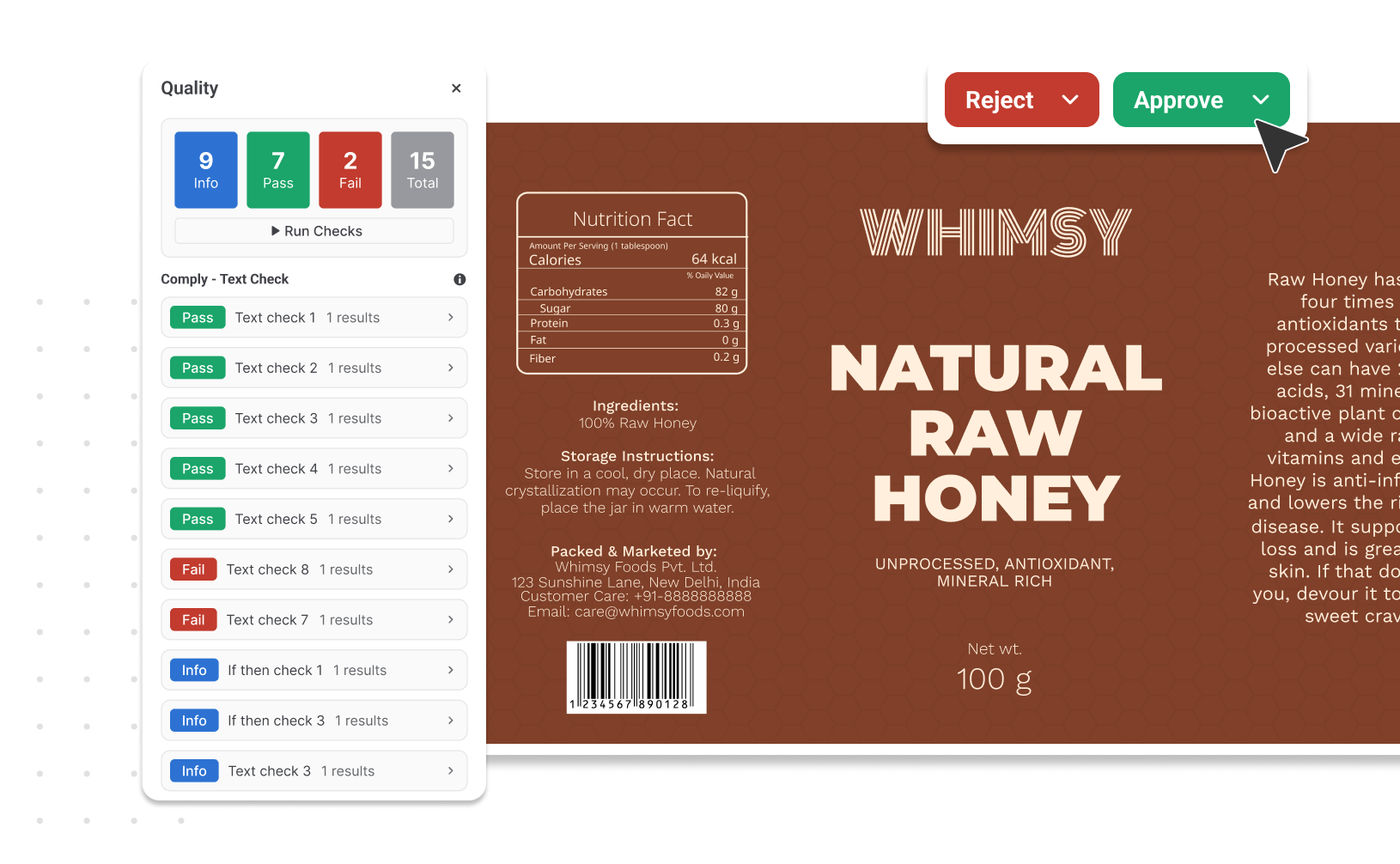
3. Workflow Integration
- Comply provides AI-assisted quality checks to artwork reviews which become a mandatory gate in the artwork approval workflow. Artwork cannot proceed to print unless it passes.
- With the ‘Quality Check’ tool, run automated checks within workflows that connect with regulatory data libraries, so formulation updates automatically sync with artwork content.
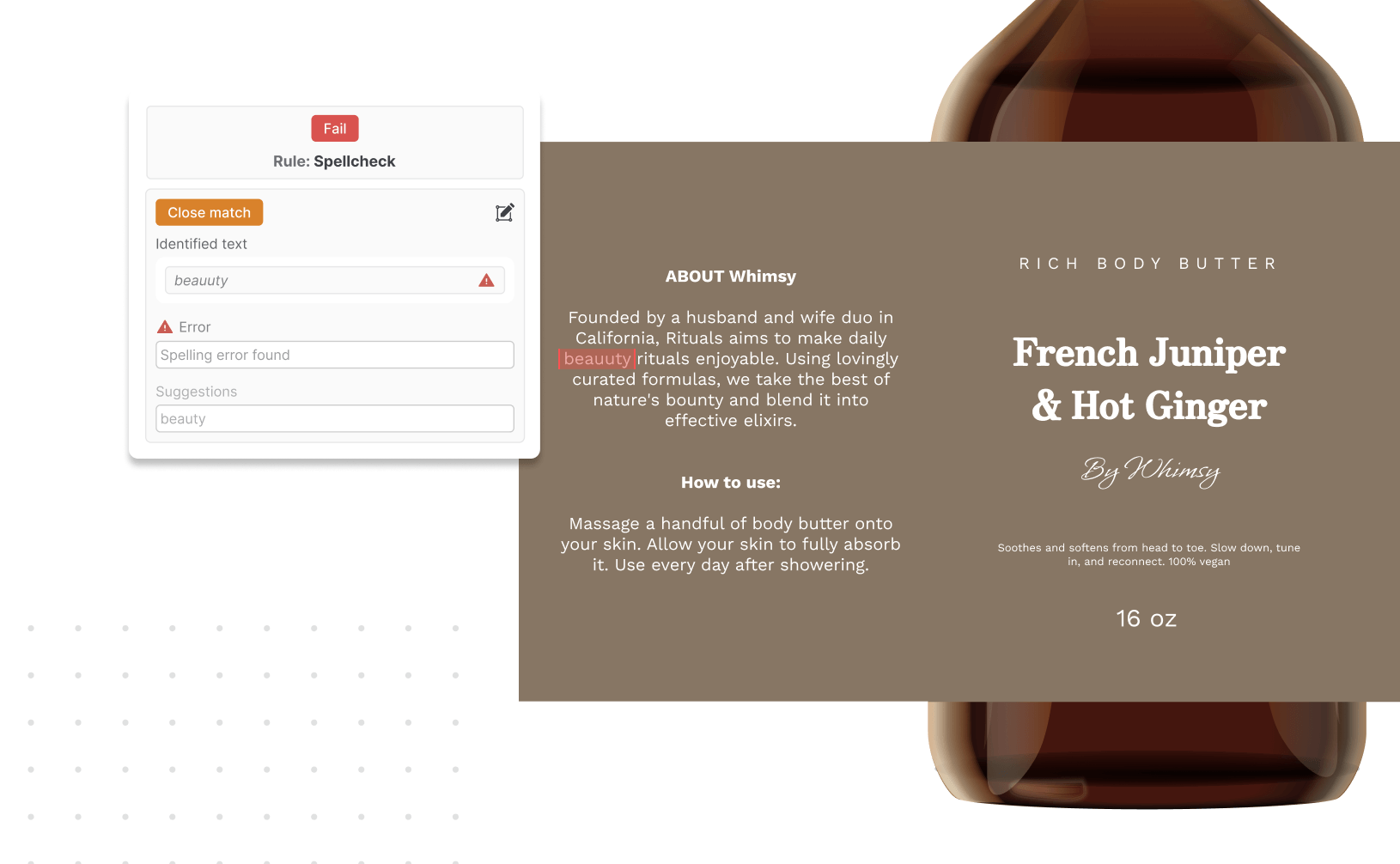
4. Spell check up to 40 languages
- Comply proofreads pack copy in up to 40 languages to catch typos, mistranslations, or misused terminology.
- This feature is critical for brands expanding into global markets where a single spelling mistake can cause confusion or compliance issues.
5. Efficiency at Scale
- You can automate repetitive validation across hundreds of SKUs.
- Reuse pre-validated rulebooks, reducing duplication and errors.
- Your team can focus more on judgment-based decisions instead of mechanical checks.
Conclusion
Product recalls caused by artwork errors are avoidable, but only if brands stop treating packaging as a design task and start treating it as a compliance process.
With Comply, packaging compliance moves upstream. Rulebooks enforce regulatory requirements, AI-driven checks flag risks, and workflows ensure nothing prints without validation.
Comply is currently in beta. Sign up here to get notified when it’s available and start rolling out error-free packaging artwork!