Packaging Trends 2027 – Chapter 2

Introduction > Chapter 2
Sustainability Becomes Business as Usual
More than 50 years ago, Coca-Cola commissioned a study to examine the environmental impact of its packaging.
That was in 1969.
The questions surrounding sustainable packaging have grown considerably more complex since then. Materials, recyclability, carbon impact, reporting requirements, producer responsibility, and packaging data are now part of the conversation.
But one of the biggest changes heading into 2027 isn’t simply what companies are being asked to improve. It’s how they turn those expectations into everyday packaging decisions.
For example:
What needs to change across the portfolio?
Which materials meet recyclability requirements?
Where does the necessary packaging data live? Who owns it?
How does information move between internal teams and suppliers?
And how can companies keep pace as requirements continue to evolve?
Vivian Loftin, Co-Founder of Recyda, sees that shift clearly in the conversations she’s presently having with companies. Customers are moving further into “the actual execution of things,” she says, with discussions becoming much more concrete around packaging data, integrations, and implementation.
That growing focus on execution reflects a broader change across the industry. Sustainability is becoming part of how packaging is designed, sourced, managed, and produced.
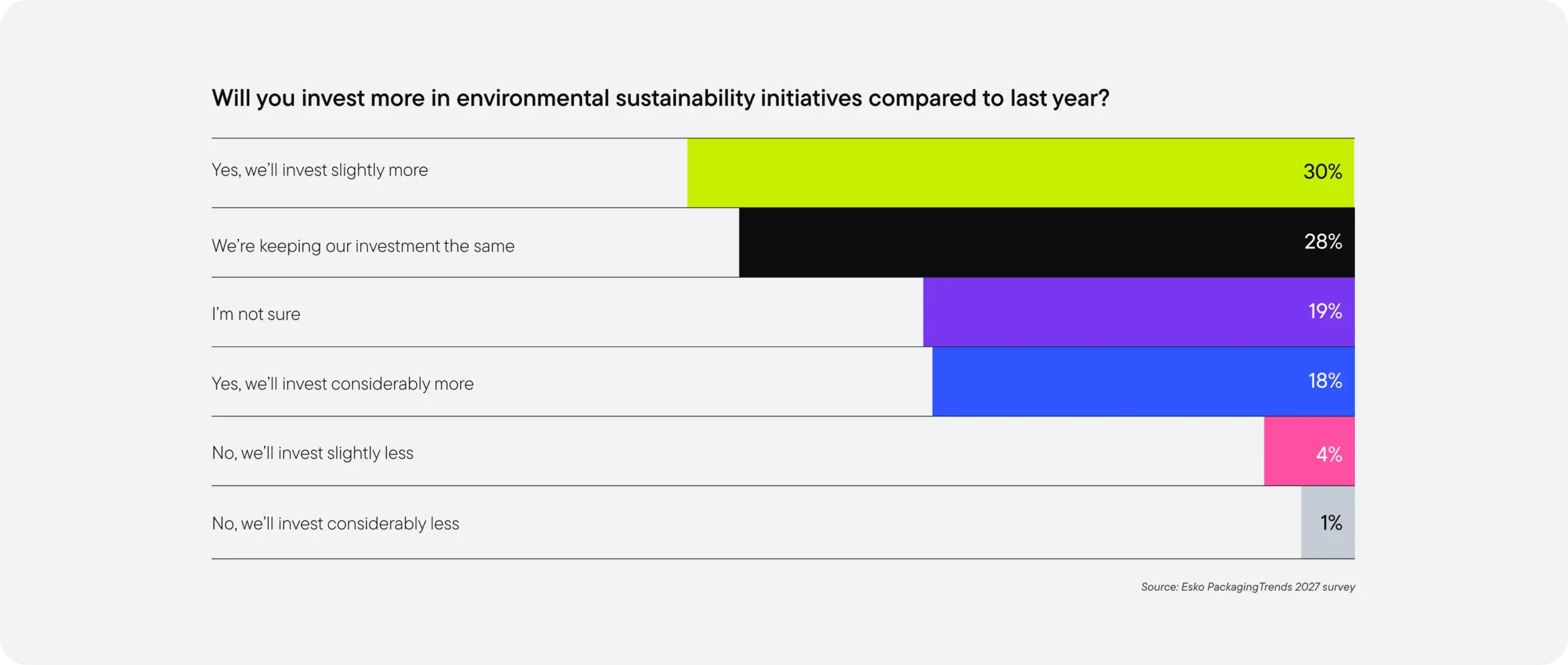
In an Esko survey of 258 packaging professionals, 48% said their organizations expect to increase investment in environmental sustainability initiatives in 2027.
Loftin expects it to become “a standard rather than a marketing claim,” built into the fundamentals of packaging alongside its role in protecting and selling a product.
Sustainability Influences Decisions Across the Packaging Lifecycle
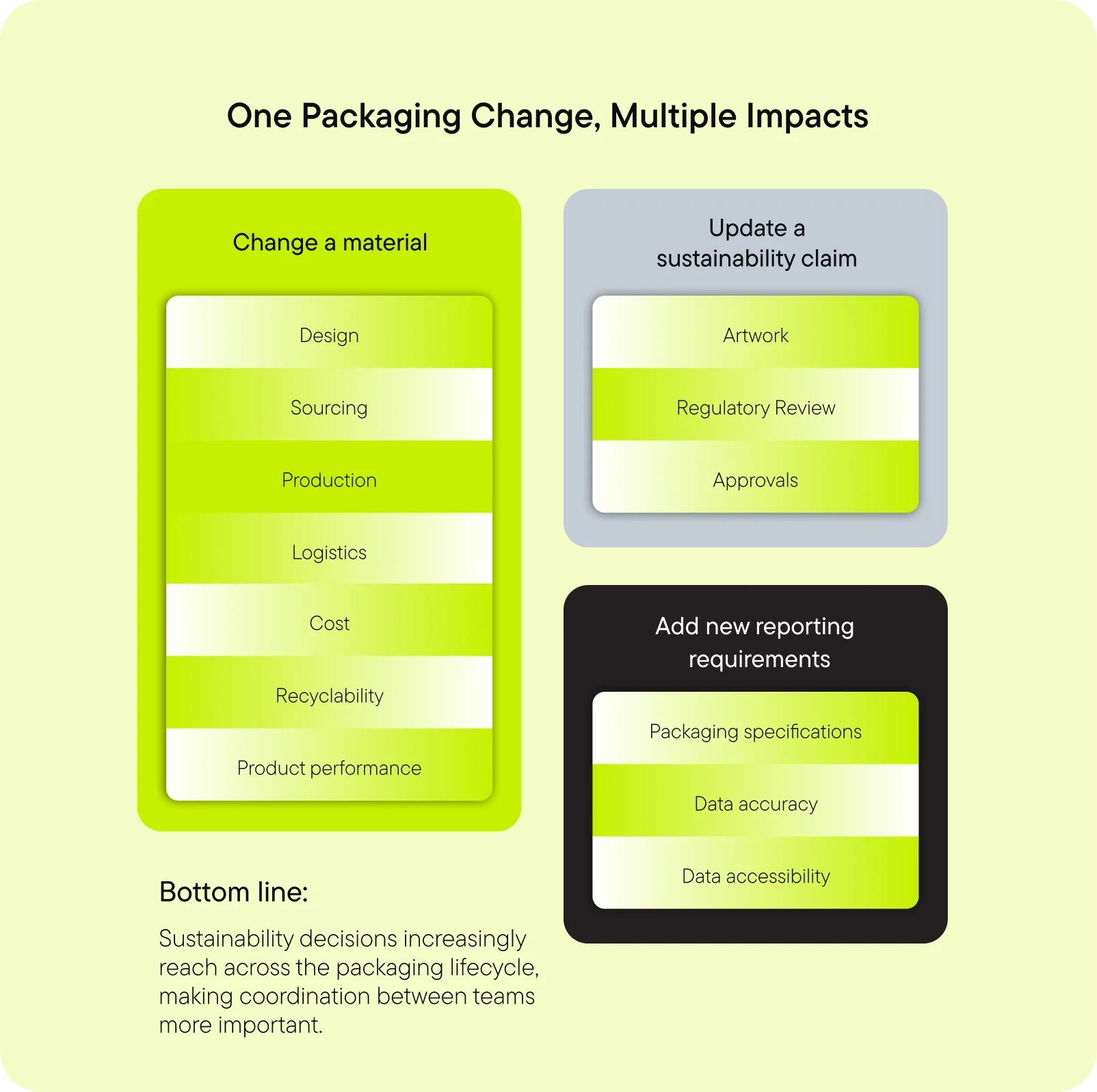
A sustainability decision rarely takes up residence in only one part of the packaging process.
The impact also looks different depending on the role.
For brands, expectations are coming from more directions. Companies are strengthening their own sustainability requirements even while regulatory timelines remain in flux. Supply chain requirements from global businesses can ultimately reach converters far downstream. For converters, shifts toward thinner, more stretchable or mono-material substrates require adjustments to inks, platemaking, screening, and other production processes.
Sustainability requirements are also increasingly becoming part of the criteria companies use to evaluate suppliers and solutions. Loftin expects sustainability to become “the baseline” rather than a separate sales argument.
This changes where sustainability fits into everyday business decisions. It has to work alongside the priorities packaging teams already manage every day: product protection, quality, cost, speed to market, and consumer experience.
Food and beverage offers a clear example of this balancing act. Brands may be reducing materials or exploring recyclable, reusable, and refillable formats, but those changes still have to balance cost, protect the product and its shelf life, and compel buyers to pull it off the shelf or order it online.
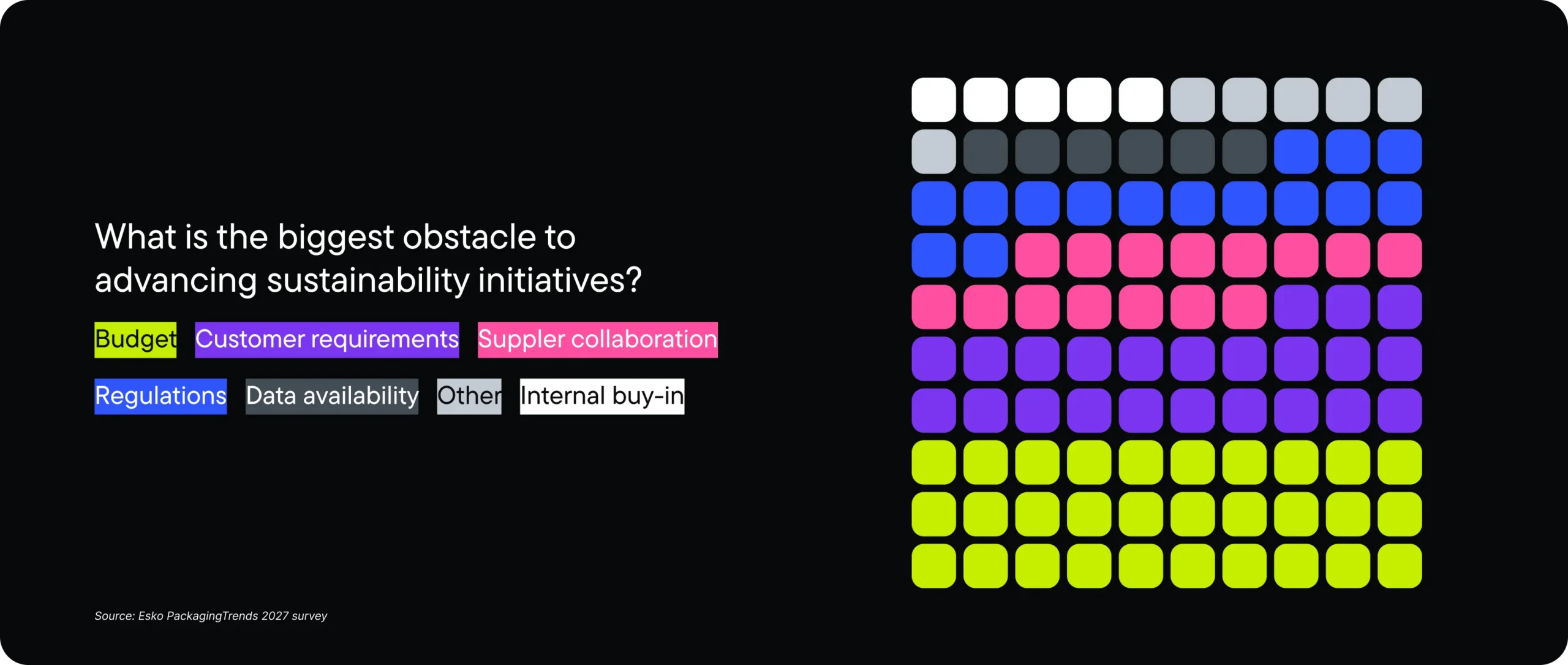
Cost is still part of the equation. In our survey, 30% of respondents identified budget as the biggest obstacle to advancing sustainability initiatives.
Some sustainability challenges will require bigger changes. Loftin points to packaging formats that have barely changed in decades, including difficult-to-recycle pharmaceutical blister packs, as an example of where teams may eventually have to abandon the tried-and-true for something newer.
Growing documentation requirements can also take time away from the innovation work packaging engineers need to do.

Regulations Drive Operational Change
Nowhere is this truer than in the area of sustainability. The regulations are coming fast and furiously, and they’re vast.
For example, PPWR is a major part of the current sustainability conversation in Europe, but additional new requirements are evolving well beyond a single regulation or region.
New and expanding requirements across Europe, North America, and Asia are targeting everything from packaging reduction and recyclability to recycled content and producer responsibility (Plastics Today).
And 59% of packaging professionals expect the pace of packaging regulation to intensify over the next 12 months.
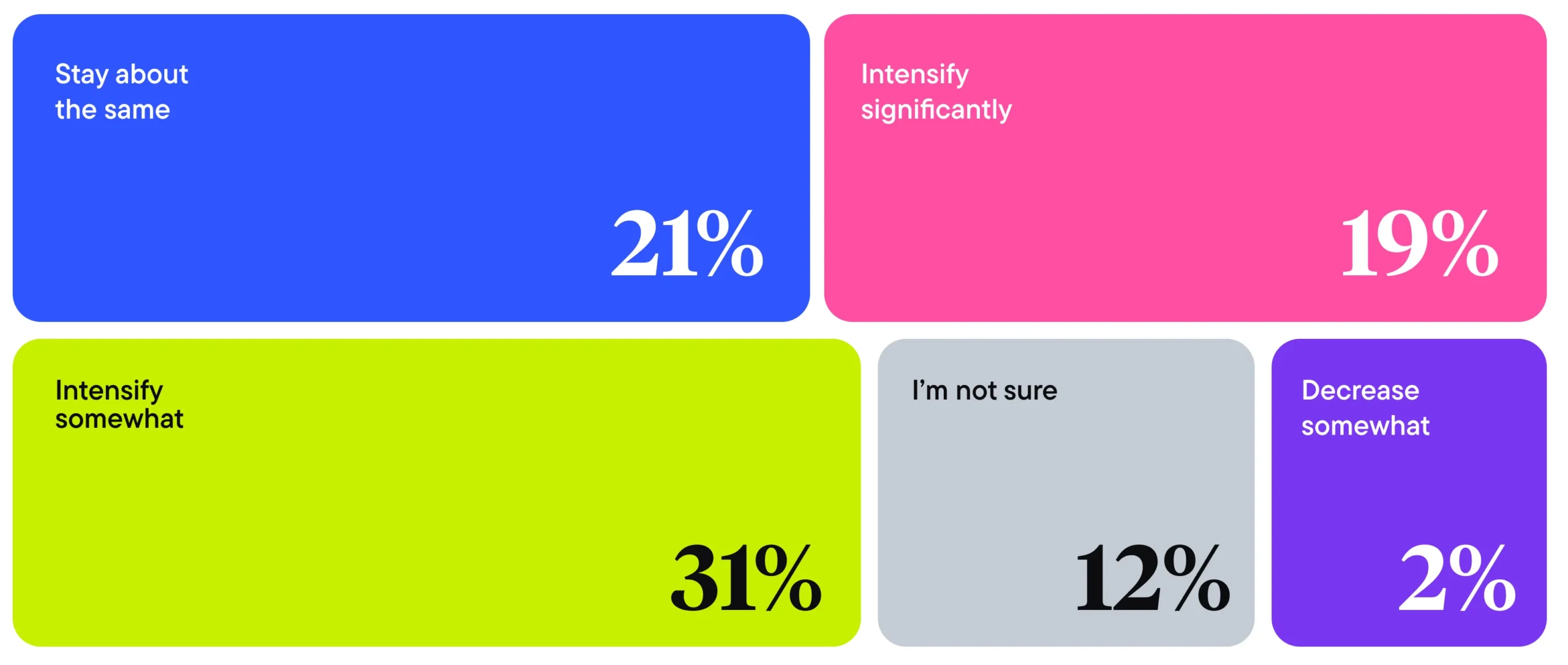
And all of this has an operational impact.
Sustainability requirements are evolving globally, while activity among US brands and converters is also accelerating as customer requirements and global standards influence their operations.
Geert De Proost, Director of Product Offering – Converter Software at Esko, recently encountered a customer with two full-time employees focused solely on answering incoming PPWR-related requests.
And those requests are likely to translate into more packaging changes.
Compliance may require a new code or label. Sustainability targets may lead to a different material, which can affect color and print reproduction. Brands may redesign packaging to reduce material use or improve recyclability. Extended producer responsibility requirements can also create an ongoing incentive to improve packaging performance and reduce associated fees.
For converters, these changes add up. De Proost expects the volume of change requests to increase as regulations take effect and brands continue adjusting their packaging in response. The challenge isn’t simply making one regulatory change. It’s having the processes in place to manage a continuing stream of them efficiently.

Without that capacity, more changes can mean more manual work, higher costs, longer turnaround times, and potentially more waste.
Dominic Harris, Co-Founder of CarbonQuota, cautions against allowing whichever regulation happens to dominate the conversation today to consume the entire sustainability agenda. EUDR held that position previously, while EPR and PPWR are taking much of the attention now. Other metrics and priorities can easily fall down the list while organizations concentrate on more immediate requirements.
This may sound somewhat dire, but it doesn’t mean the sky is falling anytime soon.
The answer is to build processes that make ongoing change easier to manage. Packaging portfolios need to be understood. Documentation needs to be maintained. Responsibilities need to be clear. Supplier information needs to remain accessible. And redesign work needs enough time to happen properly.
That last point is particularly important as deadlines approach. Loftin notes that packaging redesign can take considerable time, making a regulation that appears several years away much closer in the rearview mirror.
Better Packaging Decisions Depend on Better Packaging Data
Companies need to understand what their packaging consists of before they can confidently measure it, report on it, or decide what aspect of it needs to change.
That need is becoming more concrete as reporting requirements expand. Seven US states have now enacted packaging EPR laws, with programs increasingly requiring detailed information about packaging materials and recyclability (EarthShift Global).
De Proost expects the need for structured digital data to reach a new level in 2027. He connects that need to initiatives such as GS1 Sunrise 2027, where packaging data increasingly has to move beyond internal systems and support broader regulatory and digital use cases.
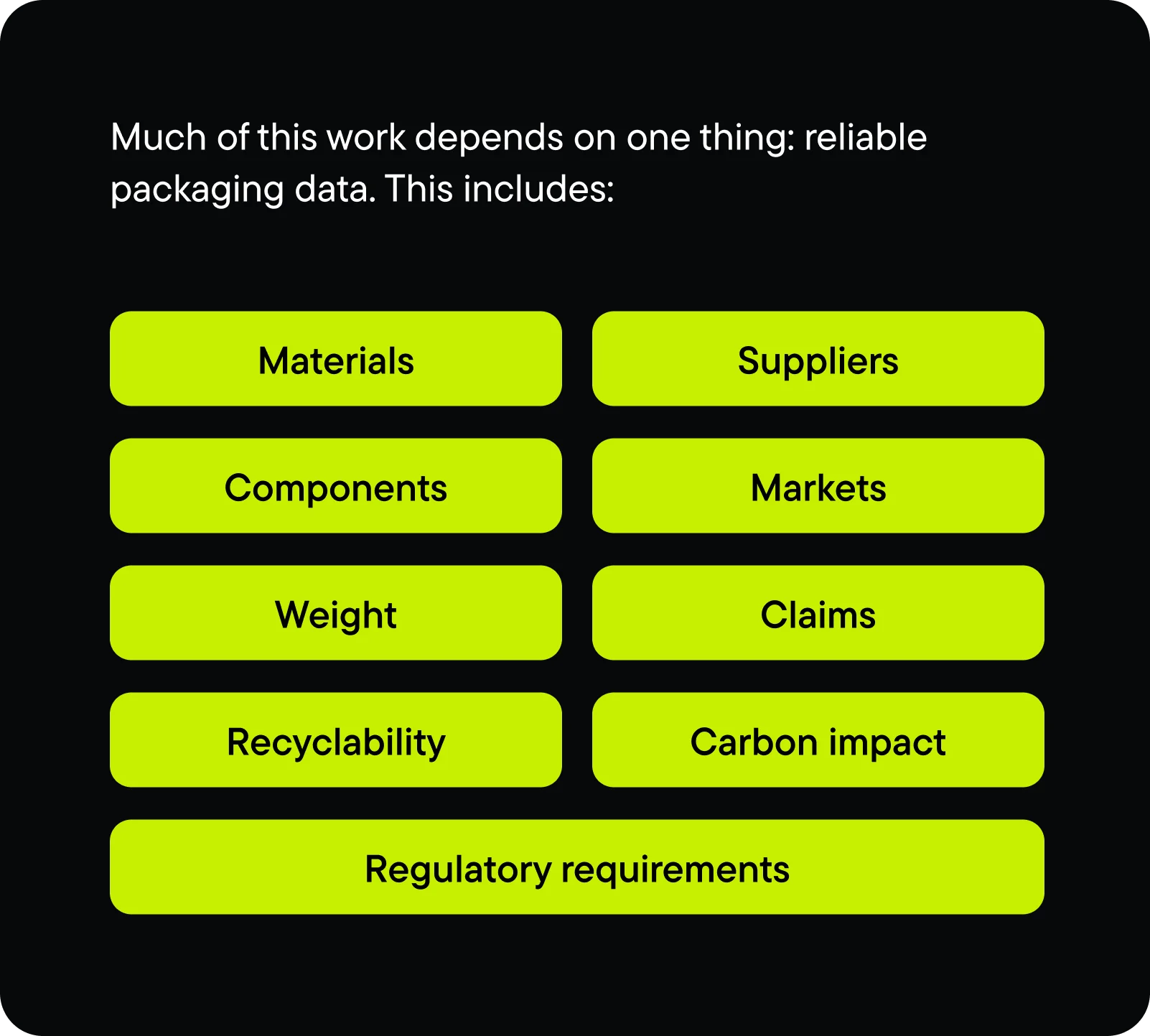
Different regulations and sustainability metrics may ask different questions, but much of the information needed to answer them comes from the same underlying packaging data.
This makes data quality and consistency increasingly important as requirements evolve.
Loftin goes even further, describing data as one of the biggest sustainability developments heading into 2027. For most companies, she believes the complexity of sustainability compliance now requires digital systems to support it. Those systems also need clear internal processes, ownership, and people who understand how the information should be managed.
The goal is visibility across the portfolio: knowing what packaging consists of, where the information comes from, whether it remains current, and what may need addressing next.
Building Adaptable Processes
Sustainability increasingly involves packaging teams, procurement, regulatory, R&D, suppliers, and other partners. Each has a role in maintaining information, making decisions, and carrying changes through to production. How those groups work together matters just as much.
For data to be useful, it needs to move freely through the organization.
But data alone isn’t enough. As the volume of packaging changes increases, the processes surrounding that data also need to become more efficient.
Data and automation are increasingly interconnected. Structured packaging information gives teams a reliable foundation for change, while workflow and process automation help move those changes from onboarding through design, approvals, and production with less manual intervention.


For converters facing more frequent change requests, this efficiency becomes increasingly important. Automation helps absorb greater volumes of work without requiring every additional request to create a corresponding increase in manual effort, cost, and waste.
And the benefits aren’t limited to managing change. Greater automation can also increase production capacity, reduce material costs per job, and help teams handle more work without adding headcount.
The same principle applies to sustainability reporting. As requirements expand, organizations can either rely on more manual work to calculate and report environmental information or automate more of that process.
The same underlying packaging data can also support multiple needs, from recyclability and EPR reporting to carbon-footprint calculations. Rather than treating each sustainability requirement as a separate exercise, organizations can use the same reliable data foundation across them.
Technology is only part of that preparation.
Successful implementation also requires companies to have clear processes and ownership in place, understand what their packaging consists of, maintain that information over time, stay connected to suppliers, and incorporate sustainability into R&D and portfolio management.
This does not require every package in a complex portfolio to reach its final sustainability goal at once. It requires visibility into where the organization stands and a plan for what needs to be implemented next.
This mindset also creates a more realistic model for continuous improvement. De Proost sees digital data as a common denominator connecting sustainability with other major packaging developments. Structured information provides the foundation for increasingly intelligent tools to help companies place products and packaging on what he calls a “continuous improvement path.”
Collaboration matters just as much. Loftin notes that brands and converters may each be protecting their own domains, but ultimately “both are working towards the same goal.”
Building these connections now can make the next change easier to absorb, whether it comes from a regulation, a customer requirement, a new sustainability target, or a redesign opportunity.


Business as Usual
By 2027, sustainability will be increasingly visible in the everyday mechanics of packaging: the data that teams maintain, the questions they ask suppliers, the materials designers consider, the information needed for compliance, and the processes used to move a packaging change from idea to production.
Notably, this may be one of the clearest signs of progress.
Successful sustainability implementation comes from companies knowing where they stand and which parts of their portfolios still need to transition. This creates room for measurable progress without pretending every challenge has already been solved.
In 2027, much of the work will focus on turning sustainability goals and requirements into everyday practice: managing data, working with suppliers, making packaging decisions, and continuing to improve as requirements change.
And as more of the work depends on accessible, structured information, packaging itself is taking on another role. The data connected to a physical package is becoming increasingly valuable across compliance, sustainability, traceability, and the wider product experience, setting the stage for the next major shift: packaging data becoming a product in its own right.

 Tap to read





Want to keep a copy?
Download the complete 2027 Packaging Trends report to save, share, or read offline.