
Reducing packaging time to market has become an industry goal. Every brand wants to launch products faster, respond to changing regulations more quickly, and keep pace with evolving consumer expectations without sacrificing quality.
But what does that actually look like?
At Esko World 2026, one ambitious challenge set out to answer that question.
Called The Big Easy, the project challenged teams across the packaging value chain to take a fictional snack brand, Bayou Bites*, through a realistic packaging transformation and deliver finished product to the shelf in roughly 48 hours.
The challenge captured plenty of attention because of the timeline. What made it memorable, though, was something else entirely. It showed what becomes possible when people, processes, and technology work together across the entire packaging lifecycle.
Prefer watching to reading? We’ve got you covered. Watch the video below for the full story, or keep scrolling to explore the details.
.
An Idea Born During an Evening Run
The concept didn’t begin in a meeting room.
It started during an evening run.
Dries Vandenbussche, Senior Director of Global Partner Strategic Development for Sales, had been thinking about a familiar message that had appeared in countless presentations over the years: reduce time to market without compromising quality.
Rather than presenting the vision on another slide, he wondered whether the team could actually demonstrate it.
“When I came back from my run, I sent out an email to the Esko World management team titled, ‘What if…'” he recalled. “Why don’t we make this more concrete? Should we not challenge ourselves in proving this statement?”
The idea was straightforward.
Instead of talking about connected packaging workflows, build one.
Instead of describing what’s possible, prove it in front of hundreds of packaging professionals.
Building a Realistic Packaging Challenge
The team didn’t want to create an artificial demonstration designed only to succeed. Every decision had to reflect the kinds of requests packaging teams receive every day.
The fictional Bayou Bites product would undergo a complete packaging refresh.
The recipe would be reformulated to create a healthier product, requiring updated nutrition information and ingredient declarations. The packaging would be redesigned to appeal to a younger audience. A traditional barcode would become a GS1 Digital Link-enabled 2D code. Sustainability improvements would influence material choices, recyclability, carbon footprint calculations, and EPR reporting.
In a real packaging workflow, each of those changes create work across multiple departments.
This usually includes:
- Marketing needing updated artwork
- Regulatory teams reviewing content
- Printers preparing production files
- Brand owners verifying claims
Additionally, packaging specifications, approvals, and production all need to stay aligned.
Individually, none of these tasks are unusual. Together, they often stretch product launches from weeks into months.
“We wanted to take a realistic example where a lot of market drivers were applicable,” Dries explained. “This process normally takes months.”
The Biggest Challenge Wasn't the Software
When people think about reducing time to market, they often imagine software doing the heavy lifting.
The reality is more complicated.
Some processes simply take time.
Ink needs to cure. Flexible packaging needs to be converted into finished pouches. Products need to be printed, produced, shipped, and delivered.
Those physical steps couldn’t be compressed.
That meant every process leading up to production had to run as efficiently as possible.
“It was a stretch,” Dries said. “Once we hand it over to the printer, there’s nothing we can do. They have to print, they have to cure the inks, they have to pouch the product.”
The production schedule remained tight until the very end. Finished pouches arrived only hours before they were due on stage during Esko World’s closing session.
That uncertainty kept everyone on their toes, and the team awake at night, and ultimately, was what made the whole scenario feel very real.
Why Packaging Workflows Slow Down
One of the biggest lessons of The Big Easy wasn’t how quickly the work could happen.
While the speed was impressive, it wasn’t the point. As the team reiterated, the point was to focus on where time is usually lost.
A formulation change doesn’t affect only one document. It creates a chain reaction.
Nutrition panels change. Ingredient statements change. Marketing claims may need updating. Different markets require different regulatory content. Packaging materials may need to be validated again. Multiple teams and external partners all become part of the approval process.
Most of the delay comes from having to wait.
Waiting for approvals.
Waiting for information.
Waiting for someone else to finish the previous step.
“I think by far the biggest slowdown is the amount of people involved, the amount of approvals required, and the amount of waiting time,” Dries said. “You’re waiting for people very often.”
Connected systems don’t eliminate those steps.
They make it easier for the right information to move with the work, reducing duplicate effort, manual handoffs, and unnecessary delays.
The Moment Everyone Believed
Throughout Esko World, attendees received regular progress updates as the project moved from conception to production.
On the first day, curiosity dominated the conversation.
Could this actually work?
By the second day, confidence started to build as each milestone was completed and the audience watched the project move steadily through the workflow.
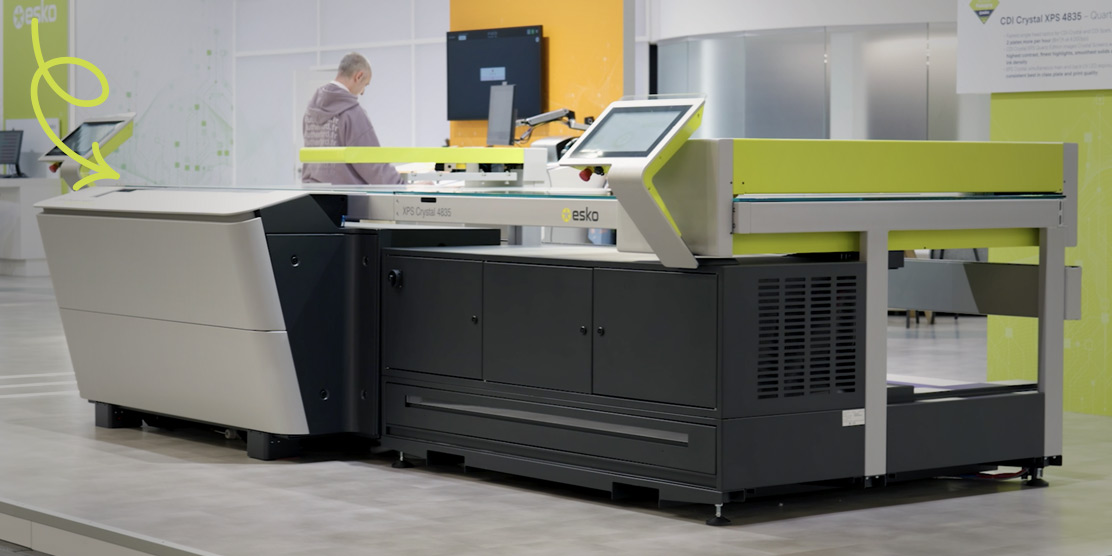
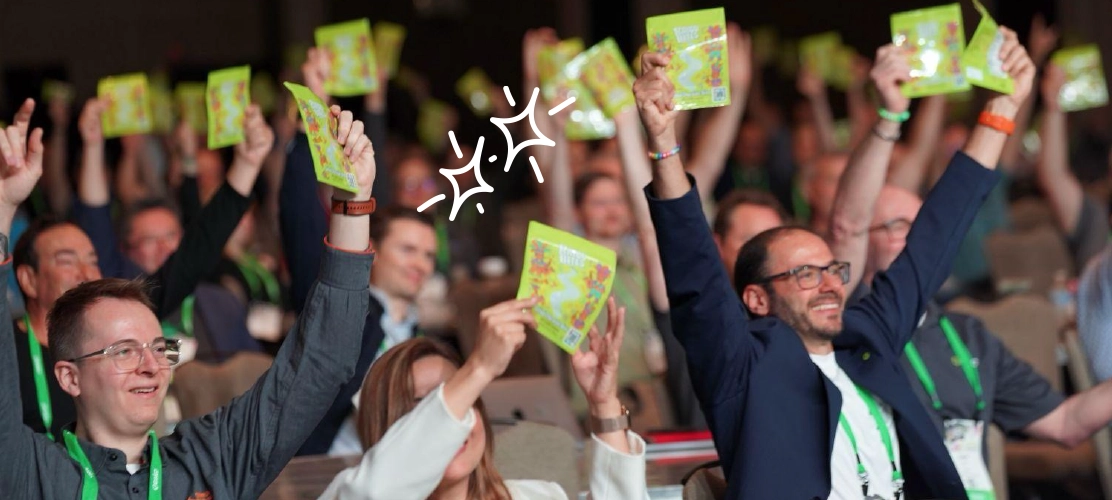
The biggest moment came during the closing session. Not only was the packaging change completed, but the finished product came to life, being put in the hands of each of the attendees.
Then came one final surprise.
While the audience had been following production in the United States, the team had also completed the same project for the French market, producing a localized flexographic version simultaneously in Europe with partner Comexi. Meanwhile, Prisma handled the display graphics, and ePac produced the digitally printed pouch in the U.S.
That reveal reinforced the broader point. Connected packaging workflows don’t exist for a single product or a single market. They create opportunities to manage complexity at scale.
As they held the package they had participated in designing, they knew it had evolved from an amorphous idea into a finished product over the course of a mere two and a half days.
What this Means for Connected Packaging
For the team, The Big Easy was never really about 48 hours.
It was about making Esko’s vision tangible and giving people something they could take back to their own businesses.
“I wanted to inspire people,” Dries said. “Even when a customer is only involved in one piece of the full story, it should make them think about how they can benefit from the solutions we have in place today. A number of small optimizations can be meaningful.”
Packaging isn’t becoming simpler.
Brands are managing more variants, more regulatory requirements, more sustainability reporting, and more pressure to move quickly.
The Big Easy demonstrated that while those challenges continue to grow, connected workflows can help reduce the waiting, improve collaboration, and make product changes faster and more predictable.
Sometimes the best way to explain a vision isn’t another presentation.
It’s proving what’s possible.
Want to see how the challenge unfolded?
Watch the full recap video and follow the complete journey from specification to shelf.
*The products described or depicted herein are intended solely for marketing and informational purposes. Any similarity to existing products or trademarks is unintentional and coincidental. Further, Esko implies no relationship to, or ownership of, the products depicted herein. No representation or warranty is made that such products currently exist or will be made available.